





October is Guanacaste's second rainiest month, just behind September. Most days still give you a workable morning, with rain in the afternoon and at night, so plan your outings early. In exchange you get the lowest prices of the year, the greenest landscape, and the emptiest beaches and trails. It also brings the year's biggest olive ridley turtle arribadas (a peak it shares with September), the opening of the leatherback nesting season at Playa Grande, and the peak of the raptor migration. Best tours this month: a Palo Verde river cruise, birding in the dry forest, and the mangrove canoe safari at Playa Grande. Best for: nature lovers who don't mind a little rain.
What is the weather like in October in Guanacaste, Costa Rica?
October is the second rainiest month of the year, just behind September. We won’t dress that up — it’s the truth. But here’s what the guidebooks miss: the rain is the reason to come, not the reason to stay away. Rain on the rainforest, rain sweeping across the savanna — it turns the whole landscape into something magical, something that quiets you. It’s a thing you feel more than explain. The forest is at its deepest green, the rivers run high, the air is washed clean, and there is almost no one else here to see it.
The honest logistics: prices, closures and rain
October is the low point of the tourist year — the lowest prices, the emptiest beaches and trails, and yes, some hotels and businesses on the coast close for the season, and the odd tour (rafting especially) can be called off when a storm rolls through. The pattern still holds most days — workable mornings, rain in the afternoon and night — but plan for water, and plan your outings early. This is a month for the traveler who comes for nature first.
What wildlife can you see in October?
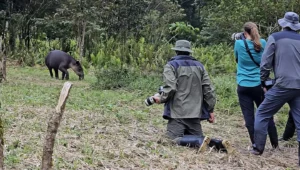
The great olive ridley arribada is at its biggest of the year now, a peak it shares with September — one of Earth's largest wildlife events. At Ostional, on the Nicoya coast, well over a hundred thousand turtles can come ashore in a single night. Closer to us, protected Nancite beach inside Santa Rosa National Park has its own arribadas, far smaller today than they were in the 1970s. Discover the dry forest on our bird-watching & wildlife experience. And in October, the leatherback nesting season opens at Playa Grande, an hour and a half from Playas del Coco. These are the largest sea turtles on the planet, up to 1.8 metres and 680 kilos, and Playa Grande is still the most important leatherback beach in Costa Rica. Their numbers in the Eastern Pacific have fallen sharply, so seeing one is now a rare privilege, and every nest counts. Paddle the Playa Grande estuary on our wildlife canoe safari.
Birds: the great raptor migration
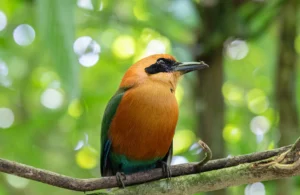
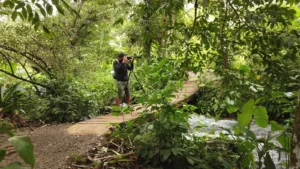
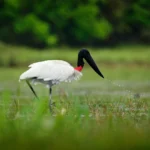
October is the peak of the great raptor migration — millions of hawks and vultures streaming south toward South America, spiralling in kettles of thousands on the rising thermals. It’s among the largest bird movements on Earth, and most of it follows Costa Rica’s Caribbean side, though some pass over Guanacaste too. Among them is the Swainson’s hawk — the very same bird that, come January, you’ll find hunting behind the cane machines in our lowlands. In October it’s passing through the country by the thousand; in January it’s home in our fields. And on the ground, the winter migrants have settled in among the residents: this is the fullest the birding gets all year. Join our bird-watching & wildlife experience. A Palo Verde boat tour still works on calm days — crocodiles, iguanas and birds in every direction — but storm weeks can make the Tempisque dangerous, so we watch the river and tell you before the day. Visit the Tempisque wetlands on our Palo Verde & El Viejo experience.
Is October worth it?
October asks the most of you and gives the most back. It’s the quietest and cheapest month of the year — some places shut their doors, and you’ll want good rain gear and morning plans. But in exchange you get the greenest Guanacaste there is, the peak of the turtle arribada, the opening of the leatherback season at Playa Grande, the great raptor migration passing through the country, and a stillness the high season never knows. For a nature lover who isn’t afraid of a little rain, October is quietly one of the most magical months of the year.
To see which days work best in the rainy months, go to the When to Come section of our guide to things to do in Guanacaste, Costa Rica.
October in Guanacaste, Costa Rica: frequently asked questions
Is October a good time to visit Guanacaste, Costa Rica?
Yes, for nature lovers who don’t mind a little rain. October is the second rainiest month, but it brings the lowest prices of the year, the greenest landscape, the year’s biggest olive ridley arribadas, the opening of the leatherback season at Playa Grande and the peak of the raptor migration.
How much does it rain in Guanacaste in October?
October is the second rainiest month, just behind September, with seventeen-plus rainy days, and the rain eases late in the month. Most days still give you a workable morning, with rain in the afternoon and at night. Average highs are about 31°C (88°F) and lows about 22°C (72°F), recorded in Liberia by Costa Rica’s National Meteorological Institute.
Is October cheap in Guanacaste, and is everything open?
October has the lowest prices of the year. Some hotels and businesses on the coast close for the season, and the odd tour, rafting especially, can be called off when a storm rolls through.
← September · Full month-by-month guide · November →
Planning an October trip? Design your experience with us →
By the Guanadreams team, led by Miller Contreras — naturalist guide and wildlife photographer, born and raised in Guanacaste.