
SAFARI FLOAT · PEÑAS BLANCAS · LA FORTUNA
Safari Float on the Peñas Blancas
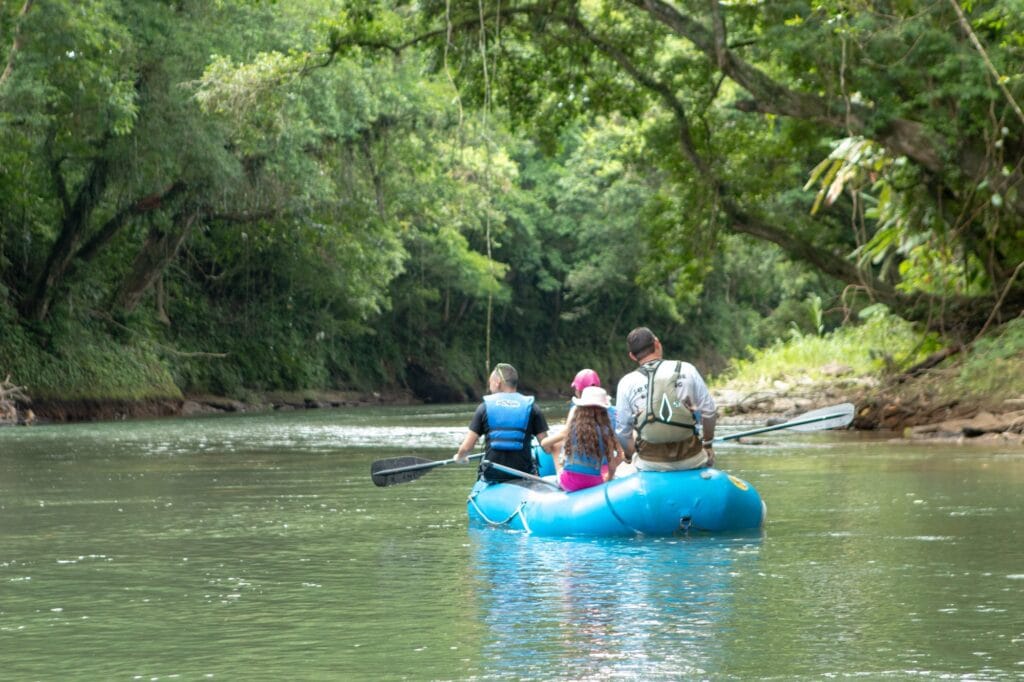
The Peñas Blancas Safari Float is a quiet, rapid-free raft ride through rainforest about twenty minutes from La Fortuna, Costa Rica: your guide moves the raft while you watch the banks, for roughly an hour and twenty minutes to an hour and forty on the water. No paddling, no rapids — just a slow way to get close to wildlife. It is an option on our La Fortuna overnight, from $800 per person for one night.
The word safari does the work here, not the word float. There are no rapids on this stretch and nobody hands you a paddle. You sit in a raft, the guide moves it, and for the best part of an hour and a half the river does the rest — which turns out to be the best way anyone has found to get close to animals without them noticing you. Boats are quiet. Feet are not.
Is the Peñas Blancas safari float calm?
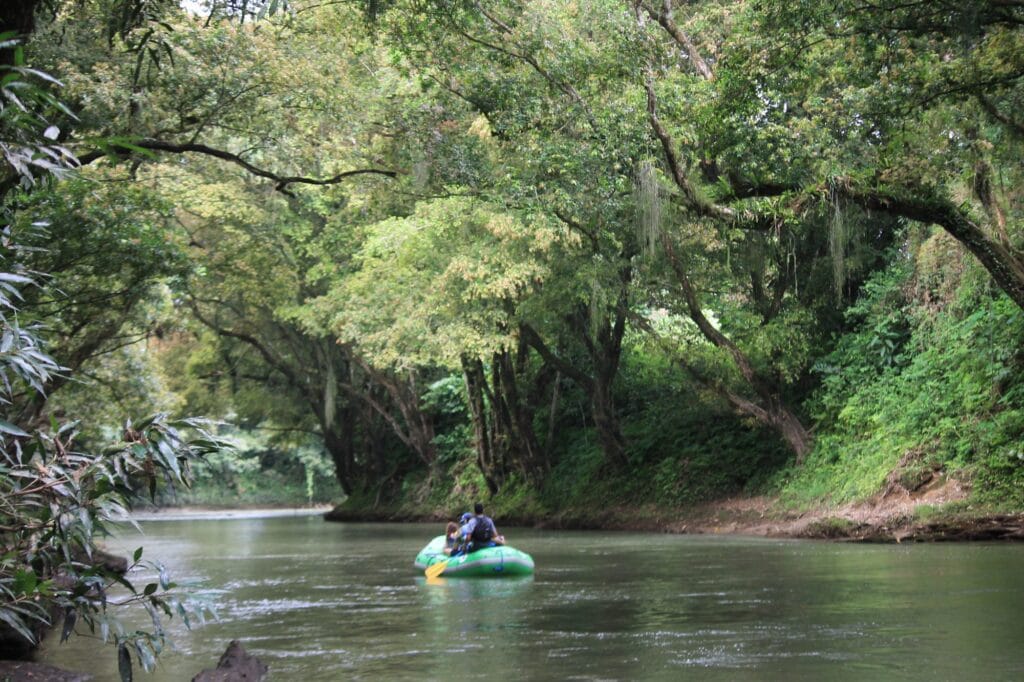
This is not whitewater and it is not trying to be. The Peñas Blancas runs slow and wide through rainforest twenty minutes from La Fortuna, and the whole design of the trip is to stop being loud.
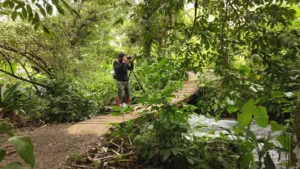
You sit. The guide paddles, and mostly he does not — he lets the current carry you and steers just enough to keep the raft side-on to whatever he has spotted. The stops are the point. When something is worth looking at, you hold there for as long as it takes rather than sliding past it.
Somewhere between an hour and twenty minutes and an hour and forty on the water, and the reason it varies is the whole point: it depends on what you find and how long you want to stay with it. Nobody is watching a clock. If the sun is hard that day and your group would rather move, you move.
It suits people who do not want an adrenaline morning, and it suits children and grandparents equally, which is rarer than it sounds.
Dry forest and rainforest are different animals
We run two other float trips much closer to the coast, and if you are staying in Guanacaste one of those may be the sensible choice. But they are not the same experience, and the difference is not the scenery — it is what lives there.
The Corobicí float runs through dry forest. That is the Guanacaste habitat: thorny, deciduous, bare for months of the year. It is beautiful and it holds a great deal of wildlife, but it is a dry-forest cast — magpie-jays, iguanas, howlers, crocodiles.
The lagoon float is a different thing again: still water inside a private reserve on the Tenorio side, rainforest, and no current at all.
The Peñas Blancas is rainforest river, on the Arenal side of the mountains. Continuous canopy, humidity all year, and a species list that simply does not overlap with the coast. That is the whole reason it is worth doing on a trip where you have already come this far inland.
What wildlife will you see on the safari float?
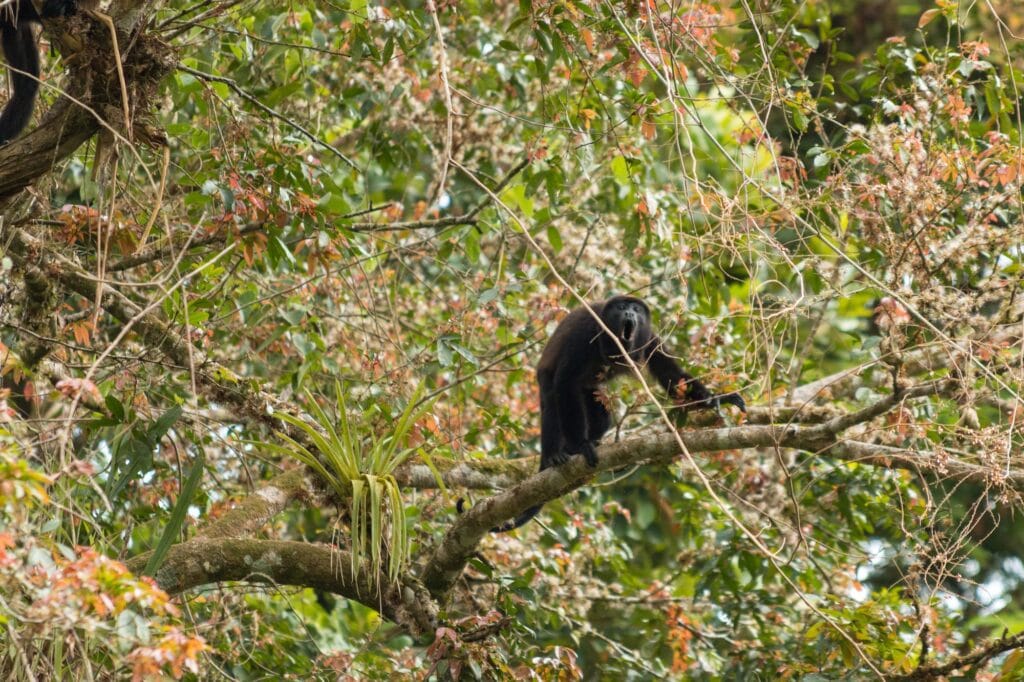
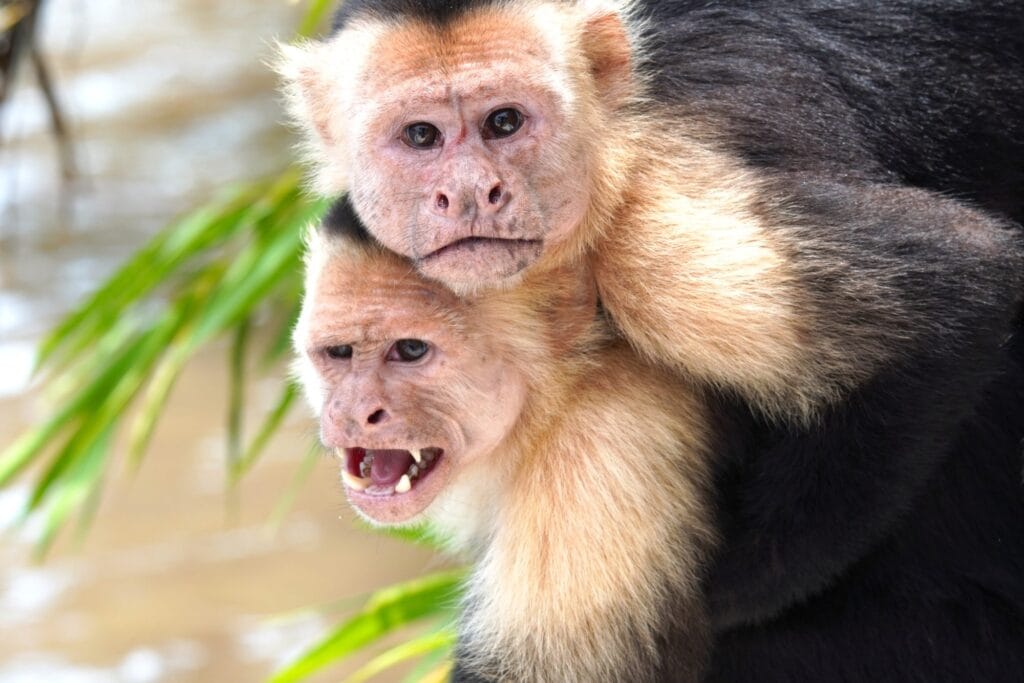
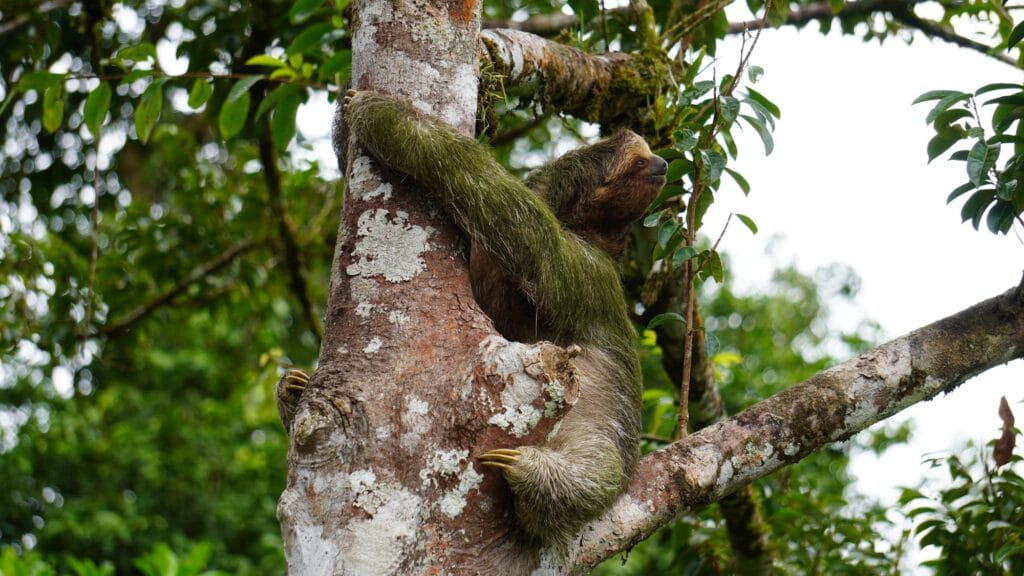
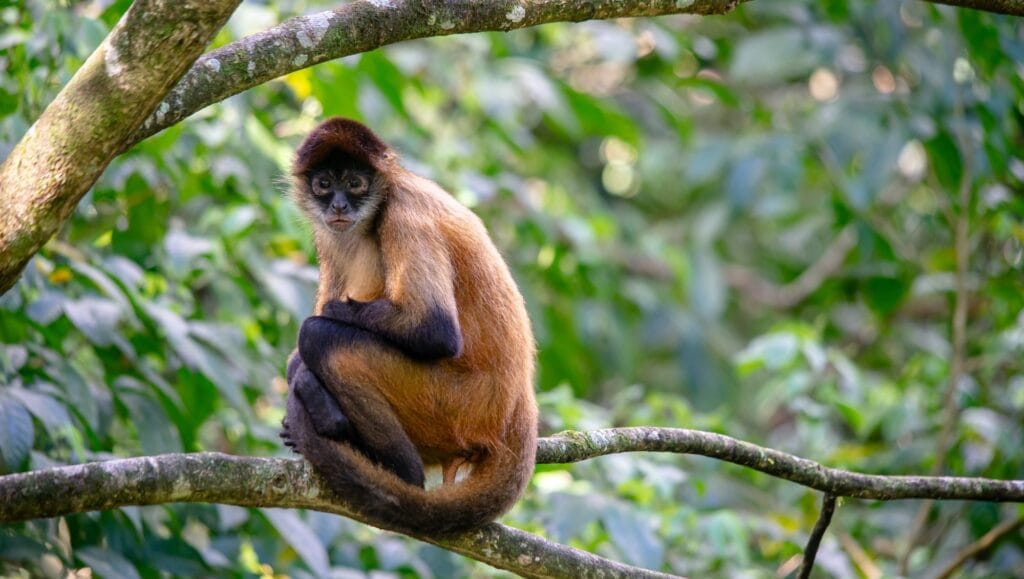
Howler monkeys are the reliable ones — you usually hear them long before anyone points. White-faced capuchins come right down to the banks, close enough that people put their cameras down and just watch. And spider monkeys live here, which matters more than it sounds: you will not find them on the Guanacaste coast at all. Two-toed sloths are found more often from the water than from a trail, because on a river you are looking across at the canopy instead of up into it.
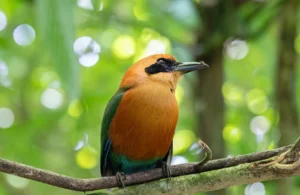
Toucans are in these crowns too — the other thing the dry forest does not give you.
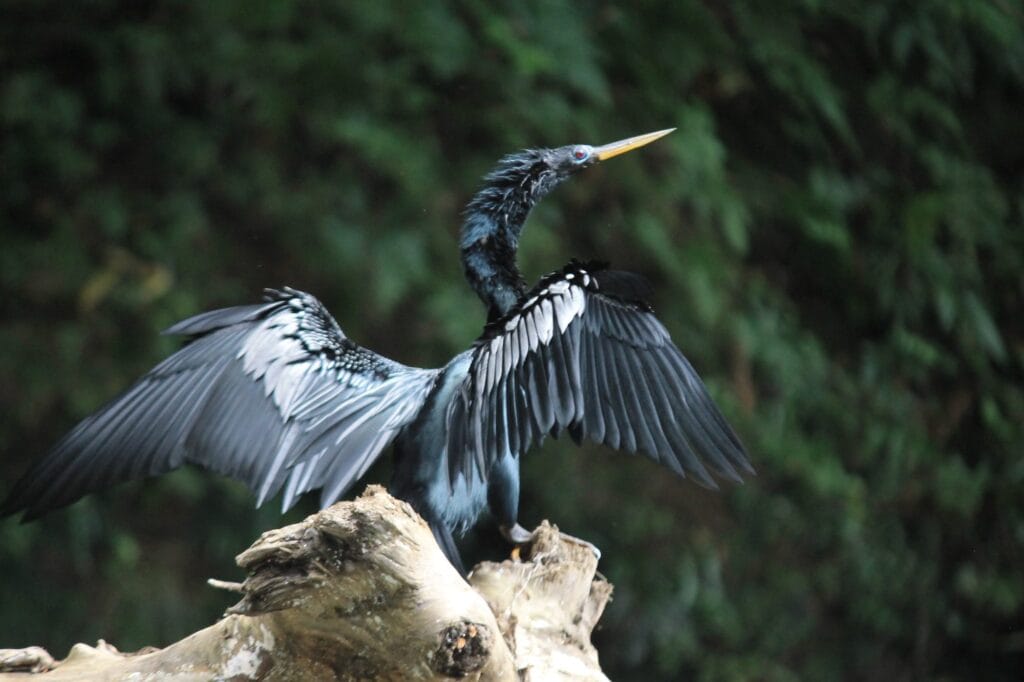
Then the ones nobody expects. Caimans on the mud, not moving. Basilisks — the lizards that run across the surface of the water, which is a thing you have heard about and then suddenly see. Bats lined up in a row under an overhanging branch, sleeping. River turtles on the logs. Herons and kingfishers working the edges, and anhingas standing on dead wood with their wings spread open to dry, because unlike a duck they have no waterproofing and have to hang themselves out after every dive.
None of it is promised. It is a wild river, not a route. But you are drifting down it without an engine, and that changes the odds more than any other way of moving through a forest.
It ends at somebody's house
The float finishes at a family home on the riverbank, where you get out and are given fresh fruit juice and something homemade to eat before the vehicle takes you back.
It is a small thing and it is the part people describe first when they get home. It is also the difference between money that stays in La Fortuna and money that leaves it.
It is not a secret river
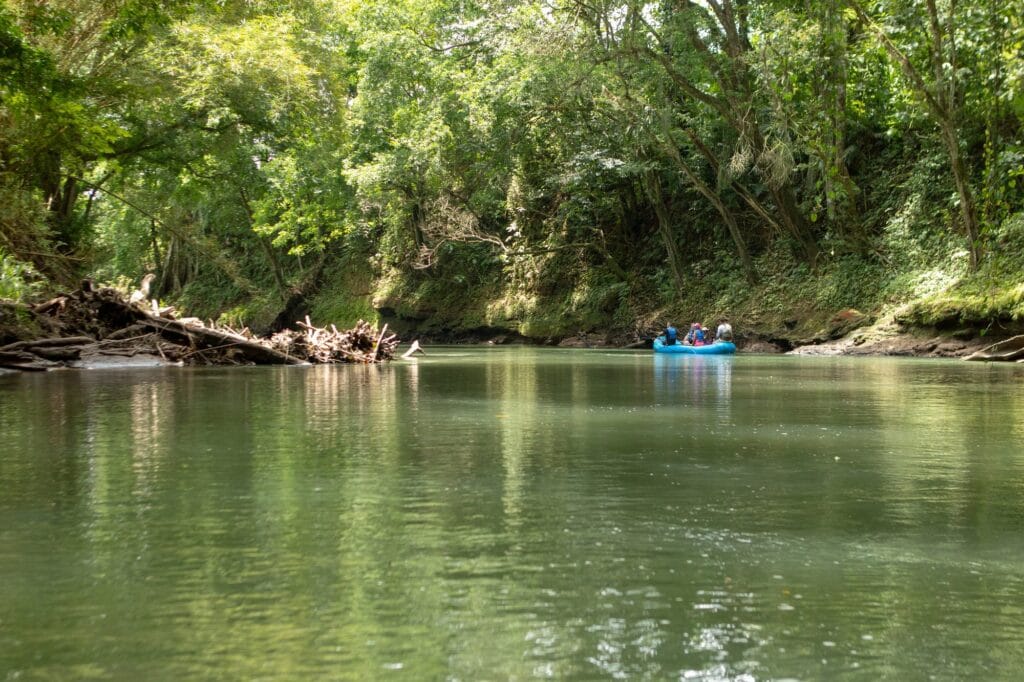
We would rather tell you this than have you find out at eight in the morning. Several operators run the same stretch of the Peñas Blancas, and in January, February and March it can get busy — you will see other rafts, and there are houses along the banks. It is not wilderness and we are not going to call it that.
What makes the difference on a crowded morning is the guide: how far ahead he is looking, how long he is willing to hold the raft in one place, and how much he can tell you about what you are looking at. That part we control.
If solitude matters more to you than convenience, say so when you book and we will talk about the alternatives.
Available on the overnight
This float is part of the La Fortuna overnight — it is not sold on its own, and it is not on the one-day trip from the coast.
From $800 per person · one night
Frequently Asked Questions
Is there any whitewater?
No. This stretch is flat and slow, and that is deliberate — rapids and wildlife do not mix.
Do we have to paddle?
No. The guide handles the raft. You sit, and the only thing asked of you is to be quiet when he raises a hand.
Can we book this without the overnight?
No, and we would rather say so plainly. It is twenty minutes from La Fortuna and three and a half hours from the coast, so it only makes sense as part of the two-day trip. If you are staying in Guanacaste and want a float, we have two that are much closer.
Is it suitable for young children or older travellers?
Yes, and it is one of the few things that genuinely suits both. There is no scrambling, no paddling and no current to fight. The minimum age is four, life jackets are provided, and the river is shallow. Tell us the ages and we will make sure the boat and the timing suit your group.
What should we bring?
Sandals or water shoes, quick-dry clothes, sun protection, insect repellent and something waterproof for your phone. Binoculars if you own them. You will not get soaked, but you will get splashed.
When do we have to cancel by?
Seventy-two hours before your tour begins, counted from the start time and not the day. Cancel before that and your deposit comes back in full.
Book direct with the operator
- We run these tours ourselves. No middleman, no reseller.
- Private to your group — minimum four guests for this experience, no strangers in your van.
- The price you see is the price you pay: taxes and door-to-door pickup included.
Drift, do not paddle
Tell us when you are here and how many of you there are, and we will build the two days around what you actually want to see rather than around a list.
More than 300 five-star reviews on Tripadvisor. Our guides’ eBird lists are public — you can read them before you write.
Part of our Nature Experiences
Or write to us
By the Guanadreams team, led by Miller Contreras — naturalist guide, born and raised in Guanacaste.