




Bird Watching & Bird Photography in Costa Rica
More than 900 species across misty cloud forest, flooded wetlands and lowland rainforest — birded on small, private, photography-friendly mornings, with the eBird data to back every promise.
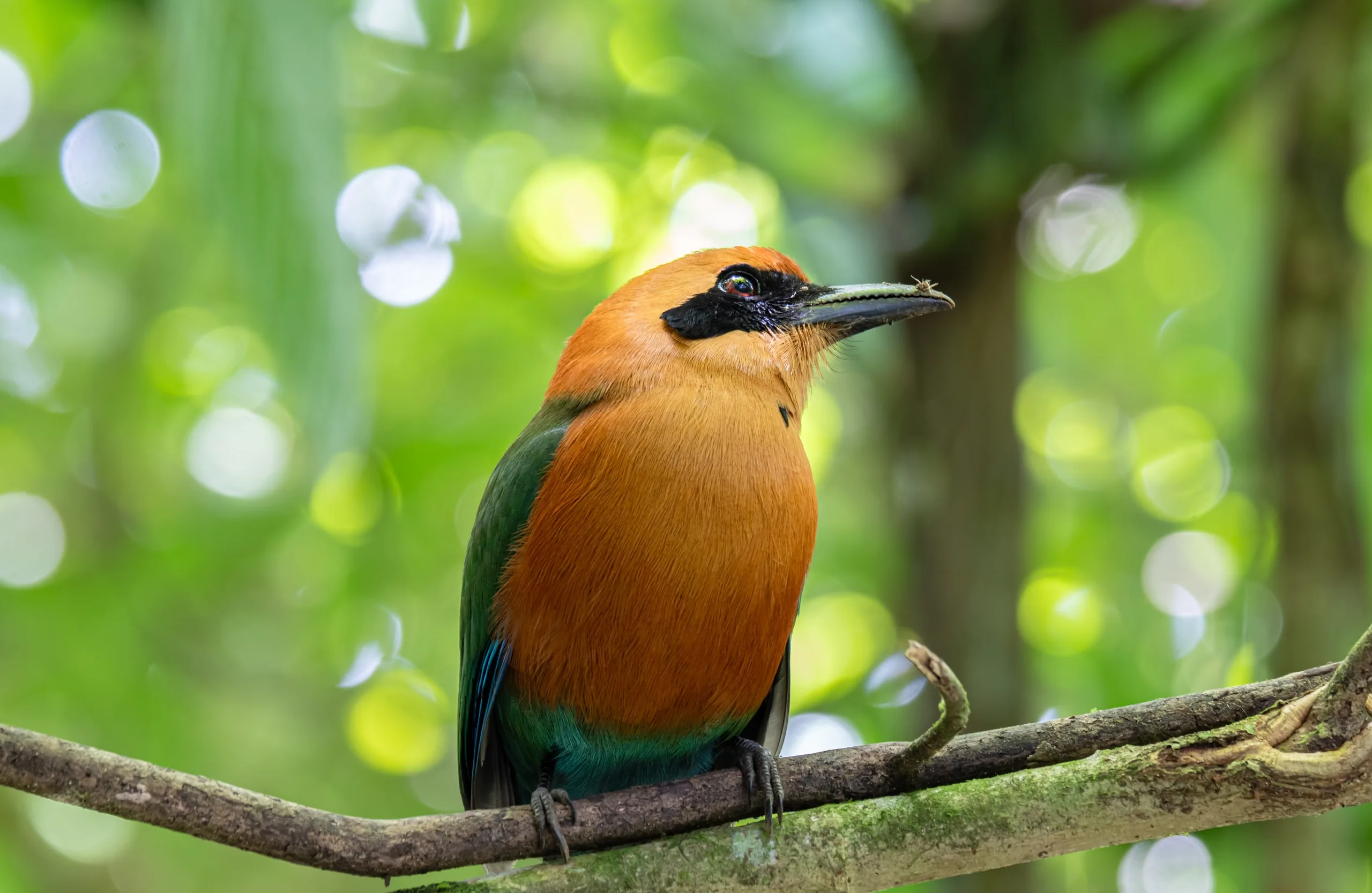
Bird watching with Guanadreams CR is a private, photography-friendly birding day in northwest Costa Rica — the Monteverde cloud forest, the Guanacaste wetlands or the Tenorio rainforest — in a country with more than 900 bird species, every figure checked against eBird. A bird-specialist naturalist guide, binoculars, spotting scope, park entrances and lunch included — from $700 per private group of 2.
Bird Watching & Bird Photography in Costa Rica
Costa Rica packs more than 900 bird species into a famously small country, and the country’s northwest is where several of these worlds meet. In a single region you can move from misty cloud forest to flooded wetlands to lowland rainforest — and each one holds a completely different cast of birds. We run these as small, private, photography-friendly mornings led by a local guide who knows the fruiting trees, the colonies, and the leks, so your time goes to the birds, not the logistics. Below are the three habitats we bird across northwest Costa Rica: the Monteverde cloud forest, the Guanacaste wetlands, and the Tenorio rainforest. Pick the one that calls you, or combine them across a few days — their peak seasons complement each other, so there’s always a great morning of birding to be had.
Numbers, not adjectives
Most tour pages promise abundant wildlife. We would rather show you the data.
Every figure on this page comes from the public eBird histograms for the exact sites we visit — the proportion of complete checklists that report each species. You can verify all of it before you book.
Here is what that looks like at Tapir Valley, one stop on our rainforest day:
| Species | Reported on |
|---|---|
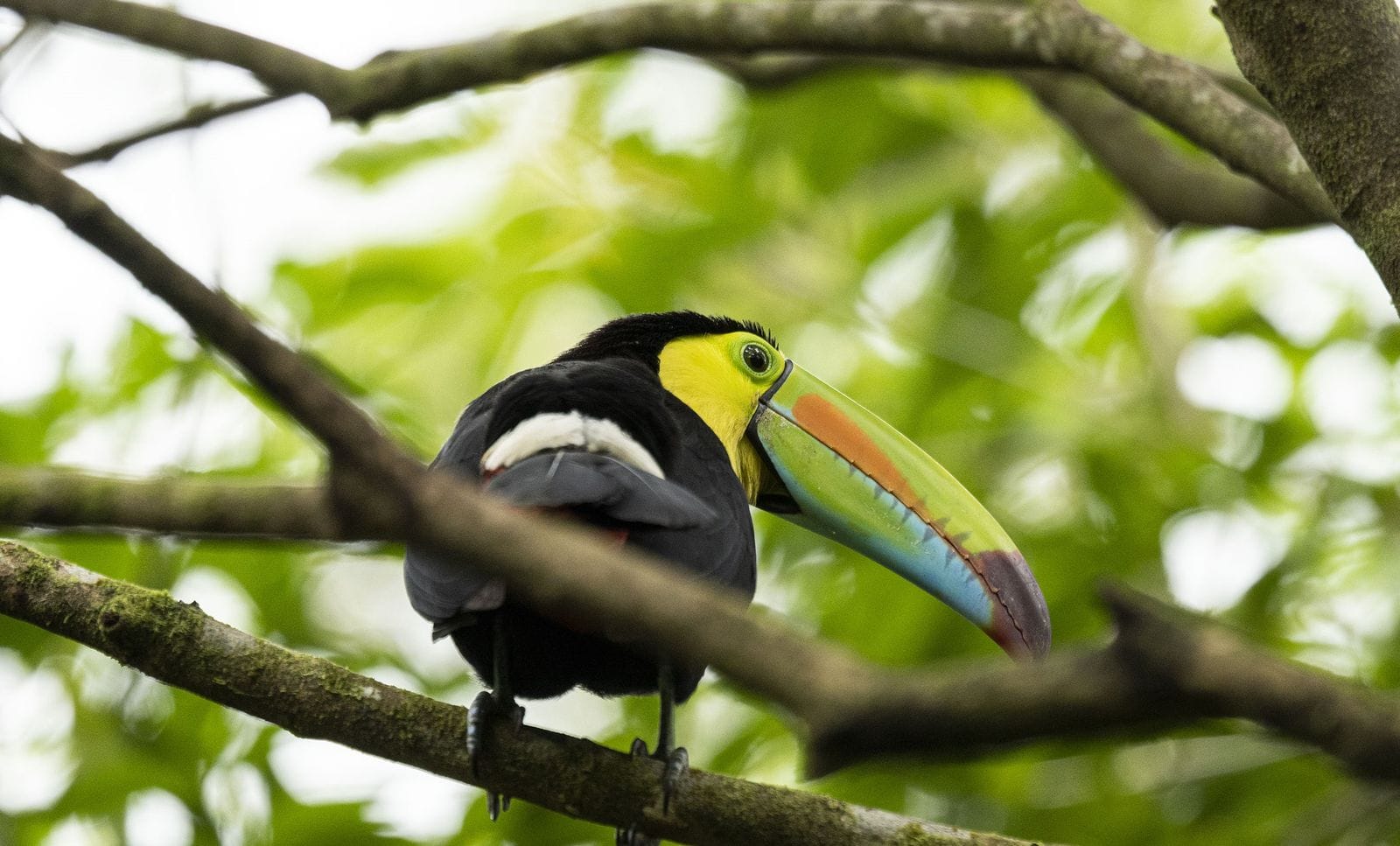
| Yellow-throated Toucan | 77% |
| Keel-billed Toucan | 61% |
| Snowcap | 57% |
| Rufous-tailed Jacamar | 49% |
| Great Curassow | 43% |
| Collared Aracari | 42% |
| Crested Guan | 41% |
| Black-crested Coquette | 35% |
| King Vulture | 13% |
| Ornate Hawk-Eagle | 12% |
The Yellow-throated Toucan figure holds every month of the year. Snowcap never drops below 41%.
We think that is a more useful promise than telling you that you may see spectacular birds. See a real trip report from Bijagua
Where can you go birding in northwest Costa Rica?
Three habitats, three different mornings of birds — start with one, or combine them across your trip. Each is fully private and photography-friendly.
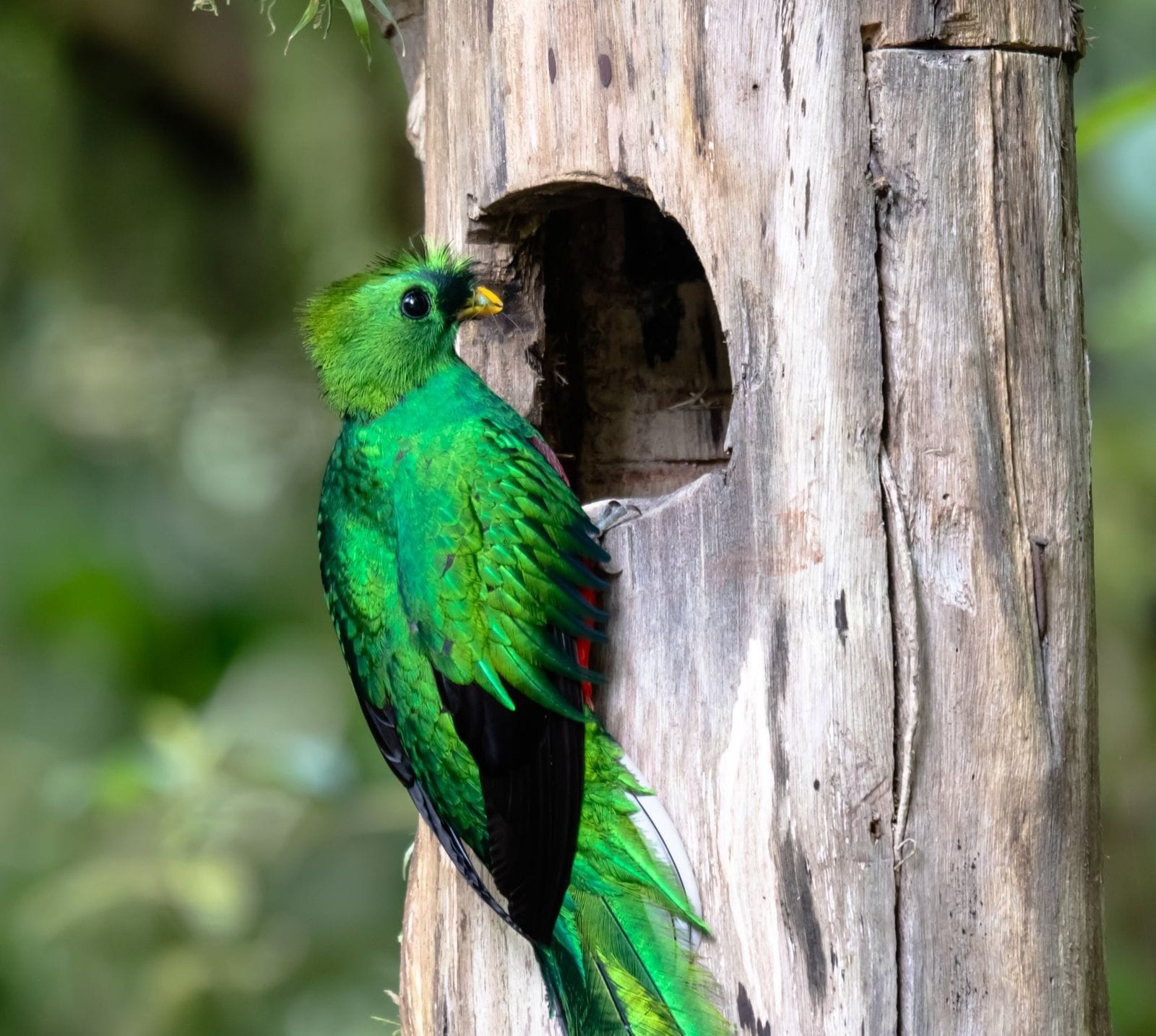
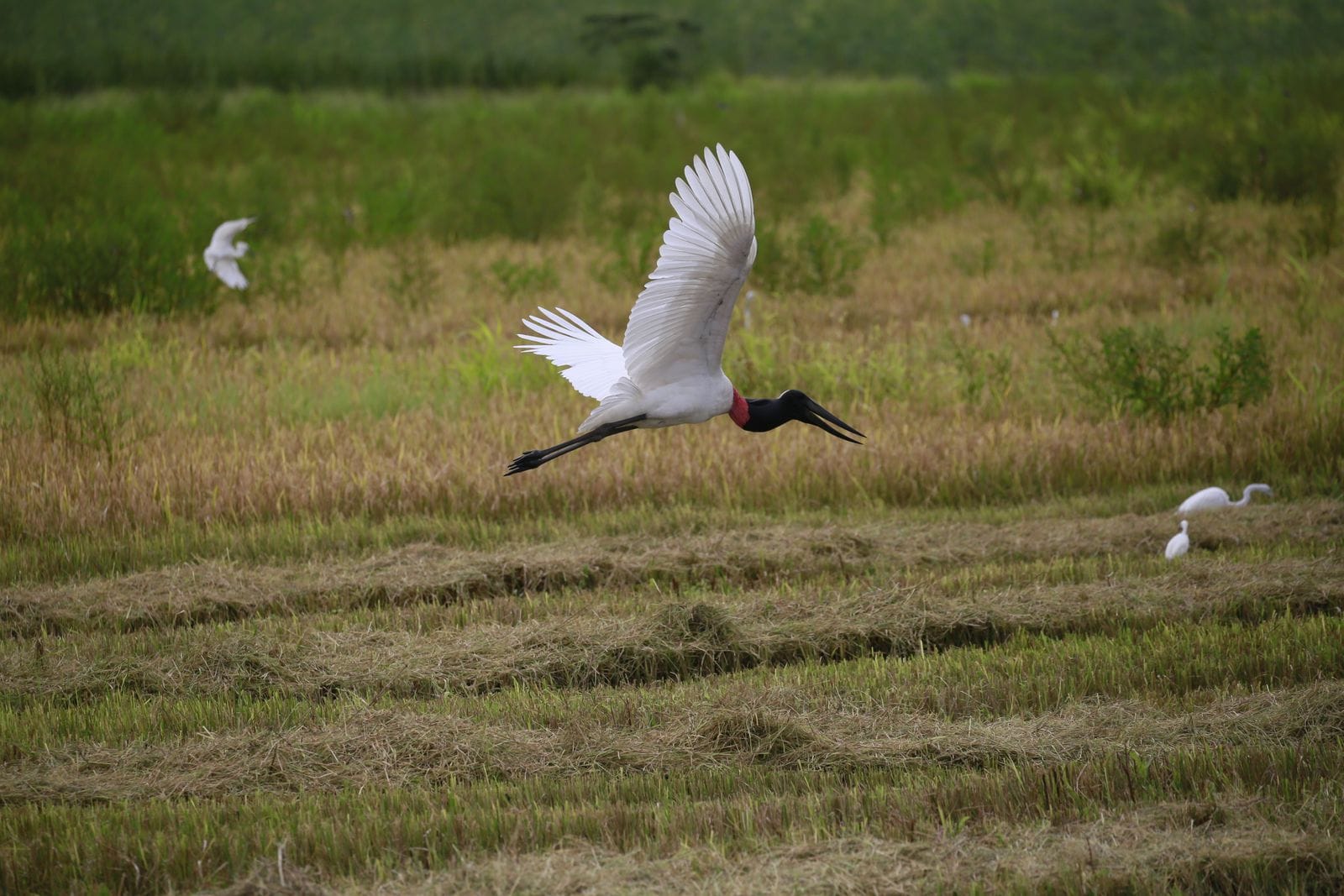
Which month is best for birding in northwest Costa Rica?
This is the part no one else will tell you.
The wetland birds of Guanacaste move with the water. In the dry months the Palo Verde marsh concentrates them. When the rains come and the rice fields flood, they shift to the fields near the coast. The two sites are almost perfectly inverse:
| Species | Site | Feb | Mar | Sep | Oct | Nov |
|---|---|---|---|---|---|---|
| Wood Stork | Palo Verde | 53% | 63% | 4% | 27% | 36% |
| Rice fields | 10% | 3% | 65% | 79% | 76% | |
| Roseate Spoonbill | Palo Verde | 60% | 58% | 4% | 23% | 28% |
| Rice fields | 4% | 2% | 41% | 37% | 36% | |
| Jabiru | Palo Verde | 25% | 37% | 16% | 7% | 10% |
| Rice fields | 24% | 22% | 37% | 18% | 27% |
Book the wrong site in the wrong month and you will spend the morning looking at an empty field. We choose the site after we know your dates — which is also why we ask for them first.
What we do not promise
Some birds are reliable. Some are not. We would rather tell you which is which before you pay.
Reliable — reported on most visits, all year
Yellow-throated Toucan · Snowcap · Keel-billed Toucan · White-throated Magpie-Jay · Long-tailed Manakin · Rufous-tailed Jacamar · Tody Motmot · White-collared Manakin · Spotted Antbird
Seasonal — excellent, but only in their window
Resplendent Quetzal (February–June) · Three-wattled Bellbird (May–June, and even then on roughly one visit in three) · Black-crested Coquette (strongest December–May) · Elegant Trogon at Santa Rosa (peaks at 58% in May)
Genuinely lucky — we will try, we will not promise
Jabiru · King Vulture · Keel-billed Motmot · Lovely Cotinga · Bare-necked Umbrellabird
If a guide tells you the Jabiru is guaranteed, check their numbers. On the public record it appears on roughly one visit in five, at the best site, in the best month.
Photographer or birder? They are not the same trip
A birder will out-list a photographer on any given day, and by a wide margin. A scope, a quick look and a tick take seconds; a clean frame takes twenty minutes on one perch.
Those are real numbers from a full day at our hummingbird sites. The photographer comes away with fewer species — but with images. We plan the day differently depending on which of the two you are, so tell us when you book.
Who guides you
Costa Rica has roughly 950 recorded bird species. Here is what our guides have personally logged on eBird — every figure links to a public profile you can open.
| Guide | Species | |
|---|---|---|
| Dave VargasNaturalist Guide — most of the country’s entire avifauna | 700 | eBird → |
| José Vargas MenaNaturalist Guide & Wildlife Photographer — 478 of them photographed | 691 | eBird → |
| Bryan MontoyaBorn in Bijagua, the gateway to Tenorio and Río Celeste — 86 documented with his own photography | 589 | eBird → |
| Obed CanalesNaturalist, wildlife photographer and birder | 533 | eBird → |
Every guide on the team has over ten years in the field.
Miller Contreras, co-founder and lead naturalist guide — over 20 years guiding here, with more than 600 species recorded in the field. I began migrating two decades of personal records into eBird in 2026; the profile grows every week as I document each location properly. eBird profile →
We are a small, owner-run operation. The person who answers your email is the person who will be standing beside you at 5:30 in the morning.
We run these tours ourselves
- We run these tours ourselves. No middleman, no reseller.
- Private from two people — no minimum group to fill, no strangers in your van.
- The price you see is the price you pay: taxes and door-to-door pickup included.
We saw active sloths, lots of monkeys, poison dart and red eyed tree frogs, three different toucan species and lots of tanagers and other beautiful birds.
 ViatorVerified review
Several of our guides have personally logged hundreds of Costa Rica's bird species on eBird — some more than 600. Meet our guides and see their eBird profiles →
Tell us your dates and target birds
Tell us your dates and target birds, and we’ll build the private morning — or a multi-habitat trip — around them. Short on time, or just want a relaxed taster? Our Wildlife Photography Experience is a 2-hour add-on focused on mixed wildlife.
More than 300 five-star reviews on Tripadvisor. Our guides’ eBird lists are public — you can read them before you write.
Prefer a form? Write to us → · Or write to us · Part of our Nature Experiences
Bird Watching in Guanacaste, Costa Rica — Frequently Asked Questions
Costa Rica has more than 900 bird species, and northwest Costa Rica is where cloud forest, wetlands and lowland rainforest meet, so one region holds a huge share of them. We bird across three habitats: the Monteverde cloud forest, the Guanacaste wetlands at Palo Verde, and the Tenorio rainforest.
It depends on the birds. Wetland birds at Palo Verde peak December to March; when the rains come they shift to the coastal rice fields (September to November). Cloud forest birding is best April to May, and the resplendent quetzal shows February to June. We choose the site after we know your dates, which is why we ask for them first.
Three habitats, each a different morning: the Monteverde cloud forest (quetzal, bellbird, hummingbirds), the Guanacaste wetlands and mangroves at Palo Verde (jabiru, spoonbills, the endemic mangrove hummingbird), and the Tenorio rainforest (toucans, jacamars, Snowcap). One, or combined across a trip.
No, and we tell you which birds are reliable before you book. Yellow-throated Toucan, Snowcap and Keel-billed Toucan are reported on most visits all year; others are seasonal, like the Resplendent Quetzal (February to June) or the Three-wattled Bellbird (May to June, and even then on about one visit in three). Every figure comes from public eBird histograms for the exact sites we visit.
No. A birder out-lists a photographer by a wide margin: a scope, a look and a tick take seconds, while a clean photo takes twenty minutes on one perch. At our hummingbird sites a birder logs about 17 to 18 species in a day and a photographer 8 to 13, but comes away with images. Tell us which you are and we plan the day differently.
Local naturalist guides with over ten years in the field, each with hundreds of Costa Rica's roughly 950 species logged on public eBird profiles you can open before booking, one of them around 700. Tours are private from two people and run by us, with no middleman.