



January is peak dry season in Guanacaste: sunshine almost every day and the Papagayo trade winds blowing strong. On land, the dry forest starts to thin and the shrinking wetlands concentrate the water birds, from wood storks to the jabiru. At sea, the same winds drive the Papagayo Upwelling, and the northern humpback whales are offshore with their calves. Mid-month, Santa Cruz holds its Fiestas Típicas. The trade-off is price: this is peak demand, and rates often run double or more what you'd pay in the green season. Best tours this month: birding and wildlife photography, and a Palo Verde river cruise. Best for: travelers who want reliable sunshine and don't mind paying for it.
January: the month of the wind
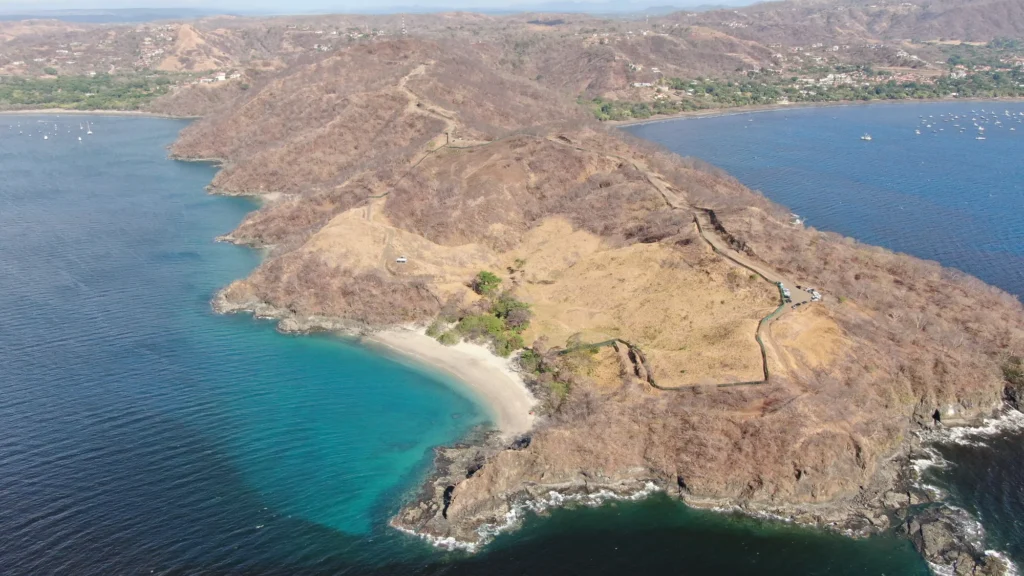
January is the month of the wind. The northern trade winds arrive and everything bends to them. The dry forest begins to thin — not yet bare (that’s February and March), but the foliage is going, and the wetlands start to shrink. Out at sea, the same wind that dries the land pushes the warm surface water offshore and pulls cold, nutrient-rich water up from the deep: the Papagayo Upwelling, one of only three of its kind in the entire tropical eastern Pacific. One wind writes the whole month, on land and at sea.
The smell of the zafra
There’s a smell, too. From January through April the mill at Hacienda El Viejo, near Filadelfia, is in full zafra — the sugarcane harvest — and the scent of fermenting cane drifts on the wind across Sardinal, Playas del Coco, Playa Hermosa and the Gulf of Papagayo. You can’t photograph it and you can’t Google it. It’s simply the smell of the dry season here.
Birds: the wetlands concentrate
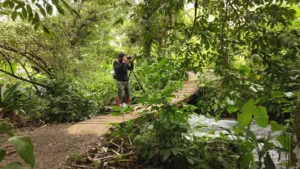
The birds gather. As the wetlands recede, the water birds concentrate: wood storks by the hundred, herons, egrets, northern migrants, and the jabiru — the tallest flying bird in Central and South America. These are the encounters at the heart of our private bird-watching & photography experiences.
Raptors, snakes and whales
The raptors follow the harvest. In the bajura, the Guanacaste lowlands, as the cane machines cut the fields, insects and rodents flee ahead of the blades and the raptors hunt in behind them. It’s in no guidebook. It happens every January. The snakes move, too, driven from cover by the constant wind — a gift if you’ve ever wanted to photograph one in the wild. And offshore, the whales: northern humpbacks with their calves, arrived from the coasts of California, Oregon and Washington to breed in our warm bays. The upwelling that chills the sea is the same one that fills it with food.
Culture: the fiestas of Santa Cruz
Mid-month, Santa Cruz holds the Fiestas Típicas Nacionales , held in honor of the Black Christ of Esquipulas, a celebration declared Intangible Cultural Heritage of Costa Rica in 2020 — marimba, the tope horse parade, traditional food, and corridas a la tica where the bull is never killed.
The honest part: dry-season fires
January is also when the first dry-country fires appear. It’s the dry season, and it shows.
Is January worth it?
Come — January is one of the best months to be in Guanacaste. Just go in with your eyes open on price: this is the country’s peak tourism demand, and lodging, dining and tours often run double or more what you’d pay in the green season. If guaranteed sunshine is worth the premium, January delivers it like no other month.
← December · Full month-by-month guide · February →
Planning a January trip? Design your experience with us →
By the Guanadreams team, led by Miller Contreras — naturalist guide, born and raised in Guanacaste.