



February is the driest, sunniest month in Guanacaste: close to ten hours of sun a day and almost no rain. The dry forest has dropped its leaves, which makes it the best month of the year to see and photograph wildlife, and Palo Verde reaches its peak, with tens of thousands of water birds crowding the last lagoons. The northern humpback whales are offshore with their calves. Expect strong trade winds, a cool sea, low waterfalls and peak-season prices, often double or more the green months. Best tours this month: a Palo Verde river cruise with Hacienda El Viejo, birding and wildlife photography, and the mangrove canoe safari at Playa Grande. Best for: photographers, birders, and anyone who wants the safest weather of the year.
February is the driest and sunniest month of the year in Guanacaste — close to ten hours of sun a day, and rainfall you can measure in single millimetres. If you want weather certainty, this is the safest bet on the calendar.
But that’s the answer every guide gives you. Here’s the one they don’t: February is also the best month of the entire year to see wildlife in the dry forest, and the reason is the thing most visitors think is a drawback.
The weather, honestly
Highs around 31°C (88°F), lows around 22°C (72°F), and barely a few millimetres of rain for the whole month — most years, less.
The trade winds are still blowing. Some years February is fiercer than January, some years gentler; it depends entirely on when the winds set in that season, and anyone who tells you they can predict it is guessing. The wind keeps the coast comfortable and the dirt roads dusty in equal measure.
The sea stays cool. That surprises people who came for bathwater. It’s the Papagayo Upwelling: the same wind that dries the land pushes warm surface water offshore and pulls cold, nutrient-rich water up from the deep. There are only three upwellings like it in the entire tropical eastern Pacific, and ours is one of them. Cold water is the price; what it feeds is the reward.
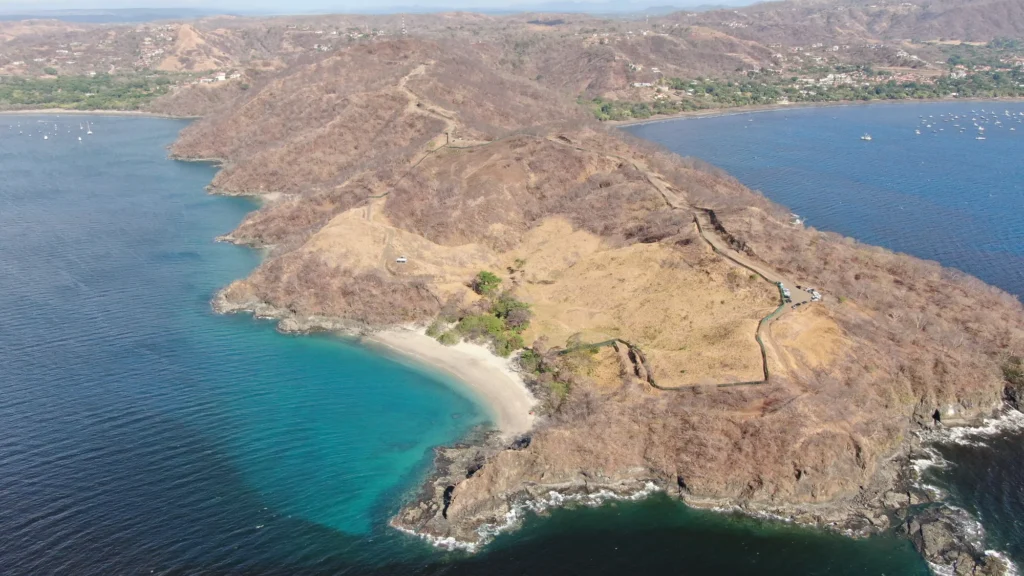
And the landscape is golden, not green. Some visitors arrive expecting rainforest and find something closer to an African savannah. We’d rather you know that before you land than feel misled when you get here.
Why a bare forest is the best forest
Here’s what the golden hills actually give you.
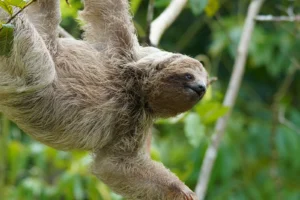
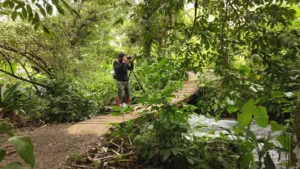
The trees have dropped their leaves — and a bare forest is a forest where you can finally see. No foliage between you and the animal. No branches in the frame. Hard, clean dry-season light. For anyone who came to watch wildlife, and especially for anyone carrying a camera, February and March are the two months that matter most.
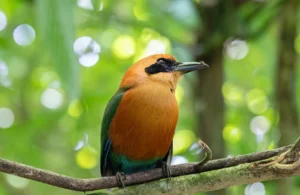
There’s a distinction worth understanding, because almost nobody makes it: seeing the most species and photographing them well are two different seasons. September through November brings the northern migrants and the longest bird lists of the year — but the canopy is thick and everything is hidden. February gives you fewer species and a completely open forest. If you want a list, come in autumn. If you want photographs, come now.
And the bare forest isn’t dead. Many of these trees photosynthesise through green, chlorophyll-rich bark — which is why the trunks glow faintly green when the light hits them. It’s also why they flower in this season: with no leaves to hide the blossoms, the flowers advertise straight to their pollinators.
Drive the back roads in February and the brown hills are dotted with yellow corteza amarilla and pink roble sabana — bare branches on fire with colour. The flowering is unpredictable; each tree responds to its own microclimate, so no two years look quite the same.
One more thing worth knowing about where you’re standing: the tropical dry forest is the most endangered major tropical ecosystem on Earth — more threatened than the rainforest. Nearby Santa Rosa, part of the Área de Conservación Guanacaste World Heritage Site, protects what UNESCO calls the best dry forest habitats from Central America to northern Mexico. When you walk it in February, you’re walking through something genuinely rare.
This is the season our private bird-watching and photography experiences are built around.
Palo Verde reaches its peak
February and March are the climax of one of the great bird spectacles in Central America.
As the wetlands of the Tempisque basin shrink through the dry season, the water birds concentrate into whatever is left — up to 60,000 to 80,000 birds crowding the remaining lagoons. Roseate spoonbills. Jabiru, the tallest flying bird in Central and South America. Wood storks, white ibis, herons and egrets by the hundred, with American crocodiles hauled out on the mudflats between them.
You don’t chase this. You sit in a boat and let it happen around you.
On the way we pass Hacienda El Viejo, the estate whose mill turns this province’s cane into nearly a quarter of all the sugar Costa Rica produces. The visit is worth its own morning: the trapiche, the ox-driven cane mill still turning; hand-pressed tortillas and aguadulce; rum followed from cane to barrel; and lunch in La Casona, a late-1800s hacienda house and National Heritage site that was once home to two Costa Rican presidents and to the Nicaraguan leader Somoza.
See our Palo Verde and El Viejo experience →
The smell you can’t photograph
From January through April the mill at El Viejo, near Filadelfia, runs the zafra — the sugarcane harvest — and the scent of fermenting cane drifts on the trade winds across Sardinal, Playas del Coco, Playa Hermosa and the Gulf of Papagayo.
You can’t photograph it. You can’t Google it. It’s simply what the dry season smells like here, and every guanacasteco knows it before they see a calendar.
Still offshore, still nesting
The northern humpback whales are here with their calves, down from the coasts of California, Oregon and Washington to breed in our warm bays. The same upwelling that chills the sea is the one that fills it with food.
And at Playa Grande, an hour and a half up the coast, the last leatherbacks of the season are still coming ashore — the largest sea turtles on the planet, at the most important leatherback beach in Costa Rica. Their numbers in the Eastern Pacific have fallen sharply, so seeing one is now a rare privilege. Their peak is December and January; February and early March are the closing nights.
Paddle the Playa Grande estuary on our wildlife canoe safari →
What’s happening in town
Late February brings the Fiestas Cívicas de Liberia — horse parades, live music, and corridas a la tica, the Costa Rican version where the bull is never killed. Liberia is close to the coast, so if your dates line up it’s an easy evening. Message us and we’ll take you.
The honest trade-off
February is peak season, and it prices like it. Lodging, dining and tours often run double or more what you’d pay in the green months. If your budget is the deciding factor, look at May, June or November instead.
The wind can be genuinely strong, and it carries dust — worth a buff and eye protection on open-air outings. The sea is cool. The waterfalls are low; if a big waterfall is high on your list, February is not the month for it and we’ll tell you so before you book.
Our verdict
Come in February if you want the safest weather of the year, the peak of the Palo Verde bird concentration, and the most photogenic the dry forest ever gets.
You’ll pay top rates — that part is real. But February gives you more for them than any other month of the high season. For photographers, for birders, and for anyone who would rather see the animals than search for them, this is the month.
← January · Full month-by-month guide · March →
Planning a February trip? Design your experience with us →
By the Guanadreams team, led by Miller Contreras — naturalist guide, born and raised in Guanacaste.