




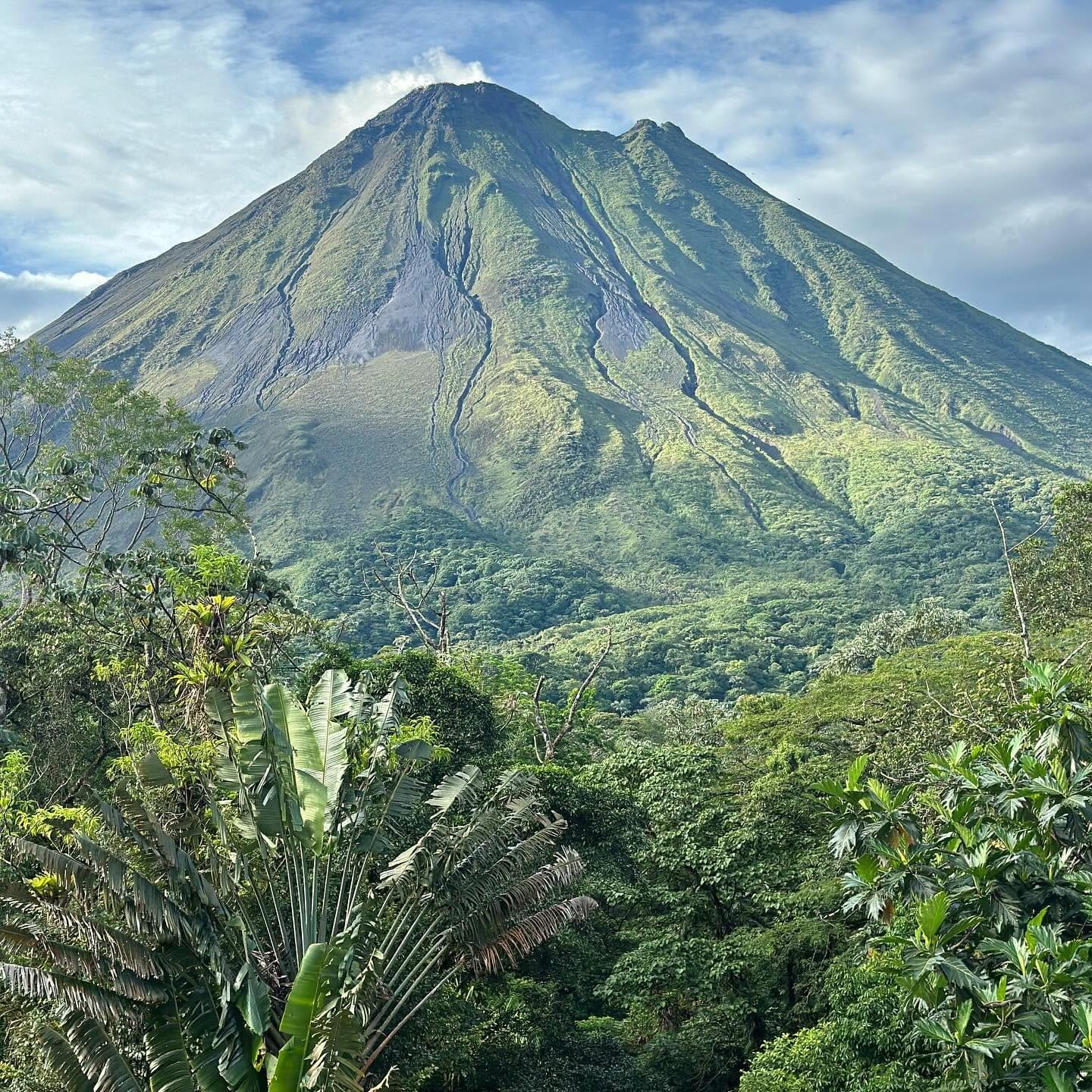
Inland, in Alajuela
Arenal sits in Alajuela, in the northern lowlands, three and a half to four and a half hours inland by road, depending on your hotel.
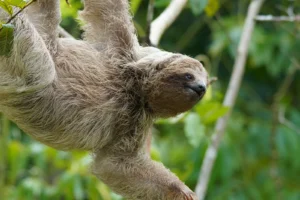 01 · NatureNature ExperiencesSloths, waterfalls and Río Celeste, with a local naturalist.Explore
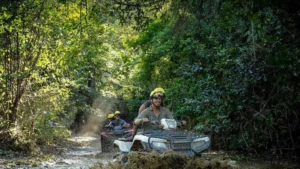 02 · AdventureAdventure ExperiencesATV trails, Tenorio rafting and canyon waterfalls.Explore
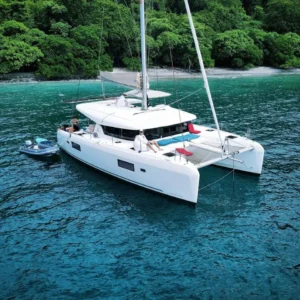 03 · OceanOcean ExperiencesPrivate catamaran, sunset sailing and sport fishing in Papagayo.Explore
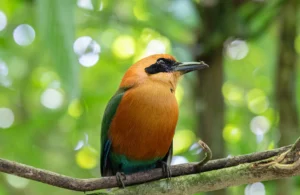 04 · BirdingBird WatchingPrivate birding days, sites and itineraries.Explore
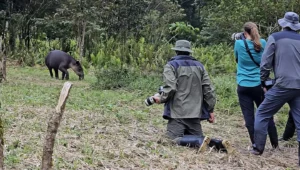 05 · PhotographyBird & Wildlife PhotographyPrivate photo days planned around the light.Explore
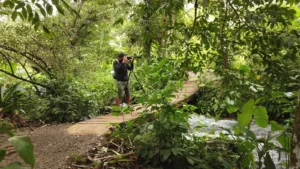
One day or a whole trip across Costa Rica. Tell us your dates and what you want to see; we build each day around you, with hotel pickup.
Design your trip → WhatsApp +506 7036 9225Three and a half to four and a half hours inland from the Guanacaste coast of Costa Rica — so we offer two private ways to go: a day trip, or one or two nights in La Fortuna.
Arenal and La Fortuna sit in Alajuela, three and a half to four and a half hours inland from the Guanacaste coast of Costa Rica depending on your hotel — so we offer two private ways to go: the Arenal Day Trip, with hanging bridges, sloths and a cacao farm, leaving before sunrise (from $450 per person, minimum 4), or a La Fortuna overnight, where you stay one or two nights and add hot springs, the waterfall or the volcano hike (from $800 per person for one night).
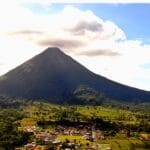
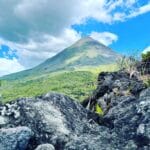
Arenal is the volcano people picture when they picture Costa Rica — a near-perfect cone with rainforest running up its flanks and a lake at its feet. It is also three and a half to four and a half hours inland from your hotel, in a province most visitors to this coast never enter.
That distance is not a detail. It is the single thing that decides how you should do this trip, and it is why we sell two versions instead of one. Below you will find both, priced honestly, along with what the volcano is actually doing these days — which is not what the brochures are still selling.
Arenal erupted for forty-two years without stopping. From the 29th of July 1968 until October 2010 — one of the longest continuous eruptions recorded in the Western Hemisphere. Before that it had been quiet for roughly four and a half centuries, and people here called it Cerro Arenal, a hill. The 1968 reactivation took the villages of Tabacón, Pueblo Nuevo and San Luis with it.
Since 2010 the volcano has been resting. It is the longest quiet stretch since 1968: weak steam from the craters, nothing more. There is no visible lava at night, and there has not been for over fifteen years.
We say this plainly because half the brochures sold in this country still show a glowing red cone. Those photographs are old. If you come expecting lava, you will be disappointed, and that is not a good way to spend a day.
What is still true is the mountain and the forest around it — and that forest is a different world from the dry forest of the Guanacaste coast. OVSICORI and the Smithsonian still classify Arenal as active, and volcanologists expect it to wake again. Nobody will tell you when.
Arenal is not in Guanacaste. People are often surprised by this, because every hotel desk on the coast sells a trip there.
The volcano sits in Alajuela, in the northern lowlands, three and a half to four and a half hours inland by road, depending on your hotel. You leave the dry forest behind somewhere around Cañas and the landscape changes underneath you — drier to wetter, thorn and deciduous to something green all year. By the time you reach the lake, you are in a different country to the one you woke up in.
That distance is the whole reason there are two ways to do this, and not one.
Both are private to your group, with a minimum of four guests, door-to-door pickup and your own naturalist guide. The difference is how much of the day you spend on the road.


Taxes and door-to-door pickup included. Tell us your group and your hotel — we confirm the exact quote on WhatsApp.
La Fortuna and Arenal, Alajuela, Costa Rica. Drag to explore.


| Distance | 3.5–4.5 hours each way from the Guanacaste coast, depending on your hotel |
|---|---|
| Price | From $450 per person · minimum 4 guests, taxes included |
| The day | Sloth encounter · hanging bridges · rainforest hike · chocolate tour · lunch |
| Wildlife | Sloths, at home in Arenal’s wet forest, not on the dry coast |
| Included | Private naturalist guide, private transport, lunch, the chocolate tour, all entrance fees and bottled water |
| Not included | Alcoholic drinks and gratuities |
| Difficulty | Easy–moderate |
| Style | 100% private · minimum 4 guests · English or Spanish |
| Pickup | Door to door from your hotel · 5:30–6:00 am start |
| Cancellation | Full refund of your deposit if you cancel at least 72 hours before your start time Travelling between December 15 and January 15, during Holy Week or Thanksgiving week? Peak dates are paid in full and have longer cancellation windows — see our booking terms. |
Last verified October 2026 by Miller Contreras, naturalist guide and wildlife photographerThe mountain, the forest around it, and hot water coming out of the ground.


There is a simple test for whether a rainforest trip is worth the drive, and it is the toucan.
In more than twenty years of guiding on the Papagayo Peninsula, one of us has seen a single toucan there. One bird, once — a Keel-billed Toucan, and it was a genuine surprise. Around Sardinal, further inland, Collared Aracaris turn up now and then, but they do not live there either. These are not birds of this coast. The dry forest that makes Guanacaste what it is — thorny, deciduous, brilliant in the green season and bare in the dry one — is simply not their habitat.
Drive an hour and three quarters to three hours inland, depending on your hotel, and the arithmetic changes completely. In the Tenorio rainforest corridor, Yellow-throated Toucans appear on more than seven out of ten birding checklists submitted to eBird. Keel-billed Toucans on six. Collared Aracaris on four. Those are not our numbers; they are the public record of every birder who has walked those trails, and you can check them yourself before you book.
The same gradient holds for almost everything people hope to see. Sloths live in that wet forest, not in the dry one. The frogs people photograph — the red-eyed tree frog on every postcard in the country — need humidity that this coast does not hold for most of the year. Howler monkeys you will hear from your hotel; spider monkeys you will not.
You will see wildlife on this day, and all of it is wild — the forest decides which animals come out. What we can tell you is where the odds change, and by how much — and that is the honest reason to make the drive.
Take the day if you have a fixed itinerary, if the volcano is a box you would like to tick honestly rather than tick badly, and if you do not mind a long day in exchange for sleeping in your own bed. It works. Thousands of people do it and go home happy.
Take the overnight if you would rather not spend seven to nine hours in a vehicle on a day of fourteen hours or more, if hot springs in the evening or a walk in the forest after dark appeal to you, or if anyone in your group would find a pre-dawn start and a late return genuinely hard.
If you cannot decide, write to us and describe your group. We will tell you which one we would book, and we will say so even when it is the cheaper one.
“We had an AMAZING trip with some pleasant surprise stops! Our trip consisted of seeing sloths, an authentic Costa Rican meal and going to the Arenal Hanging Bridges with a great view of Arenal Volcano. Miller went above and beyond to make this a very memorable trip for our family! He was very knowledgeable and we learned so much about Costa Rica.”
 TripadvisorVerified review
If your week is tight and Arenal is one item on a long list, take the day. If you would rather not spend seven to nine hours of it in a vehicle, take the overnight. The overnight costs roughly twice as much, and the reason is simple: your guide and your vehicle are yours for two days instead of one.
Three and a half to four and a half hours each way, depending on your hotel. There is no shortcut and no faster road. Anyone quoting you two hours has not driven it.
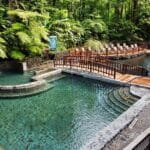
That depends on what you came for. If you wanted lava, no — and we would rather tell you now. If you want rainforest, hanging bridges, hot water coming out of the ground and a very good chance of wildlife you will not see on the coast, then yes, comfortably.
Some of it. Howler monkeys, iguanas, white-throated magpie-jays and a great deal more live in the dry forest and we run excellent days without leaving Guanacaste. But toucans, sloths in numbers and the classic rainforest species are a different habitat, and that habitat starts about three hours from here.
Yes, subject to availability. Both versions are private to your group, with a minimum of four guests. We are usually able to arrange things with a few days’ notice, though the dry season fills up.
A week is comfortable. In January, February and March, closer to three. If you are already in Costa Rica and something opened up in your week, message us anyway — sometimes it works.
Seventy-two hours before your tour begins, counted from the start time and not the day. Cancel before that and your deposit comes back in full.
Arenal is three and a half to four and a half hours inland, and for some weeks that simply does not fit. If what you wanted was a volcano and hot springs, Miravalles gives you both without leaving Guanacaste. If it was rainforest, waterfalls and a turquoise river, the Sloth & Waterfall Rainforest Combo at Tenorio is about an hour and three quarters from Papagayo and Playas del Coco.
And if you are weighing Arenal against Tenorio, know that it is not the same trip made longer. Tenorio is a cluster of forested peaks that spends most days inside its own cloud. Arenal is the youngest volcano in Costa Rica — less than 7,500 years old, 1,633 metres high — standing alone above the plains, the closest thing the country has to a perfect cone. Around it are lava fields the forest is still reclaiming, hot springs heated by the same volcano, and Lake Arenal, the largest in the country. Tenorio is rainforest; Arenal is rainforest with a volcano in it.
Tell us what your week looks like and we will say which one we would book — including when the answer is Arenal after all.
Arenal stopped erupting in 2010, and we will tell you that before you book — because half the brochures sold in this country still won’t. Our guides’ eBird lists are public — you can read them before you write.
Prefer a form? Write to us here → · Part of our Nature Experiences · Meet the guides who drive this road every week →