



Best months
December–March is the peak — residents, breeders, and northern migrants together. The dry season shrinks the lagoons and concentrates the birds, for easier sightings and photos.
 01 · NatureNature ExperiencesSloths, waterfalls and Río Celeste, with a local naturalist.Explore
 02 · AdventureAdventure ExperiencesATV trails, Tenorio rafting and canyon waterfalls.Explore
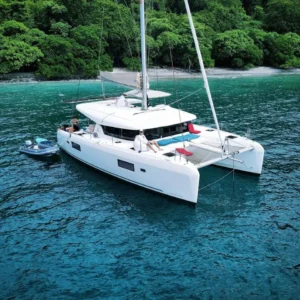 03 · OceanOcean ExperiencesPrivate catamaran, sunset sailing and sport fishing in Papagayo.Explore
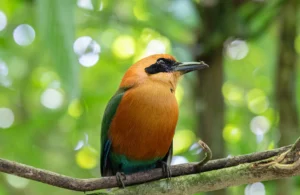 04 · BirdingBird WatchingPrivate birding days, sites and itineraries.Explore
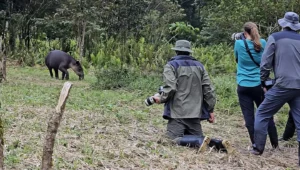 05 · PhotographyBird & Wildlife PhotographyPrivate photo days planned around the light.Explore
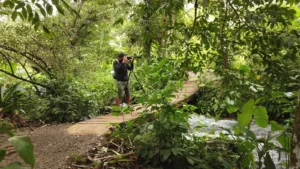
One day or a whole trip across Costa Rica. Tell us your dates and what you want to see; we build each day around you, with hotel pickup.
Design your trip → WhatsApp +506 7036 9225Palo Verde, the Tempisque rice fields and the Gulf of Papagayo mangroves — three lowland habitats of Guanacaste, Costa Rica, in one private day.
Wetlands, dry forest and mangrove birding covers three lowland habitats of Guanacaste, Costa Rica, in one private day: the Palo Verde wetlands, a Ramsar site and home of the jabiru, where waterbirds crowd the shrinking lagoons in the dry season; the flooded rice fields of the Tempisque; and the coastal mangroves of the Gulf of Papagayo. With a bird-specialist naturalist guide, from $700 per private group of 2.
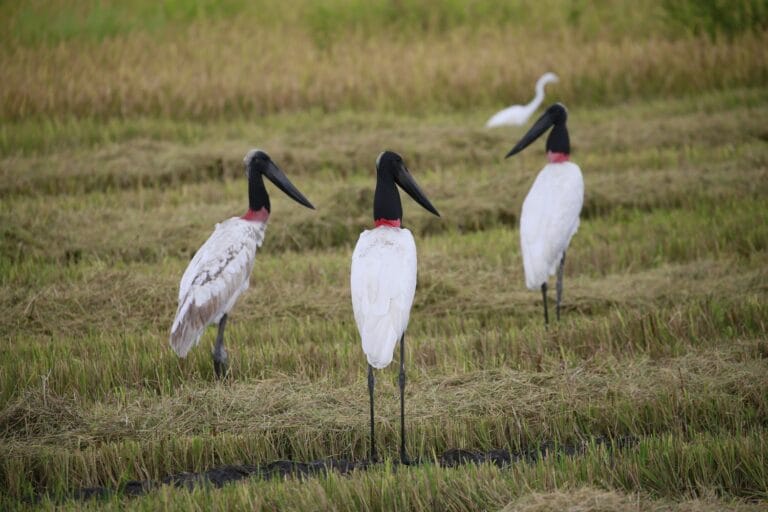
Down in Guanacaste’s lowlands, three habitats sit close together and each one holds birds the others don’t. We work the wetlands of Palo Verde — a Ramsar site where, in the dry season, thousands of waterbirds crowd the shrinking lagoons — then the flooded rice fields of the Tempisque, and the coastal mangroves of the Gulf of Papagayo.
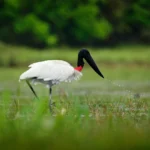
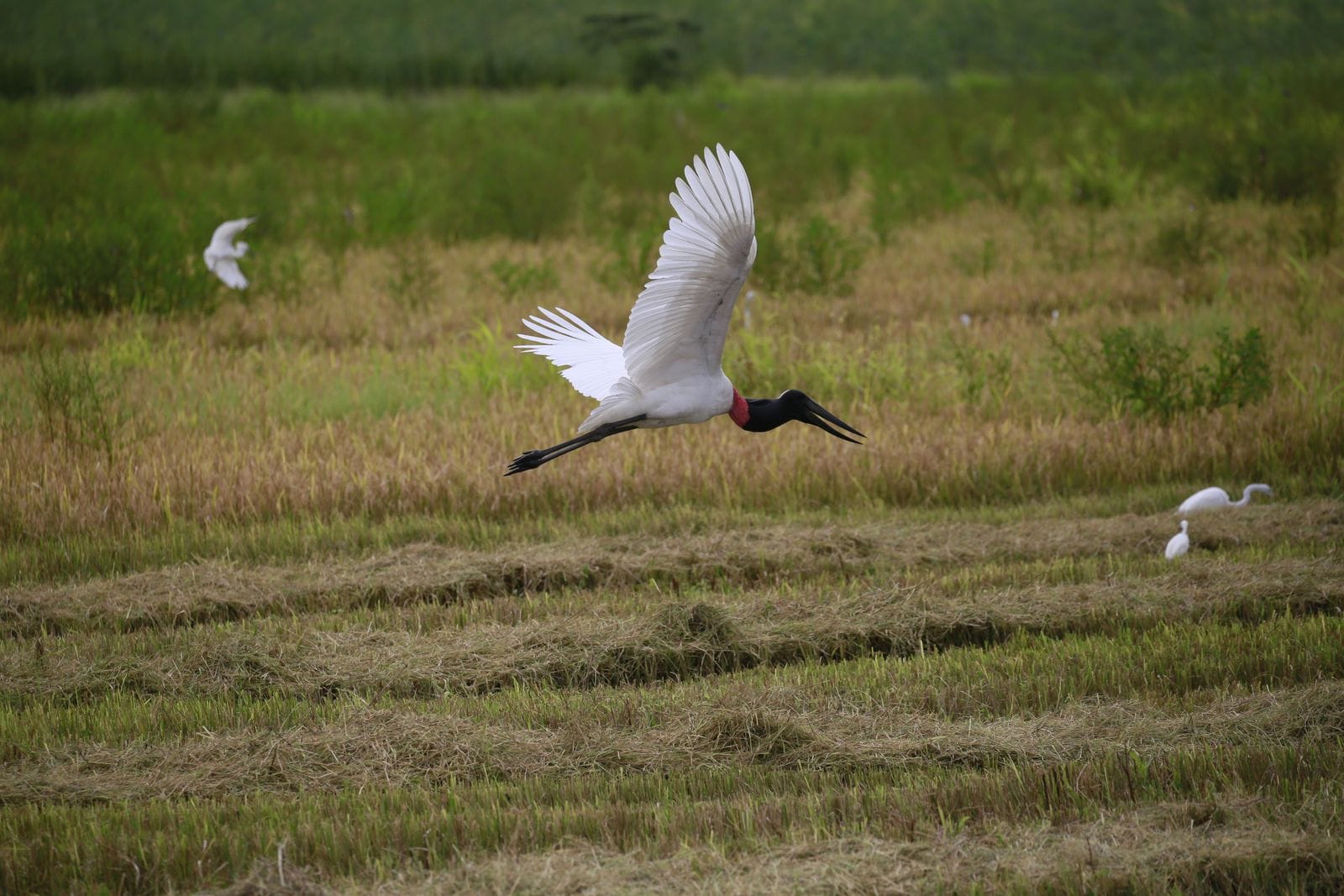
The prize is the jabiru, Central America’s tallest wading bird and Palo Verde’s rarest jewel, but you’ll also find roseate spoonbills sweeping the shallows, wood storks stalking the mud, and boat-billed herons hiding in the mangroves. December through March is the peak, when resident, breeding, and migrant birds all crowd in at once. Your guide knows the tides, the back channels, and the trees the big birds return to.
The jabiru is the prize, not a promise — so we would rather show you the numbers. Every figure below comes from the public eBird records for Palo Verde, the anchor of the day — the share of complete checklists that report each species.
| Species | Reported on |
|---|---|
| Black-bellied Whistling-Duck | 65% |
| Northern Jacana | 65% |
| Great Egret | 59% |
| Purple Gallinule | 43% |
| Bare-throated Tiger-Heron | 40% |
| Limpkin | 34% |
| Jabiru — yearly average (March) | 16% (37%) |
| Scarlet Macaw | 16% |
The jabiru peaks in the dry season — in March it shows up on more than a third of checklists. Seeing one is a good day, not a guarantee.
Palo Verde, the Tempisque and the Gulf of Papagayo, Guanacaste, Costa Rica. Drag to explore.



| Duration | Full day, early start · about 5 hours of birding in the field, plus the drive from your hotel |
|---|---|
| Price | From $700 per private group of 2, taxes included |
| Where | The Palo Verde wetlands, the flooded rice fields of the Tempisque and the coastal mangroves of the Gulf of Papagayo |
| Birds | Jabirus and waterbirds crowding the shrinking lagoons · over 300 species pass through the corridor · peak December to March |
| Included | Bird-specialist naturalist guide, private transport, entrance fees, binoculars and a spotting scope, bottled water, snacks and lunch |
| Not included | Gratuities |
| Difficulty | Easy |
| Style | 100% private · guide, transport and route are yours alone · photography-friendly · English or Spanish |
| Pickup | Tamarindo, Las Catalinas, Reserva Conchal, the Riu resorts, Coco, Hermosa, Panamá, the Papagayo Peninsula and Liberia · also Bijagua and La Fortuna, same price |
| Cancellation | Full refund if you cancel at least 72 hours before your pickup time Travelling between December 15 and January 15, during Holy Week or Thanksgiving week? Peak dates are paid in full and have longer cancellation windows — see our booking terms. |
Last verified October 2026 by Miller Contreras, naturalist guide and wildlife photographerBirding across three habitats — Palo Verde wetlands, the Tempisque rice fields, and the Gulf of Papagayo mangroves.


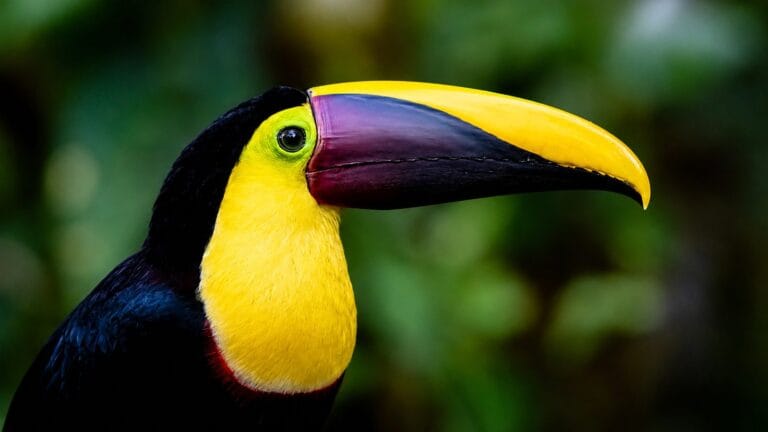
Guanacaste and its highlands hold three distinct forest types within a few hours of each other, and the birds change completely between them. Most visitors only ever see one. If you have more than a single morning, pairing two of these gives you a species list you cannot build in any one of them alone. With ten days, our birding trip from Liberia takes in all three, from the Tempisque wetlands to the Valle de los Quetzales.

December through March is the peak, when resident, breeding, and northern migrant birds all overlap and the dry season concentrates them in the shrinking lagoons. November and April are also excellent, and the mangroves stay productive into May–August for nesting.
Across three habitats in Guanacaste’s lowlands: the Palo Verde wetlands (a Ramsar site), the flooded rice fields of the Tempisque (around Bagaces and Filadelfia), and the mangroves of the Gulf of Papagayo (Playa Panamá, Playa Hermosa, Iguanita, Cabuyal).
The jabiru, roseate spoonbill, and wood stork in the wetlands; the boat-billed heron in the mangroves; plus hard-to-find species such as the pinnated bittern in the rice fields.
Mostly easy, flat walking. A boat segment — through the mangroves or along the Tempisque — can be added depending on your itinerary and the species you most want to see.
Not at all. All levels are welcome, any camera works, and your guide adapts the pace and shares hands-on photography tips.
Seventy-two hours before your birding day begins, counted from your pickup time and not the day. Cancel before that and you get a full refund. We ask for three days because the reserve and your private guide are booked for your group alone.
Our private Wetlands & Dry Forest birding day starts at $700 per private group of 2 guests, taxes included. It is a full-day experience, with about 5 hours of birding in the field, and it is 100% private: your naturalist guide, transportation and route are yours alone. The price includes a private naturalist guide specialized in birds, private transportation, park entrances, binoculars and a spotting scope, bottled water, snacks and lunch. We offer hotel pickup from Tamarindo, Las Catalinas, Reserva Conchal, the Riu resorts at Playa Matapalo, Playas del Coco, Playa Hermosa, Playa Panamá, Liberia and the Papagayo Peninsula, and in Bijagua and La Fortuna at the same price. We’ll confirm your exact quote on WhatsApp based on your group size and pickup location. See how private tour prices compare with shared tours.
Tell us your group’s pace and we’ll build the private day around it. Our guides’ eBird lists are public — you can read them before you write.
Prefer a form? Write to us here → · Part of our Nature Experiences · Bird Watching in Costa Rica