


The Lodge: Gardens and Feeders
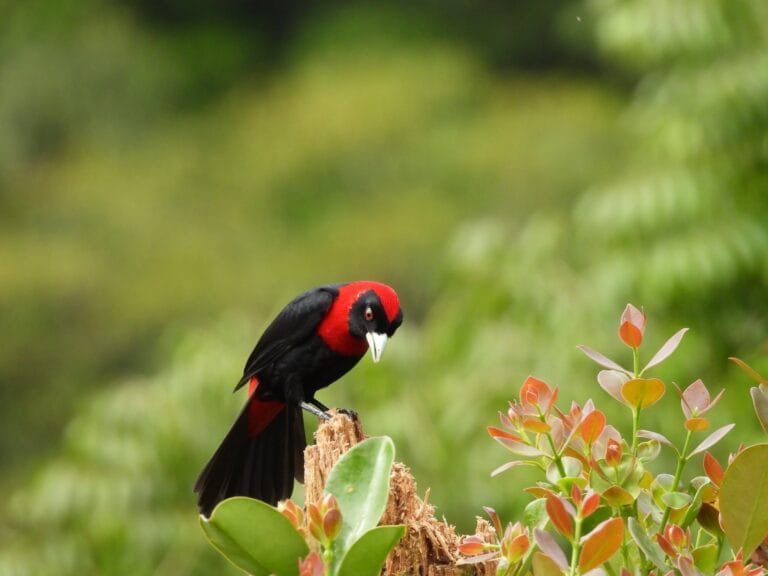
At Romain’s lodge every cabin faces a garden planted with flowers that hummingbirds feed on, and the feeders bring in hummingbirds and tanagers all day. The feeders are kept by the lodge.
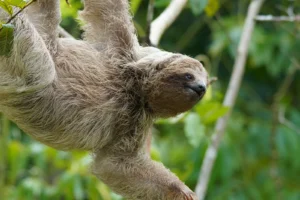 01 · NatureNature ExperiencesSloths, waterfalls and Río Celeste, with a local naturalist.Explore
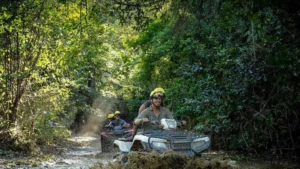 02 · AdventureAdventure ExperiencesATV trails, Tenorio rafting and canyon waterfalls.Explore
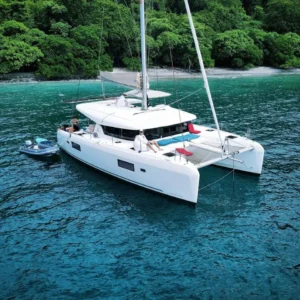 03 · OceanOcean ExperiencesPrivate catamaran, sunset sailing and sport fishing in Papagayo.Explore
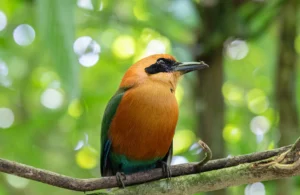 04 · BirdingBird WatchingPrivate birding days, sites and itineraries.Explore
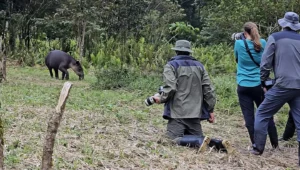 05 · PhotographyBird & Wildlife PhotographyPrivate photo days planned around the light.Explore
One day or a whole trip across Costa Rica. Tell us your dates and what you want to see; we build each day around you, with hotel pickup.
Design your trip → WhatsApp +506 8540 7408Bird photography on two cloud-forest levels, fifteen minutes apart: covered decks and hummingbird gardens at about 1,200 m, quetzal trails at about 1,500 m. A small private reserve above San Ramón, run by two brothers who grew up there, for a private day or an overnight from Guanacaste, Costa Rica.
The Reserva Natural Valle de Los Quetzales, in Bajo La Paz, San Ramón, Alajuela, Costa Rica, gives birders and photographers two cloud forests about fifteen minutes apart. At Romain Arias’s lodge, about 1,200 m, you shoot from covered decks over flower gardens and feeders, with an upper feeder that looks out over the open valley. In the reserve, about 1,500 m, local guides know the quetzal’s fruiting trees: the Resplendent Quetzal is on 77% of eBird checklists in March and 85% in May, the endemic Coppery-headed Emerald on 36% to 60% in every month with enough data, and the Three-wattled Bellbird calls from February to August. Recorded, not promised. Come for a private full day from the Guanacaste, Costa Rica coast, or spend a night at the lodge.
Not the “Valley of the Quetzals” in Dota. That name usually means San Gerardo de Dota, south of San José, at about 2,200 m. Valle de los Quetzales, San Ramón is a different reserve, at about 1,200 to 1,500 m and much closer to Guanacaste, Costa Rica.
The people
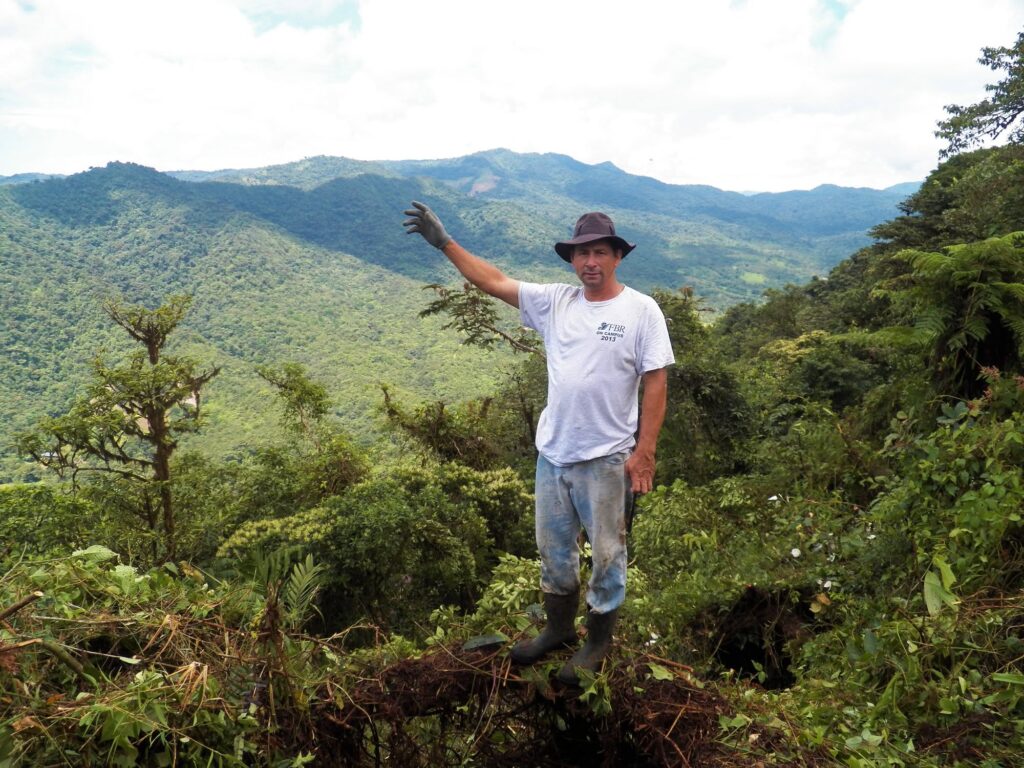
Valle de los Quetzales is the work of two brothers born in Bajo La Paz, Ignacio “Nacho” Arias and Jesús Romain Arias. As a boy, Romain loved birds so much that he was up at four every morning, waiting for daylight to go out and catch them, and he kept them in cages so he could look at them. That was decades ago.
As young men the brothers farmed the land and cut trees without thinking about it, until they saw they were clearing away the birds they loved. They stopped cutting, began replanting the forest around their homes and opened it to birdwatchers when almost no one came to Bajo La Paz for birds.
Today they put up nest boxes for the quetzal with a local association and guard the active nests, and that care is what made the valley known among birders.
They also open the reserve to science. In 2023 they let researchers onto the reserve to catch Golden-winged Warblers for a radio-tracking study; this songbird flies down from North America every winter. The study followed 69 warblers from Costa Rica and was published in Ornithological Applications in 2025.
The brothers began replanting the forest and opened it to birdwatchers when almost no one came to Bajo La Paz for birds.
Why Valle de los Quetzales
Most quetzal days in Costa Rica mean driving between several sites. Valle de los Quetzales is one small reserve where the local guides know the quetzal nests and the trees it feeds in, and where, fifteen minutes away at Romain’s lodge, the hummingbird feeders are busy from first light. Twenty-five hummingbird species have been recorded here, nine of them on more than 10% of eBird checklists, so a photographer can fill the day with a single short drive. Miller first came up here to find the one bird the Guanacaste coast had never shown him; it was not nesting season, and after two hours of walking a male perched for two minutes.
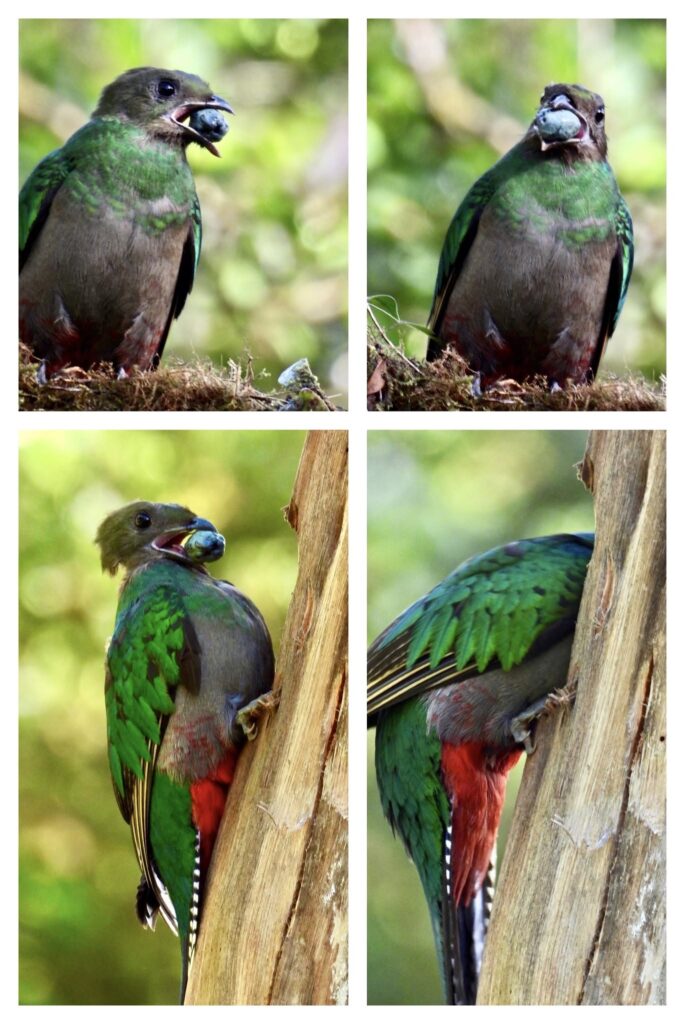
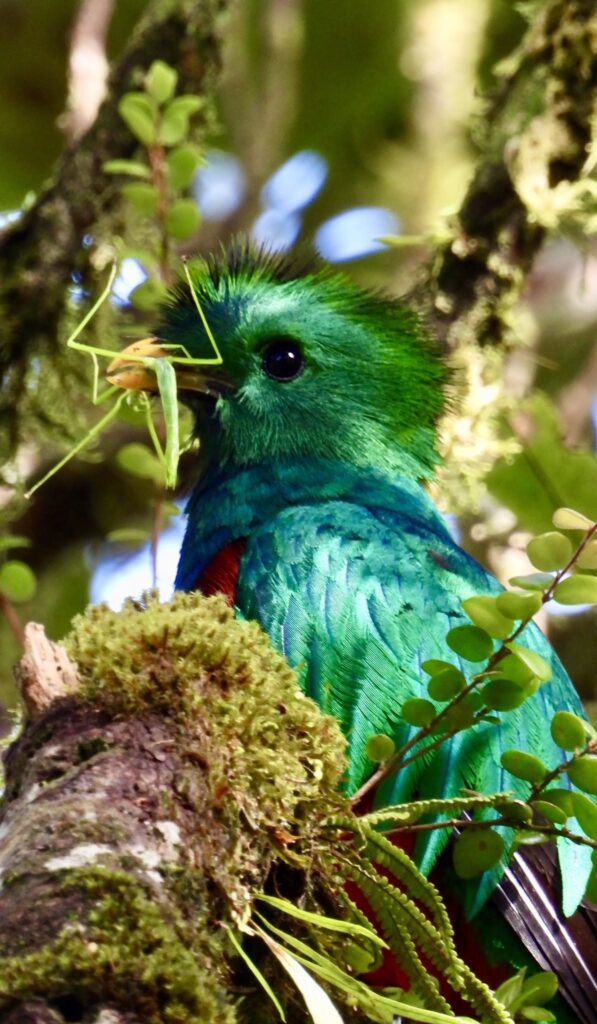
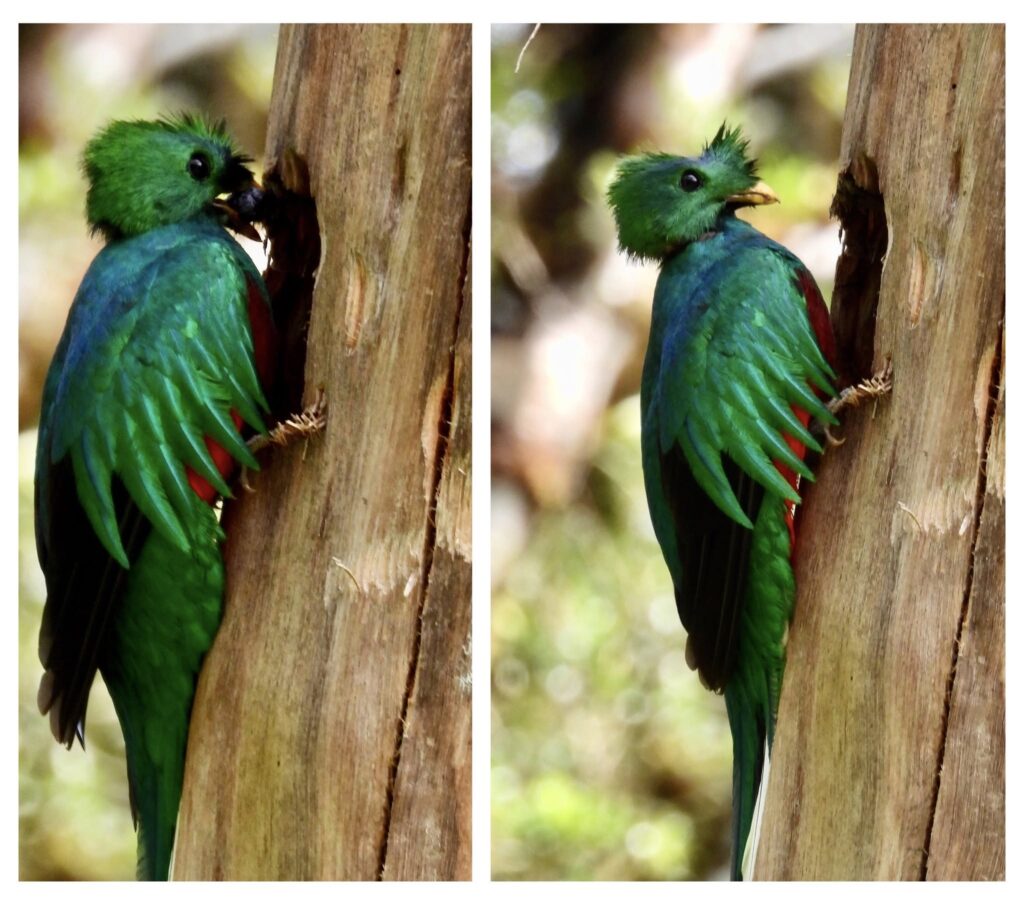
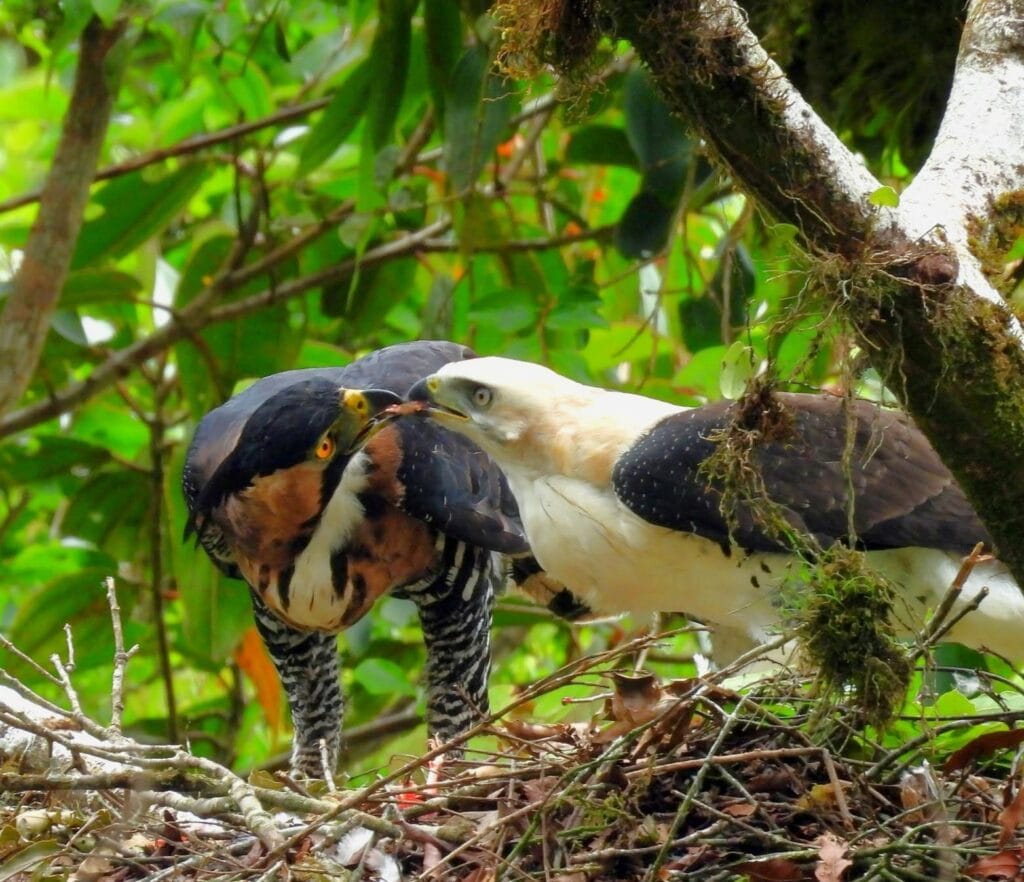
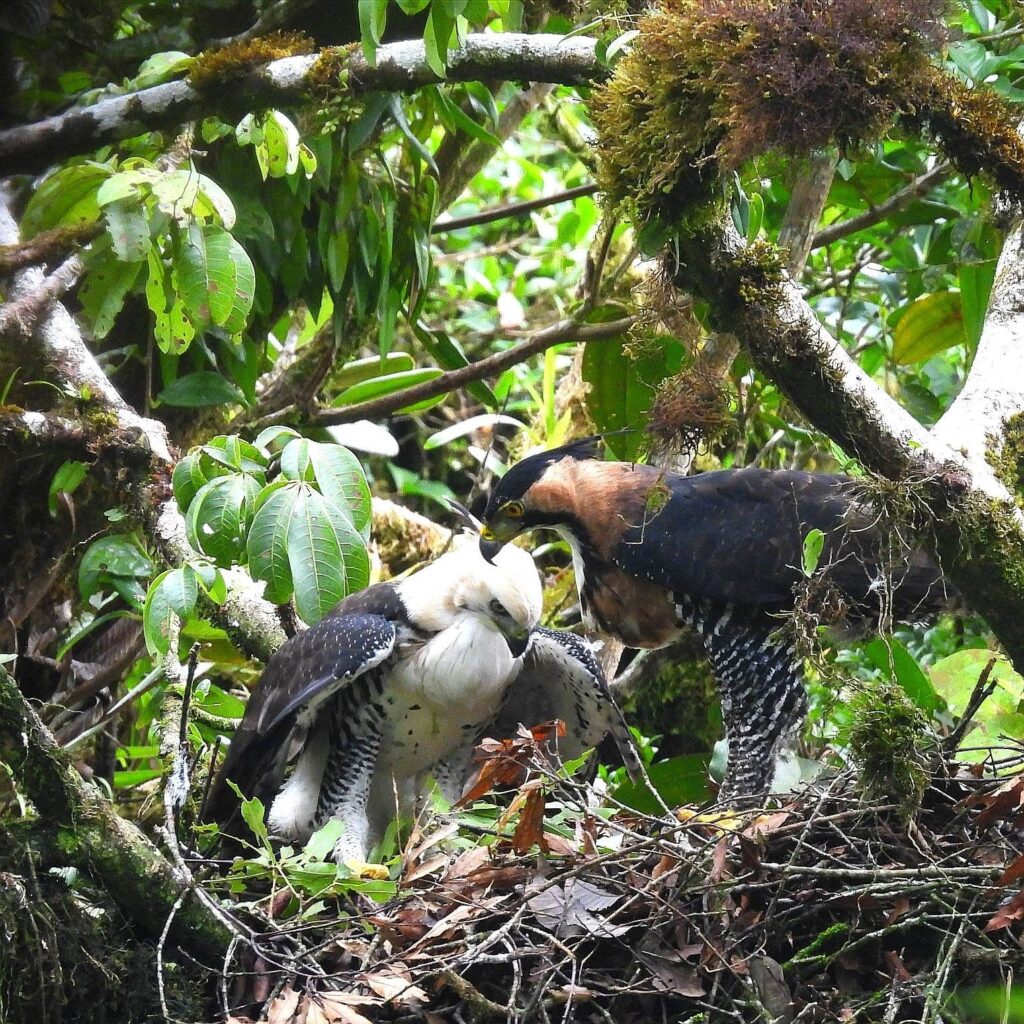
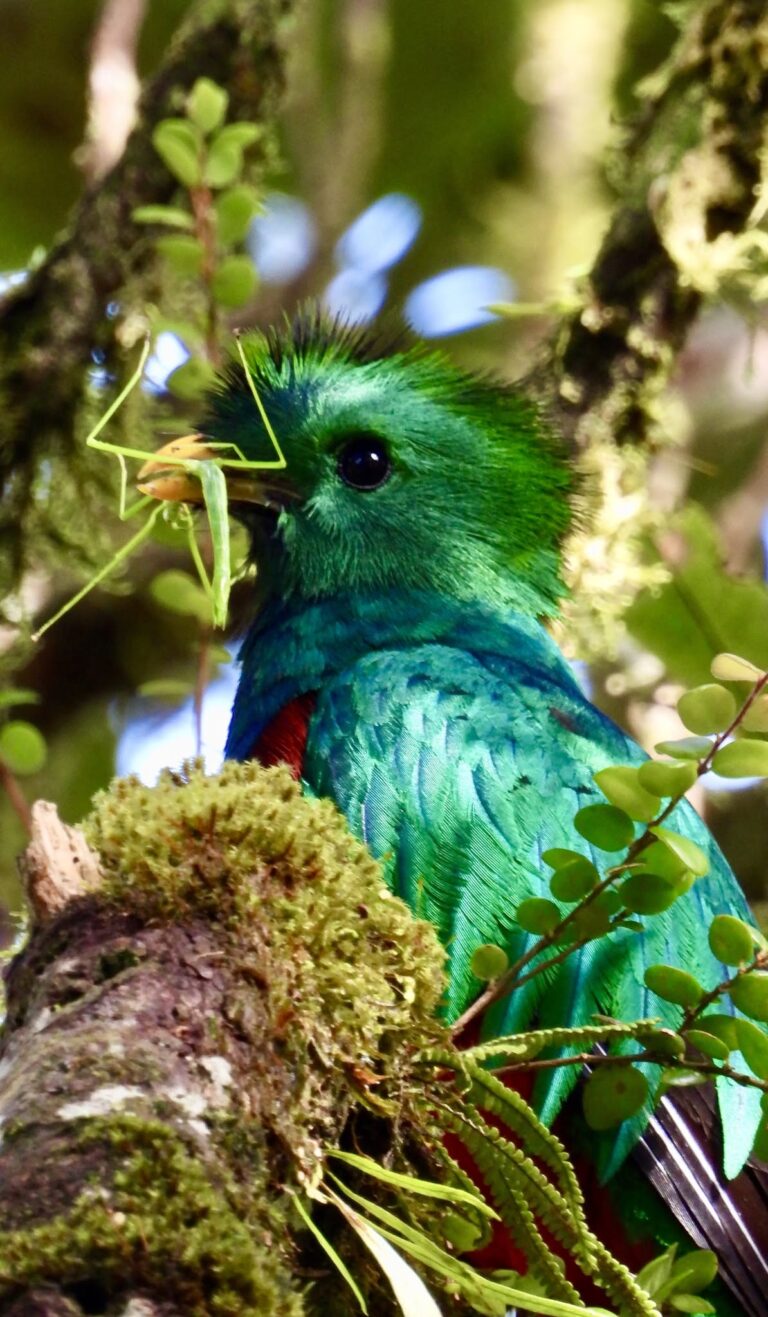
A pair raising their chicks at the reserve: the female bringing food to the nest, the male with a katydid for the chick, and the male at the nest hole. Photos: Lisa Robertson.
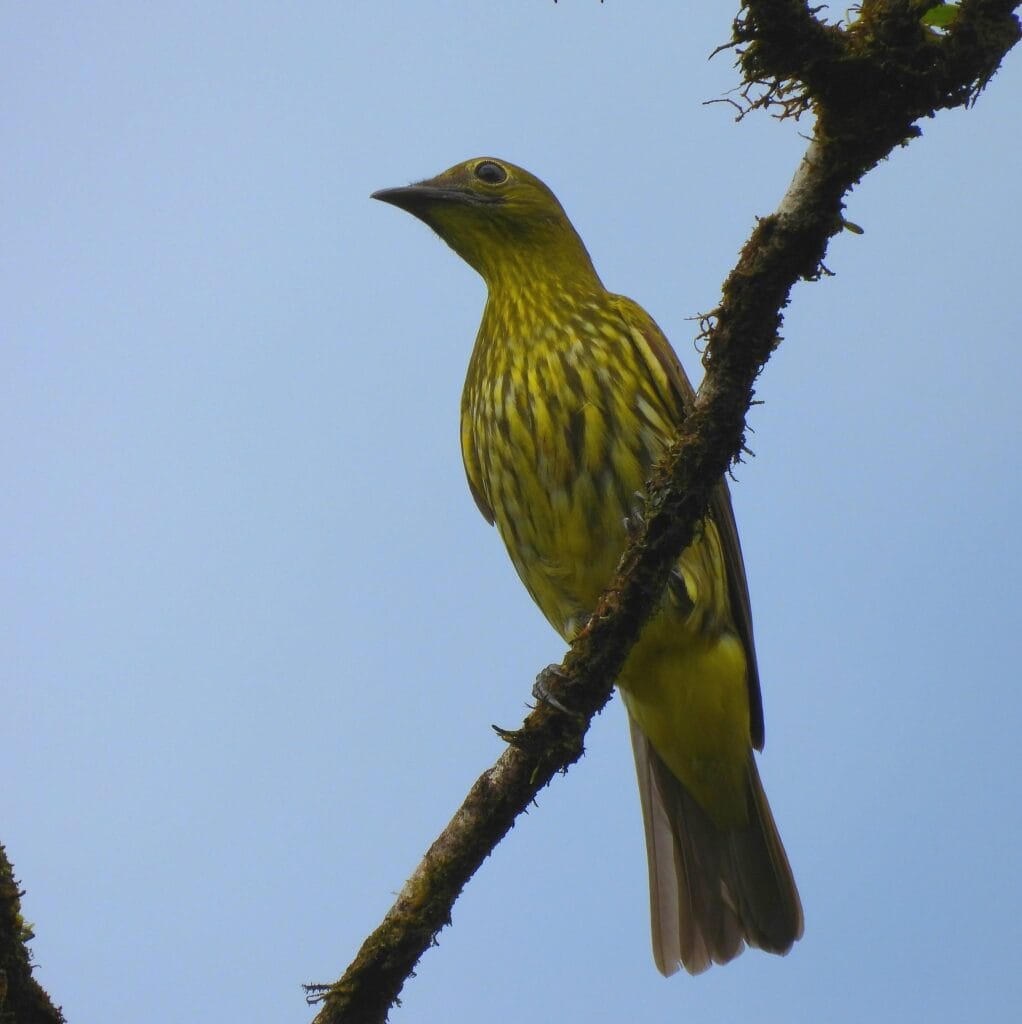

The other star
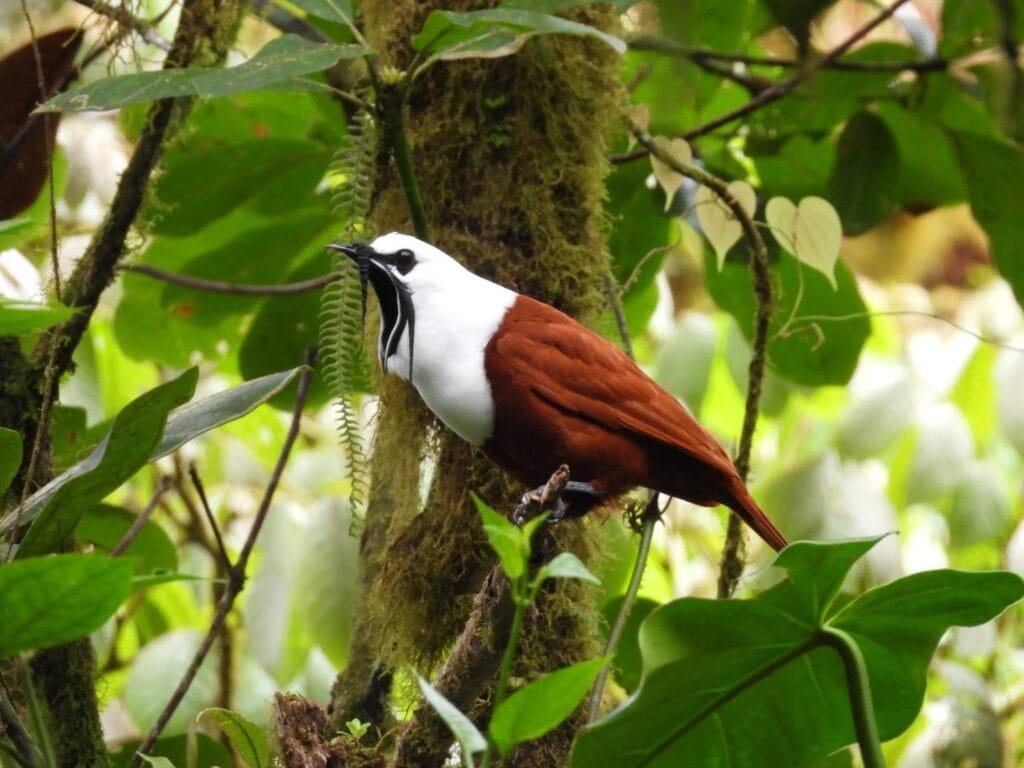
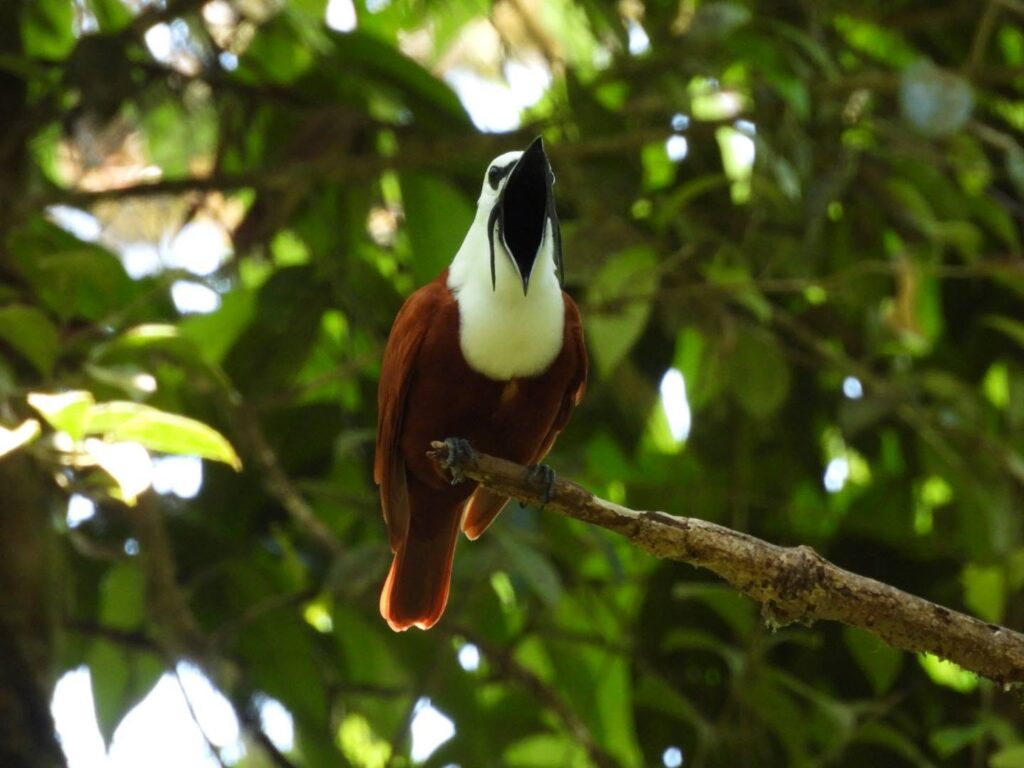
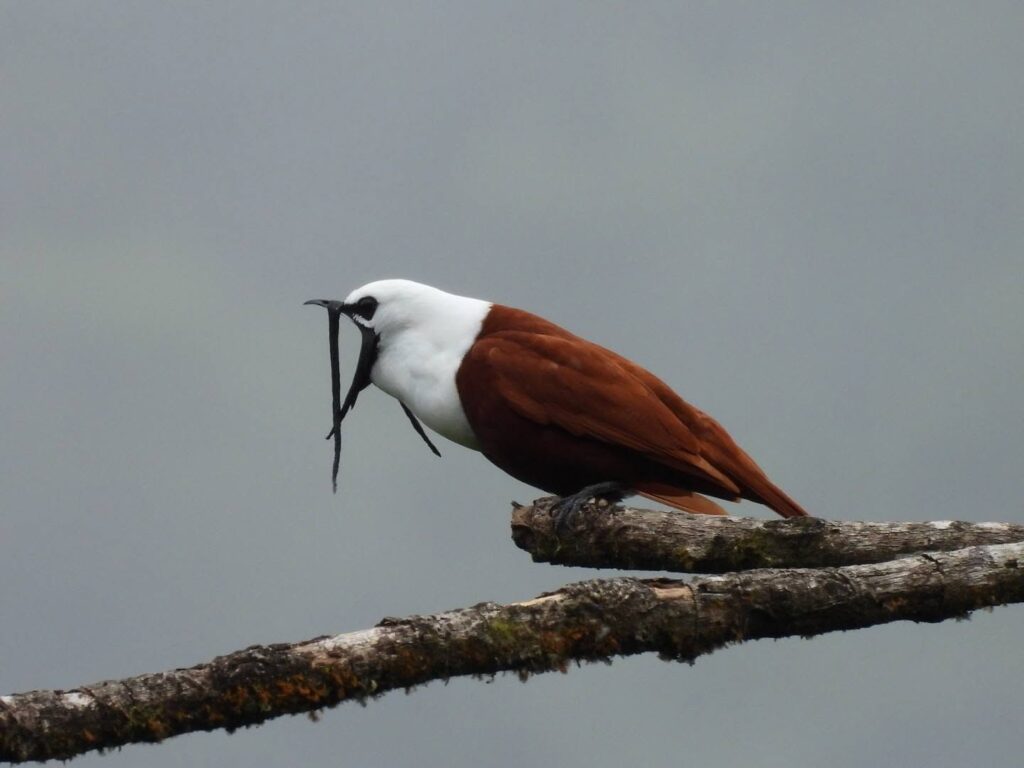
From February to August the reserve guides hear the Three-wattled Bellbird, the pájaro campana, calling across the valley. The male is chestnut with a white head, and three thin black wattles hang from the base of his bill. His call is a loud, metallic “bonk” that carries more than half a mile, so you usually hear him long before you see him.
Like the quetzal, the bellbird depends on the fruit of the laurel family, the wild avocados called aguacatillo here, so the same fruiting trees can bring in both birds. After nesting it moves down the mountains, following ripe fruit.
We follow the call and find him in the canopy with the spotting scope. We never play recordings to call him in.
The lodge and the reserve
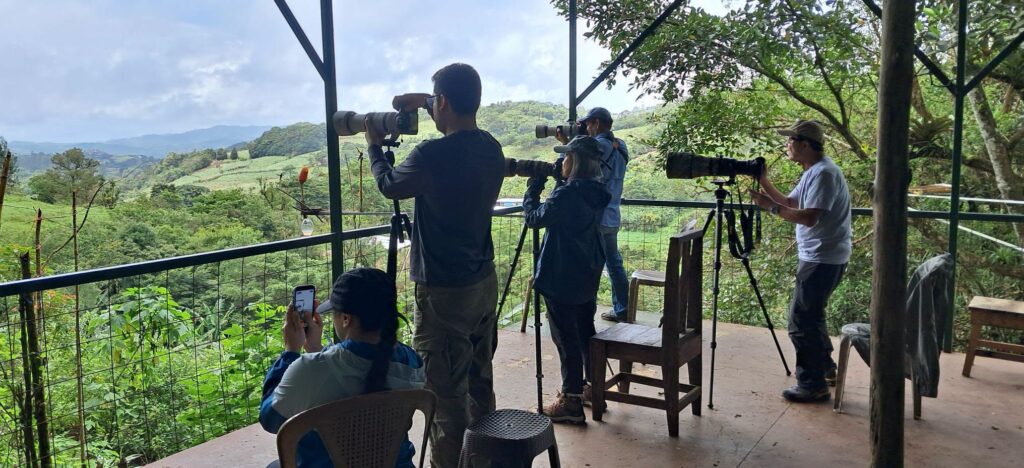
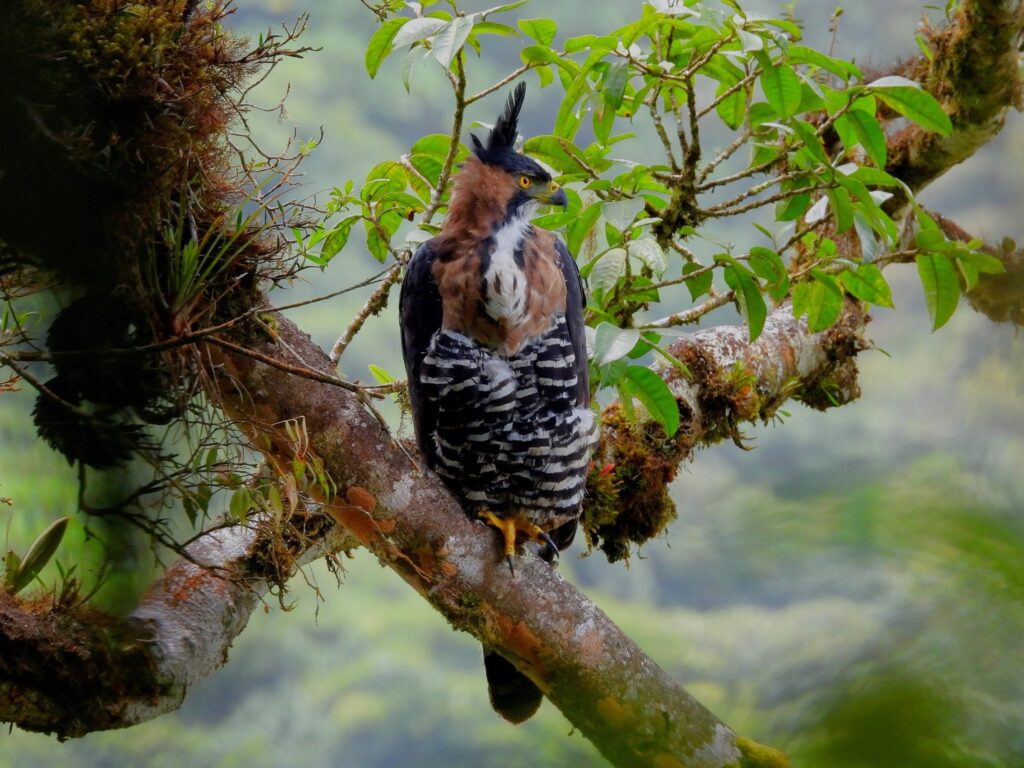
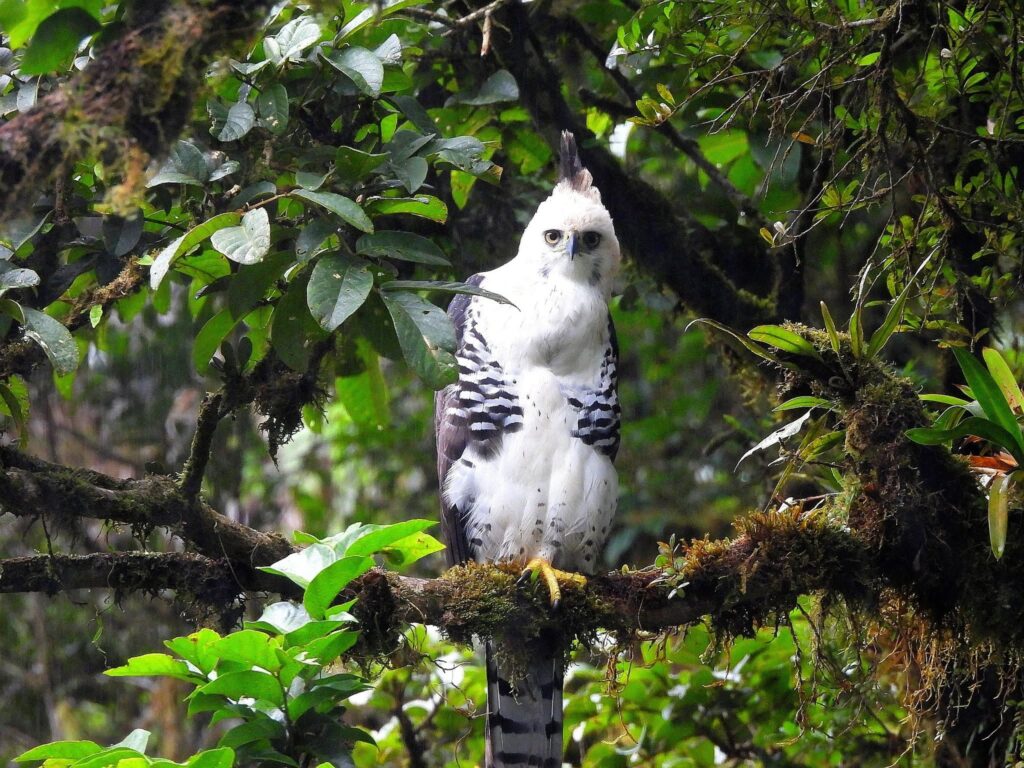
Romain’s lodge is where you sleep and where the cameras come out: the cabins, the gardens, the feeders and the covered photo decks that look out over the valley, full of hummingbirds and tanagers. For the quetzal, the Ornate Hawk-Eagle, the Sunbittern and the trogons we drive about fifteen minutes to the reserve itself, in the cloud forest.
For photographers
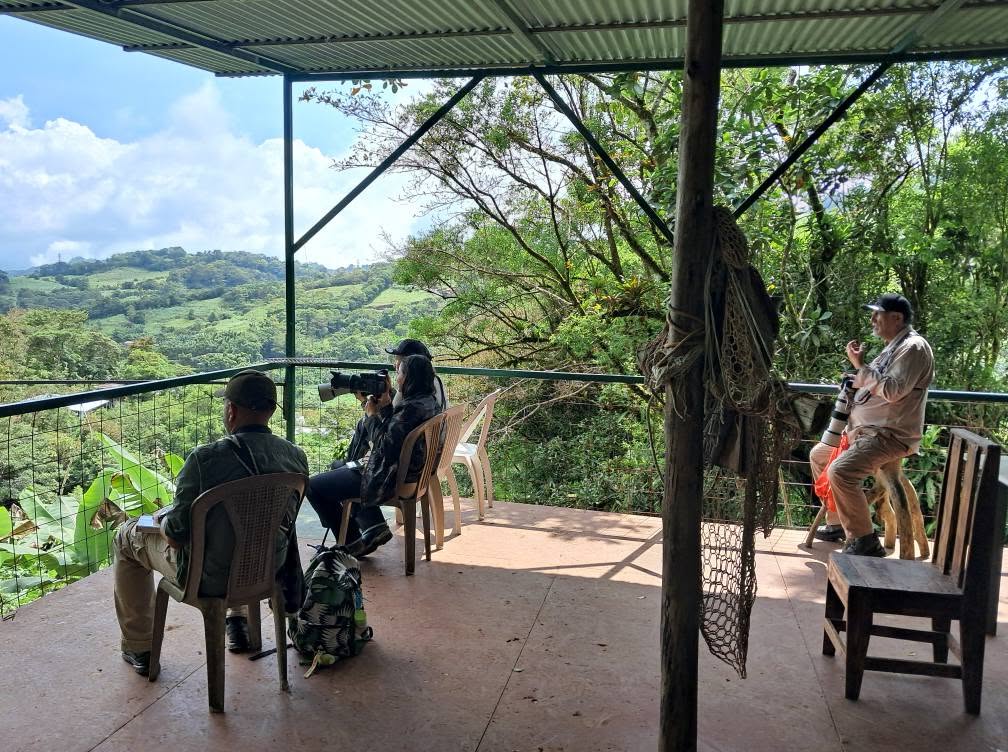
Valle de los Quetzales, San Ramón gives you two elevations and two ways of working in one day. At Romain’s lodge, about 1,200 m, you sit under a roof and let hummingbirds, tanagers and manakins come to the gardens and feeders. At the reserve, about 1,500 m, you walk slowly with the local guides who know where the quetzals feed. This is our working spec sheet; every eBird figure is recorded, not promised.
| Romain’s lodge · about 1,200 m | The reserve · about 1,500 m | |
|---|---|---|
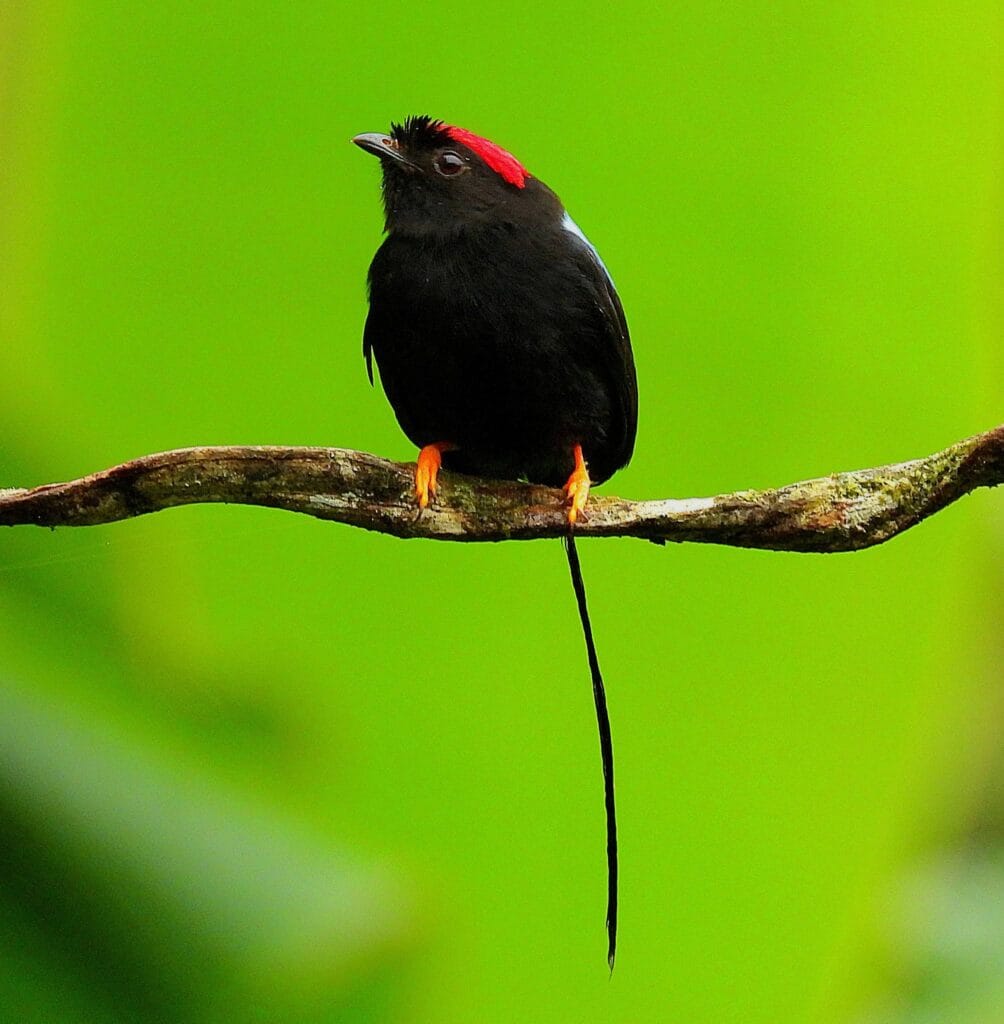
| What you photograph | Hummingbirds at the flower gardens and feeders, tanagers and other fruit-eaters, and the Long-tailed Manakin at the upper feeder, a short trail above the cabins. | The Resplendent Quetzal at the wild-avocado (aguacatillo) trees the guides know, the Ornate Hawk-Eagle perched or soaring, the Sunbittern on the stream, trogons and the Black Guan. |
| Signature birds (share of eBird checklists) | Rufous-tailed Hummingbird 56% · Purple-throated Mountain-gem 47% · Green Hermit 41% · Coppery-headed Emerald, found only in Costa Rica, 36% to 60% in every month with enough data · Violet Sabrewing 32% · Stripe-tailed Hummingbird 32%. Twenty-five hummingbird species recorded, nine of them above 10%. | Resplendent Quetzal 48% in February, 77% in March, 69% in April, 85% in May and 38% in June · Ornate Hawk-Eagle 26% to 51% from January to June, peak in March · Collared Trogon 36% · Black-faced Solitaire 34% · Three-wattled Bellbird up to 31%, in June. |
| Light and best hours | First light to mid-morning, and again in the late afternoon. Under the deck roof the light is soft and even, and the upper feeder faces open air, so the bird stands against distant green. | Dim under the canopy even at midday, and fog can roll up the valley. Ornate Hawk-Eagles soar on sunny mornings once the air warms, roughly from 8 to 11. Mornings are usually the driest part of the day. |
| Distance and lens | Close. Feeder perches can sit inside a long lens’s minimum focus distance, so a 100–400 mm zoom is the workhorse here; a 70–200 mm frames flower-and-bird scenes with the valley behind. | Variable and often far: a quetzal may feed low on an aguacatillo branch or sit high in the canopy. Bring 500–600 mm, such as a 150–600 or 200–600 zoom, or a 400 mm with a 1.4x converter. The guides spot, you shoot. |
| Starting exposure, natural light | Perched hummingbirds: about 1/1000 s, f/5.6 to f/8, auto ISO. Freezing the wings needs 1/2500 s or faster, which cloud-forest light rarely allows, so most photographers accept a little wing blur. | A perched quetzal in shade: 1/250 to 1/500 s, wide open, auto ISO up to 6400 or more. A soaring hawk-eagle against a bright sky needs about +1 to +1.7 EV. Starting points only; adjust on site. |
| Background | At the upper feeder the background falls away to a clean blur over the open valley. In the gardens, flowers and leaves sit close behind the perch. | Mossy branches, epiphytes and shade; fog softens and flattens the background. Soaring birds: sky. |
| Rain plan | Covered photo decks, and the two-bedroom cabin’s covered terrace faces its own hummingbird garden, so you keep shooting in the rain. | Light rain: keep walking with rain covers. Heavy rain: back to the lodge decks, fifteen minutes away. Let your gear warm up after the air-conditioned car so the lens does not fog. |
| How you work | Sit and wait under the roof while the birds come to the gardens and feeders. Easy for a partner who does not hike. | Walk slowly with the Arias brothers and the local guides from Bajo La Paz, handheld or on a monopod. The trails are narrow, so a tripod is hard to use. |
Good to know
The nest boxes you may see in the reserve belong to a conservation programme: the Arias brothers and a Bajo La Paz association put them up for the quetzal and protect the nests from predators. They are not a photo set-up and not a guaranteed nest; in any season a box may stand empty.
Ornate Hawk-Eagle pairs often breed only every other year, so a nest that is busy one season may be quiet the next. When a pair is nesting, the guides decide whether a short viewing from a respectful distance is possible, and we never share nest locations.
A photographer’s order of the day
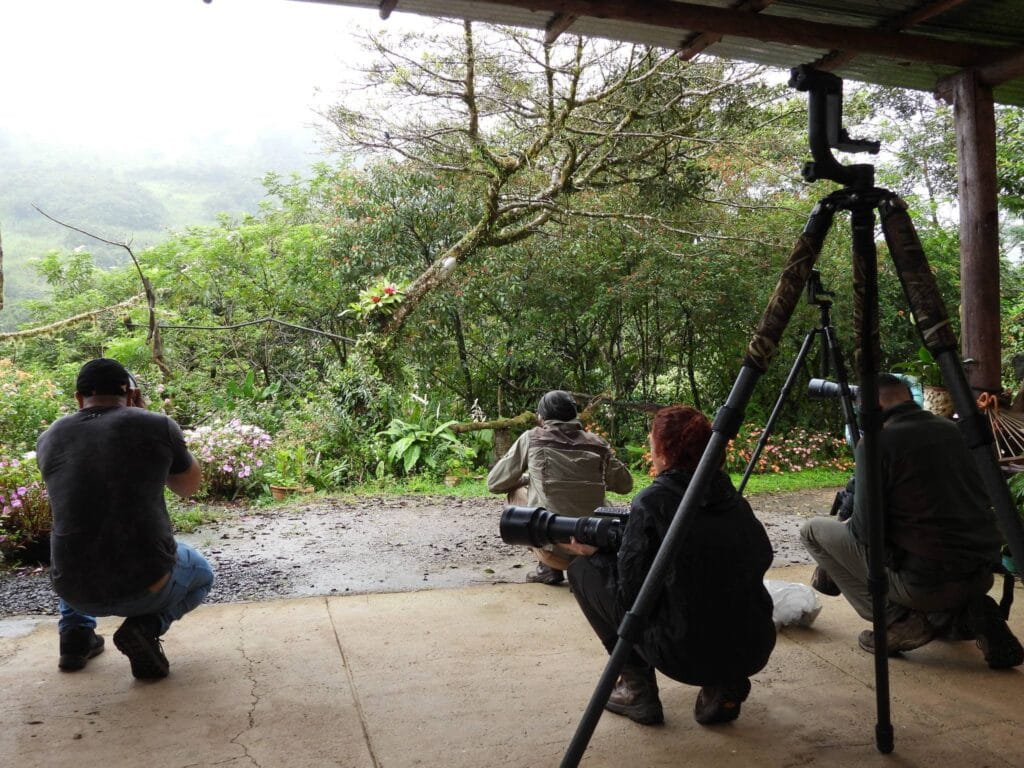
You sit under a roof and let hummingbirds, tanagers and manakins come to the gardens and feeders.
Overnight · part of our itineraries
On our private multi-day itineraries, Valle de los Quetzales is a night between the Guanacaste, Costa Rica coast and La Fortuna. You sleep at Romain’s lodge, with cabins for 19 guests in all, and at first light the quetzal trees are a fifteen-minute drive away, not hours in the dark.
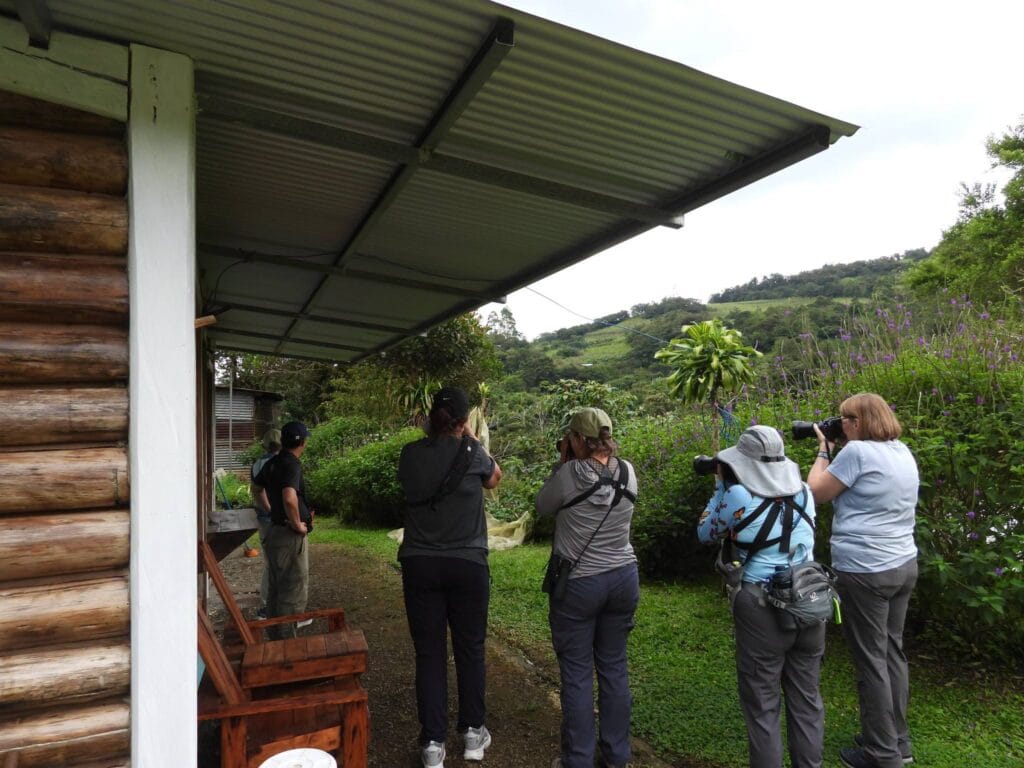
The porch roof covers you from rain and from the midday sun, so on a drizzly afternoon you can keep photographing the hummingbirds in the garden without leaving your cabin.
Private · Overnight at the reserve
Priced as one package · cabin, guided birding and the trail and garden walks included · night tour optional
The birds
You will see birds on every visit. What we can’t promise is which ones, so here they are sorted honestly.
01
Quetzal, bellbird and eagle, February to August.
02
At the feeders and the flowers, most visits.
03
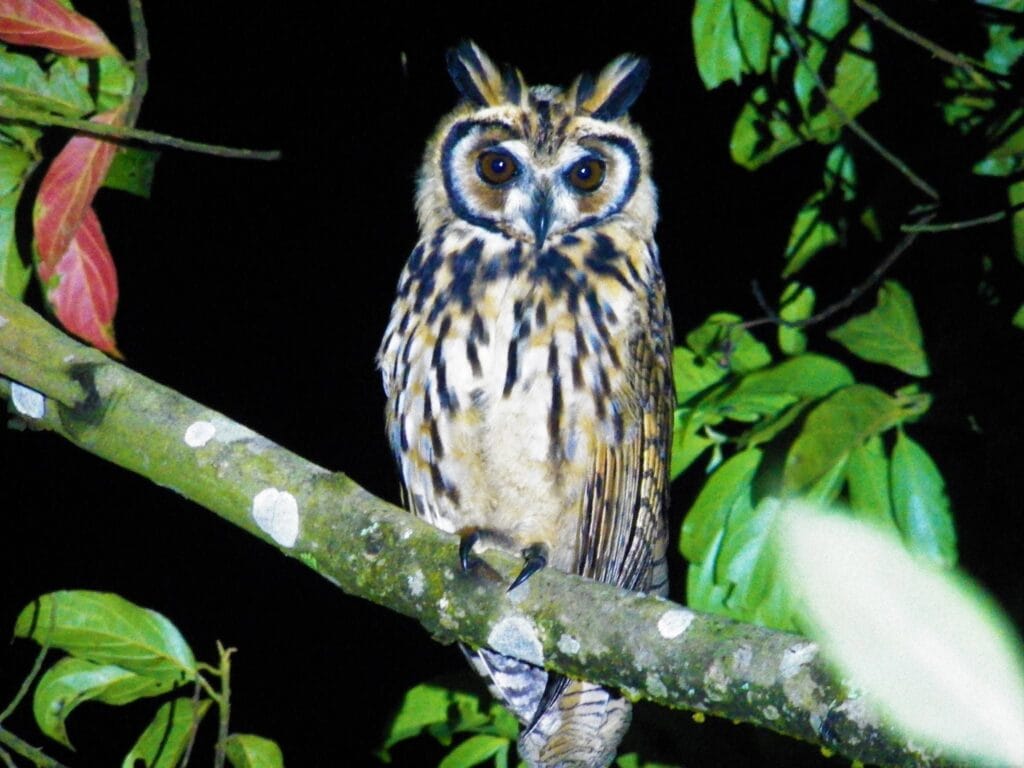
What the brothers see here through the year.
04
We will look hard. We will not promise.
Figures are the share of complete eBird checklists that report each species at the Reserva Natural Valle de Los Quetzales hotspot, by month. Source: eBird, Cornell Lab of Ornithology, read October 2026. Nesting months come from the reserve guides.


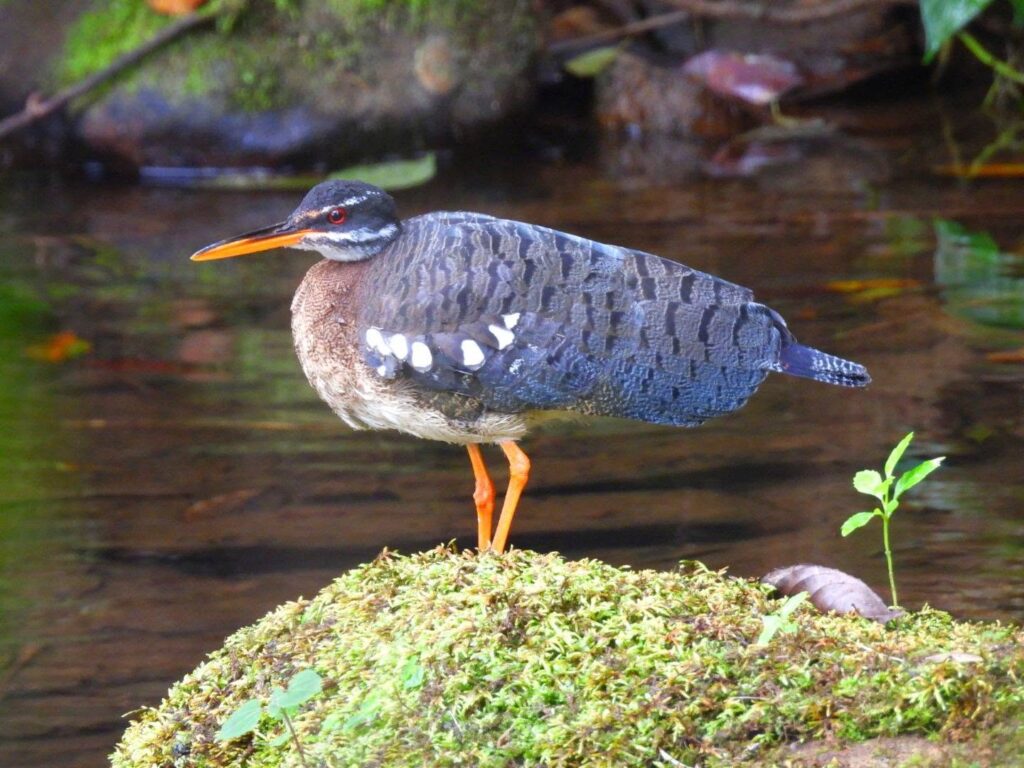
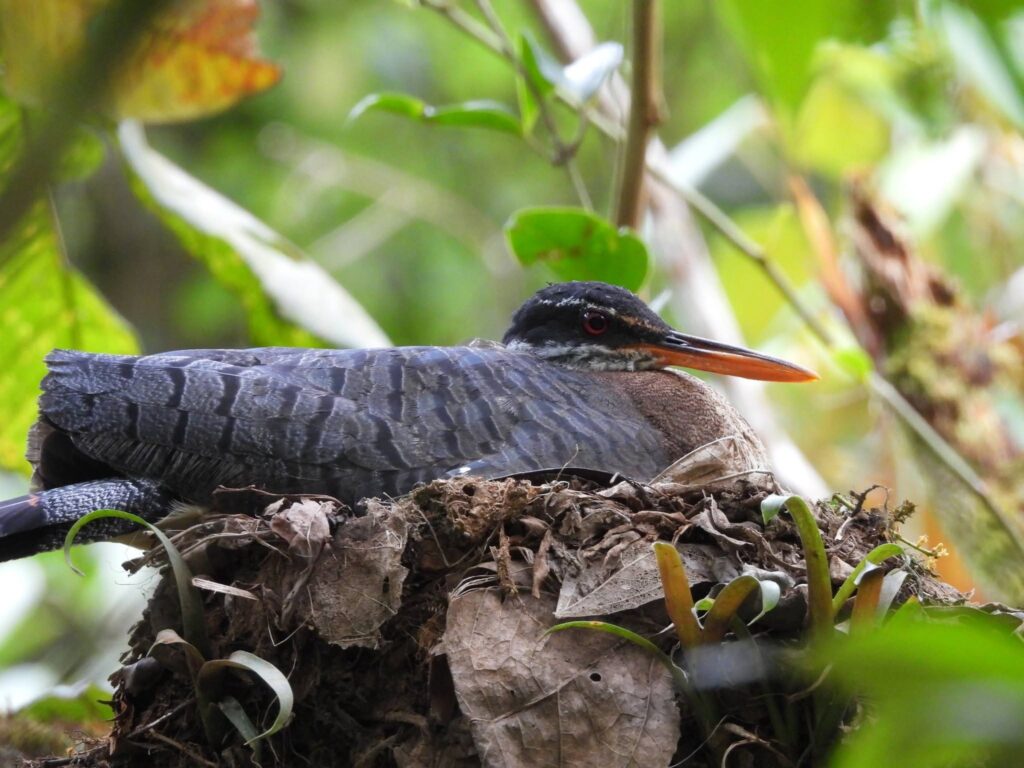
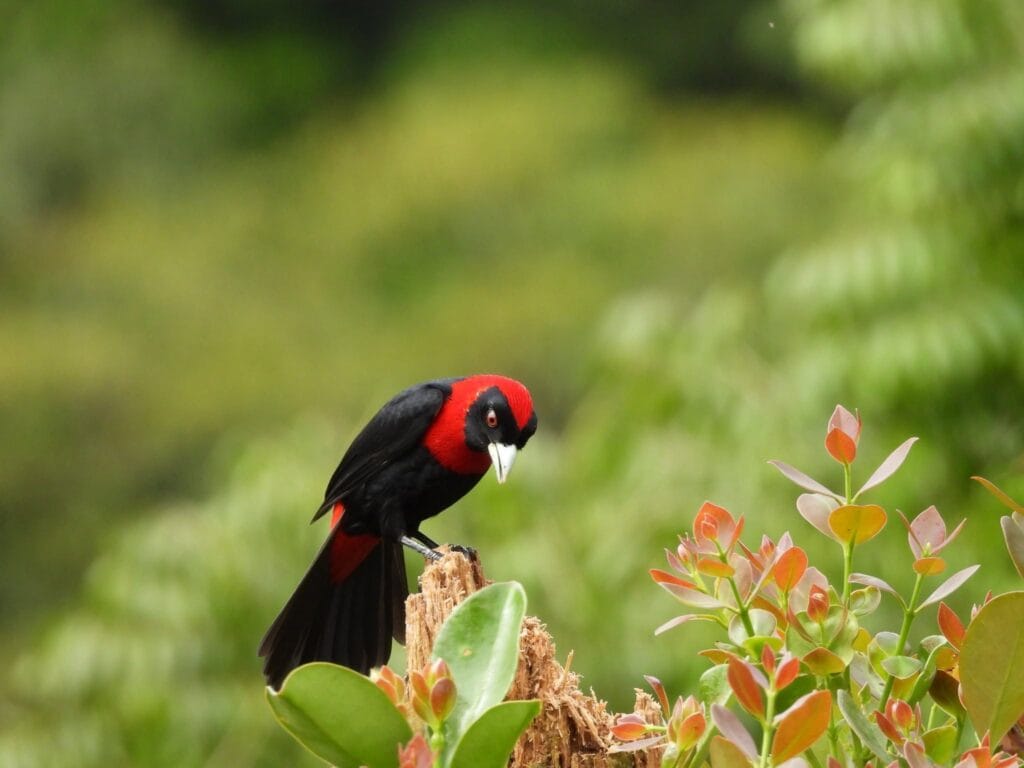
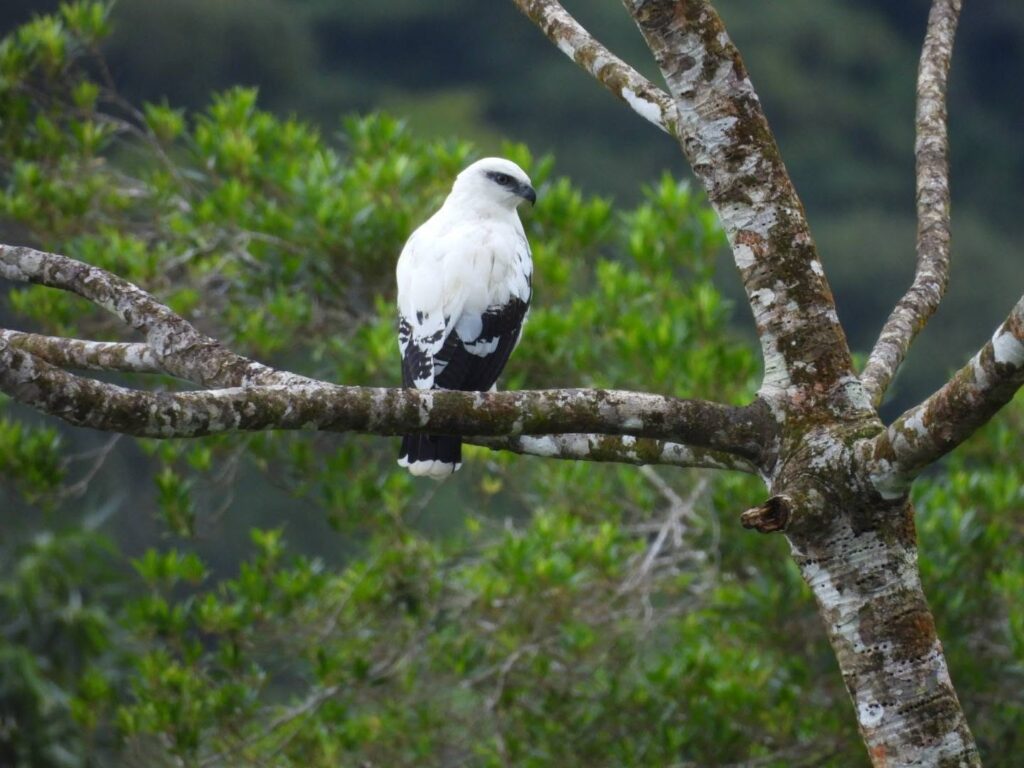

Photos taken at Valle de los Quetzales, courtesy of the reserve.
When to come
Share of complete eBird checklists at Valle de los Quetzales, San Ramón that recorded the Resplendent Quetzal. Recorded, not promised. July to November has very few checklists, so we make no claim for those months.
Share of checklists with the quetzal, December to June
Resplendent Quetzal: best in May, on 85% of checklists.
| Jan | Feb | Mar | Apr | May | Jun | Jul | Aug | Sep | Oct | Nov | Dec |
|---|---|---|---|---|---|---|---|---|---|---|---|
| 5% | 48% | 77% | 69% | 85% | 38% | Few checklists · no claim | 4% | ||||
Ornate Hawk-Eagle: 26% to 51% of checklists from January to June, peak in March.
Three-wattled Bellbird: 23% in March and 31% in June; the reserve guides hear it from February to August.
Coppery-headed Emerald: 36% to 60% in every month with enough data, so the hummingbird decks work all year.
Thinking of coming outside February to June? In December and January the quetzal was on only 4% to 5% of checklists here, and males lose their long tail feathers after breeding. Ask us before you book, and we will tell you honestly what is realistic for your dates.
Field note
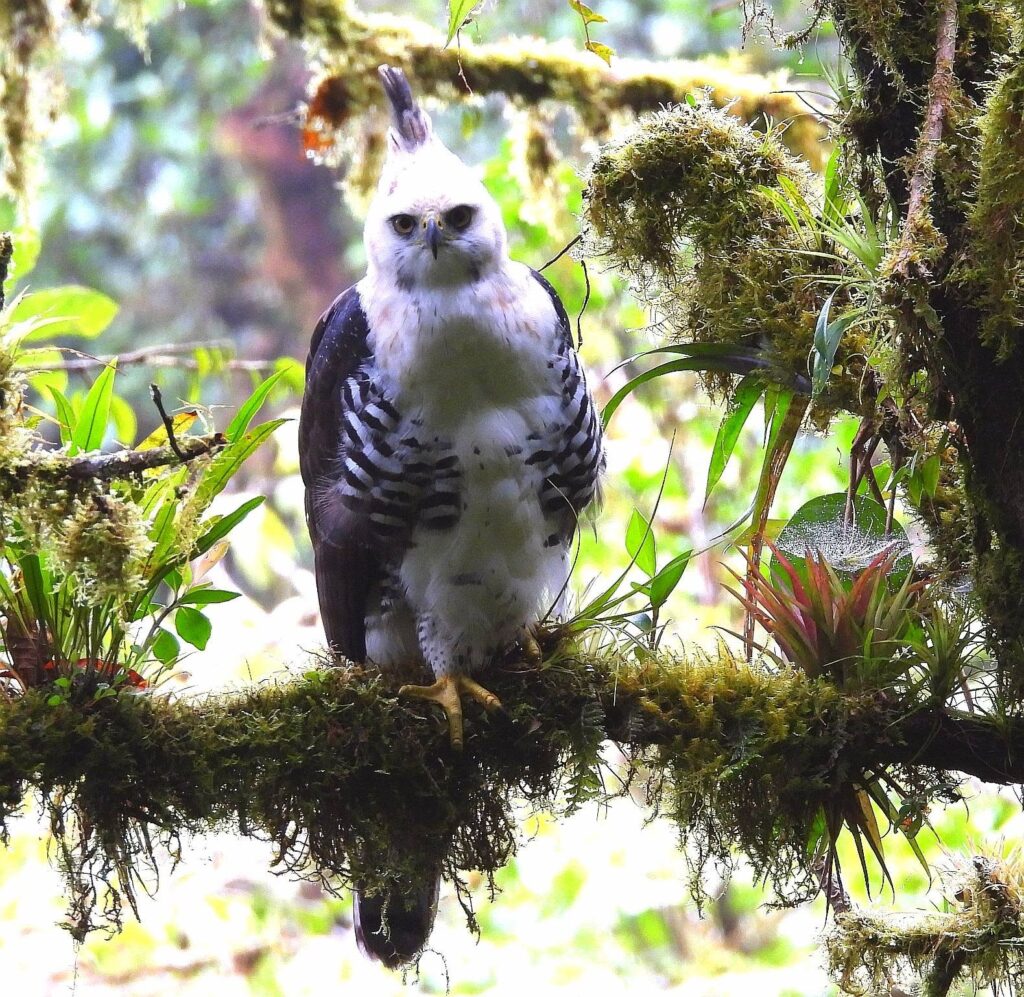
Nacho and Romain see the reserve’s Ornate Hawk-Eagles almost every day and can tell each bird apart. In 2026, about two weeks after the chick hatched, the male went out for food and did not come back. After two days the female had to leave the chick alone for two days to hunt.
When she returned she brought a daughter from an earlier brood, hatched three years before, and the daughter stayed with her young brother while the mother hunted. About two weeks later the male reappeared, and the daughter left.
Around August she was back at the same nest with a chick of her own, already flying a little. Now the mother is about to nest there again, so the young pair will have to move on.
This is what the brothers have watched, told as they told it to Miller in October 2026. The nest is watched from a distance and visits are kept short.
The eagles of the valley
One day from Guanacaste
100% private and planned around your hotel, the season and your target birds. We leave before dawn so you are at the reserve for first light, and drive you back the same afternoon. This day is part of our Cloud Forest birding.


Private · Full day
From $1,000 per private group of 2
A private naturalist guide specialized in birds, private transportation, the reserve entrance, binoculars and a spotting scope, bottled water, snacks and lunch. Taxes included.
Gratuities.
Warm layers and a rain jacket: the cloud forest is cool and damp, even when the coast is hot.
Seventy-two hours before your birding day begins, counted from your pickup time and not the day: cancel before that for a full refund.
Getting there
| From | Time |
|---|---|
| Playas del Coco, Playa Hermosa, Playa Panamá and the RIU hotels, Guanacaste, Costa Rica | 3 h 45 |
| Tamarindo | 4 h |
| Las Catalinas | 4 h 30 |
| Liberia airport (LIR) | About 3 h 30 |
| San José airport (SJO) | About 1 h 30 |
| La Fortuna (Arenal) | About 1 h 30 to 2 h |
Staying in La Fortuna? There are no quetzals there. Valle de los Quetzales, San Ramón is about 1 h 30 to 2 h away by road, and at about 1 h 30 from San José airport it also works as a last night before you fly out.
Each site has its own season. See where to bird in Guanacaste, Costa Rica and the best time for birding, month by month.
Tenorio Rainforest, with the Snowcap on 56% of eBird checklists and three toucans.
ExploreThe top eBird hotspot in Guanacaste, Costa Rica: manakins, motmots and magpie-jays below the volcano.
ExploreA boat through Cipancí, then the marsh of Hacienda El Viejo, where the Jabiru is on 38% of eBird checklists.
ExploreTell us when you are coming and which birds you are after. We will tell you honestly what is realistic for your dates and plan the day around it.
Private groups only · Hotel and LIR pickup · Based in Playas del Coco, Guanacaste, Costa Rica