What is the best place for bird photography near Guanacaste, Costa Rica?
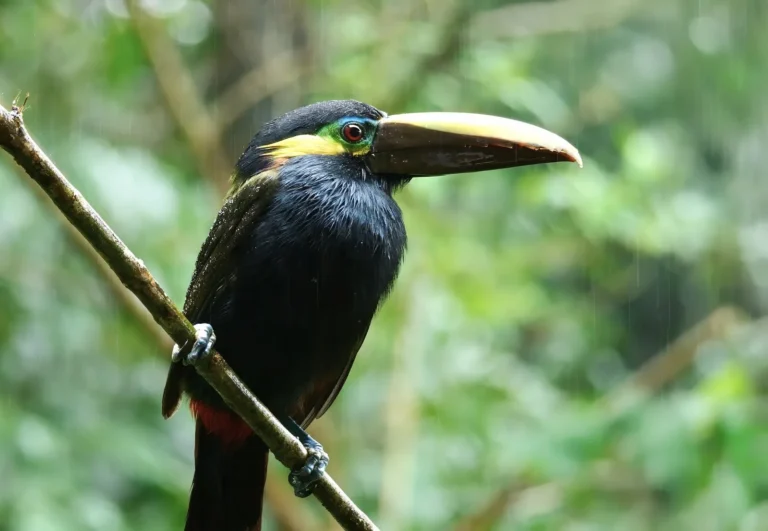
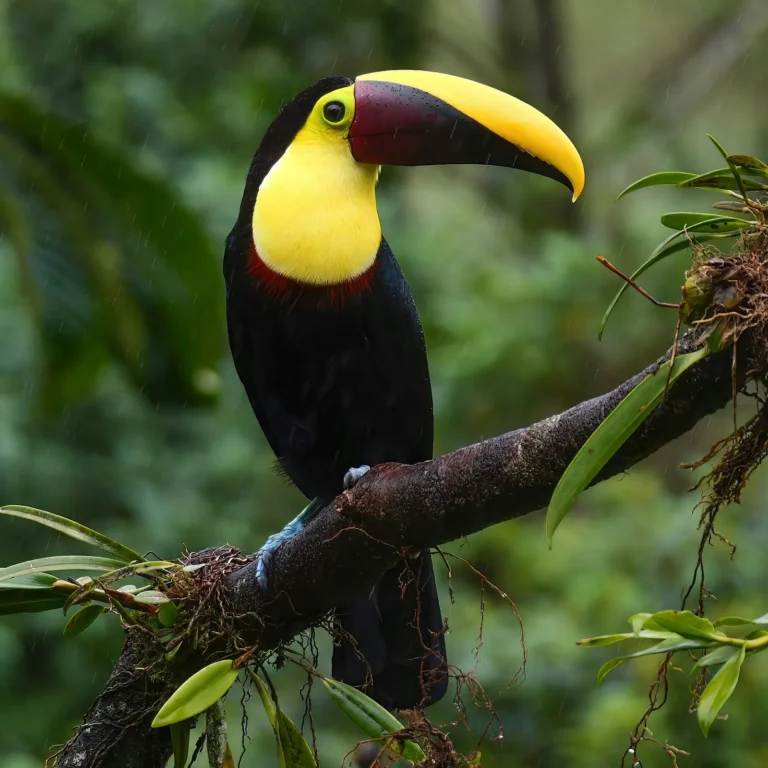
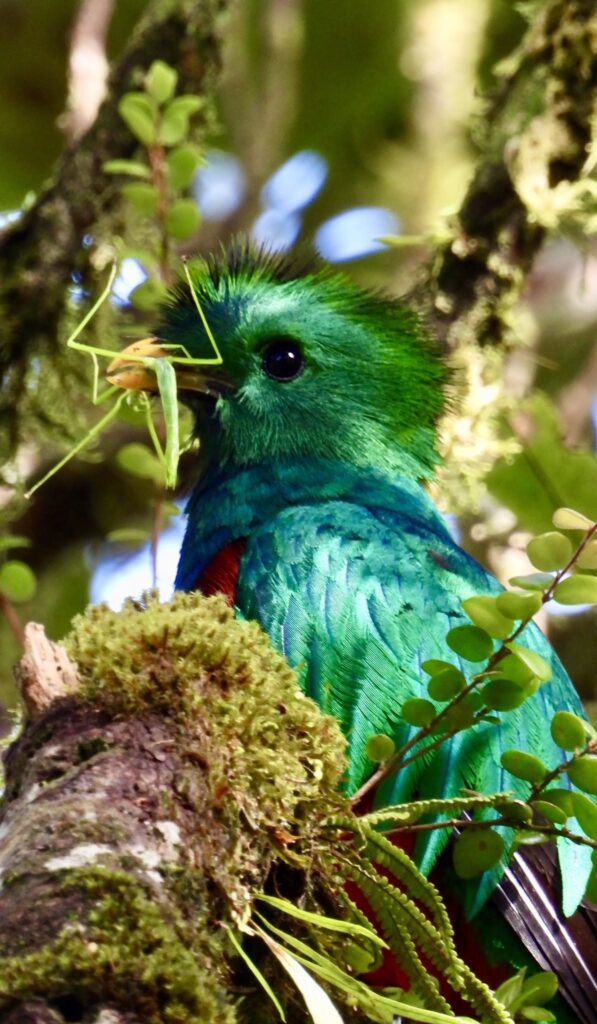
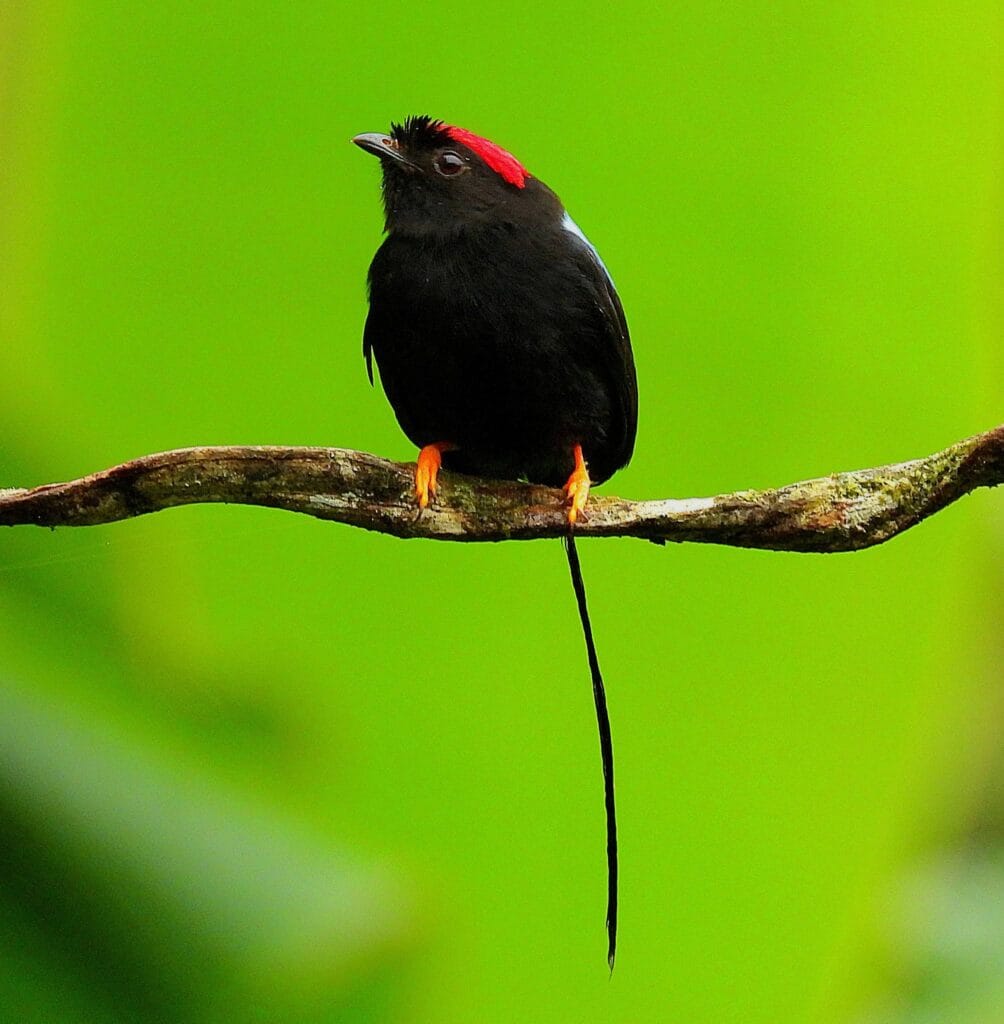
It depends on the shot. For dry-forest birds, Rincón de la Vieja’s Las Pailas sector, where the Long-tailed Manakin is on 65% of eBird checklists. For waterbirds, Palo Verde by boat. For rainforest hummingbirds and toucans, the Tenorio Rainforest, north of Guanacaste, Costa Rica. For quetzals, Valle de los Quetzales, San Ramón, 3 h 45 from Coco.
Are there bird photography hides or feeders near Liberia?
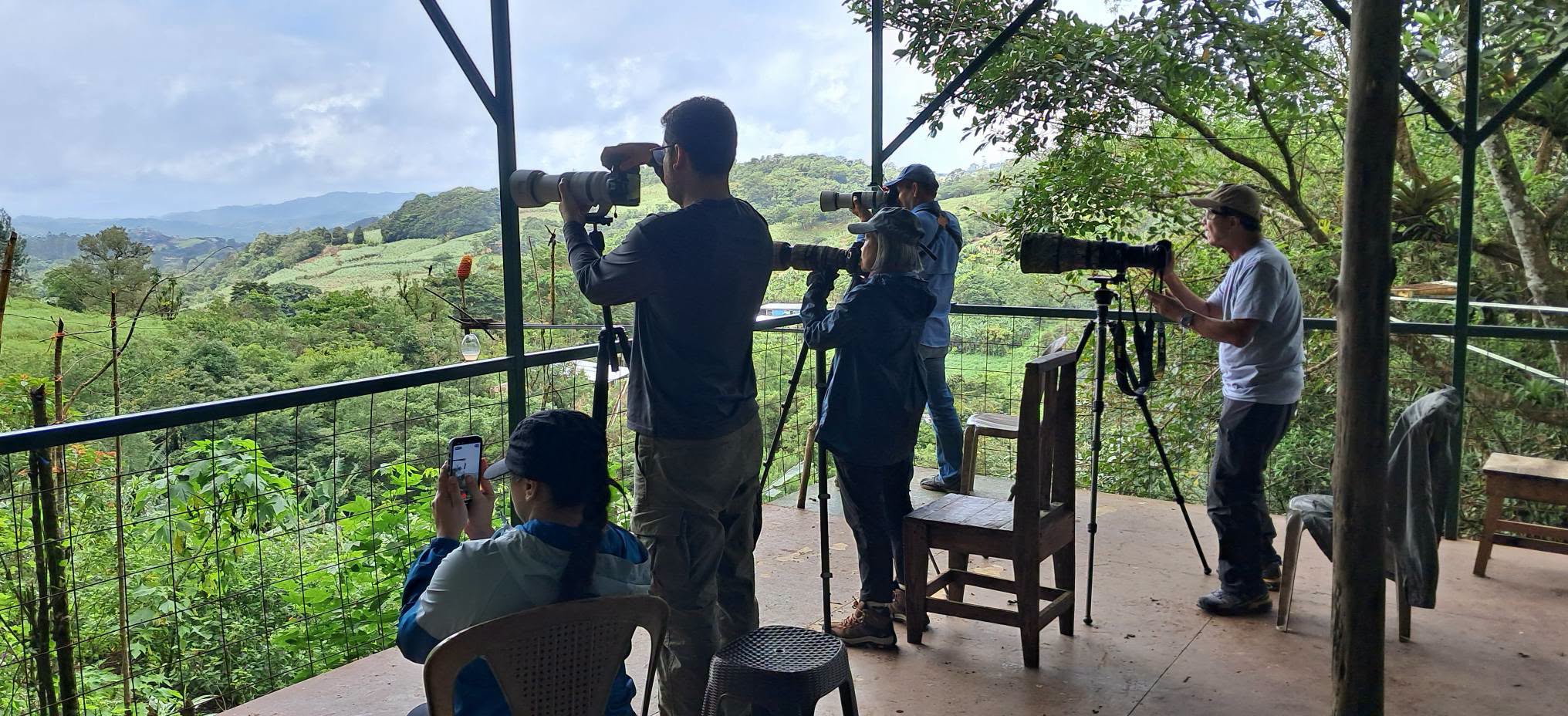
Not in the dry-forest lowlands. Around Liberia and the coast of Guanacaste, Costa Rica, the hide is our vehicle, a boat on the Tempisque or a low position. A hummingbird-garden platform is at Tapir Valley in the Tenorio Rainforest, 1 h from Liberia, and covered photo decks with feeders are at Valle de los Quetzales, San Ramón.
Can you do a bird photography day trip from Tamarindo?
Yes. From Tamarindo we leave about 1 h before arrival for the Las Trancas fields, 1 h 20 for the Palo Verde boat, 2 h 30 for Rincón de la Vieja and 2 h 45 for Tapir Valley in the Tenorio Rainforest. We usually arrive at 6:30–7:00 a.m.; for true golden hour, we leave earlier.
Can you do a bird photography tour from the Papagayo Peninsula hotels?
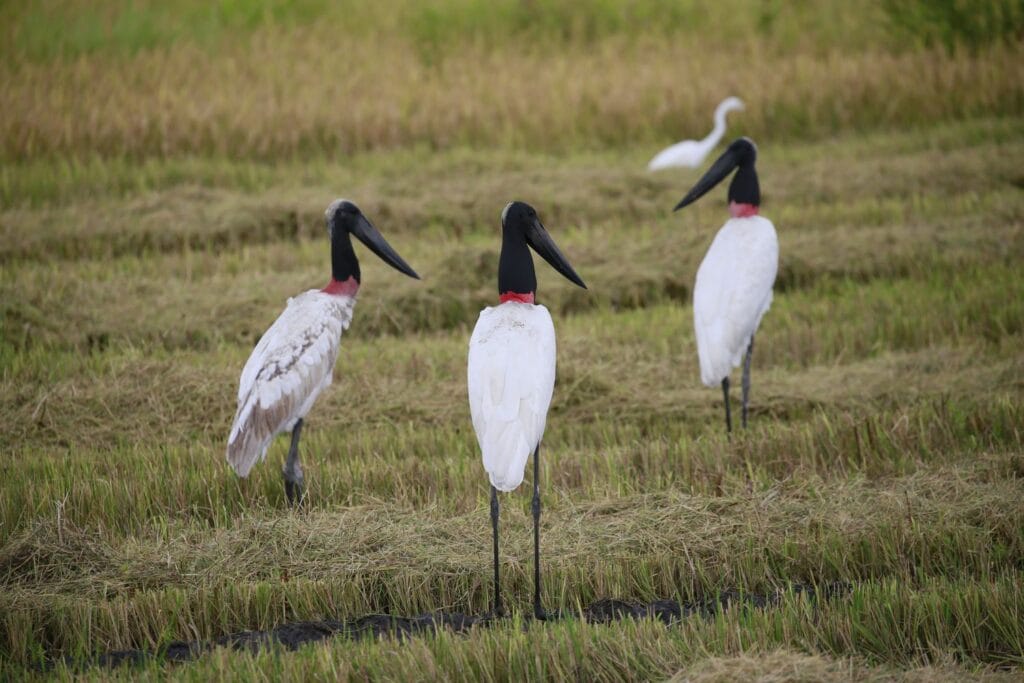
Yes. We pick up on the Papagayo Peninsula, at Playa Hermosa, Playa Panamá and the RIU. The Las Trancas fields, where the Jabiru is on 23% of eBird checklists, are 15 to 20 minutes away, Palo Verde’s boat dock is 1 h 20 and Rincón de la Vieja is 1 h 30.
What lens do I need for bird photography in Guanacaste, Costa Rica?
A 100–500 or 150–600 mm zoom covers most days. Add a 1.4x teleconverter or a 600–800 mm for distant wetland and mudflat birds. Under rainforest canopy the light is dim: a male Snowcap at Tapir Valley was shot at 428 mm and ISO 4000. A fixed 600 mm may not focus on close garden perches.
What time of day is best for bird photography in Guanacaste, Costa Rica?
The first two hours after sunrise. Sunrise falls between 5:21 and 6:05 a.m. all year, and the morning golden hour lasts only 40 to 44 minutes. The sun passes 30° between 7:32 and 8:24 a.m., so open wetlands and coast turn harsh by mid-morning. Forest interiors and covered decks stay workable longer.
When is the best time of year for bird photography in Guanacaste, Costa Rica?
February to May. Dry-season light peaks then, Jabiru chicks grow at Palo Verde and Long-tailed Manakins display. In May the Resplendent Quetzal is on 85% of eBird checklists at Valle de los Quetzales, San Ramón, and the Long-tailed Manakin on 80% at Rincón de la Vieja. August to October favours shorebirds and softer light.
Is the rainy season good for bird photography in Costa Rica?
Yes, if you plan around the rain. In Guanacaste, Costa Rica, the green season runs from May to November. Showers usually build after midday, so mornings stay workable, and overcast skies give soft, even light. July is often drier, and September and October bring southbound shorebirds and the Mangrove Hummingbird season.
Where can I photograph a Jabiru in Guanacaste, Costa Rica?
At Palo Verde National Park the Jabiru is on 16% of eBird checklists overall and 37% in March; at the Las Trancas fields near Playas del Coco, on 23%. December to April is best, as falling water concentrates prey. We keep well back from nests and never publish their locations.
Can you see a tapir at Tapir Valley?
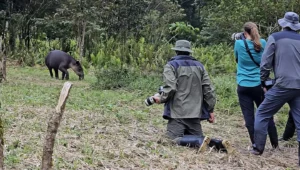
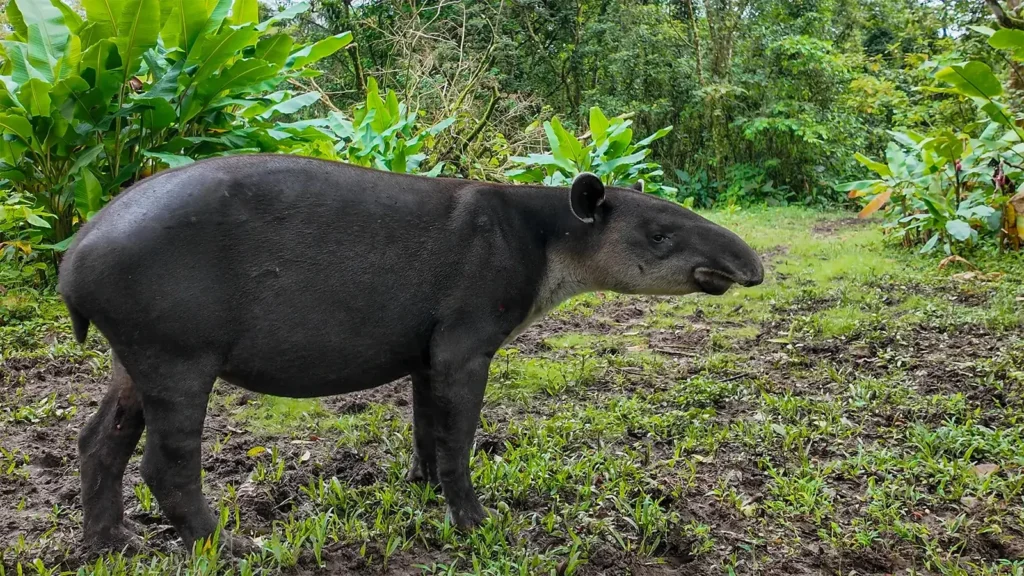
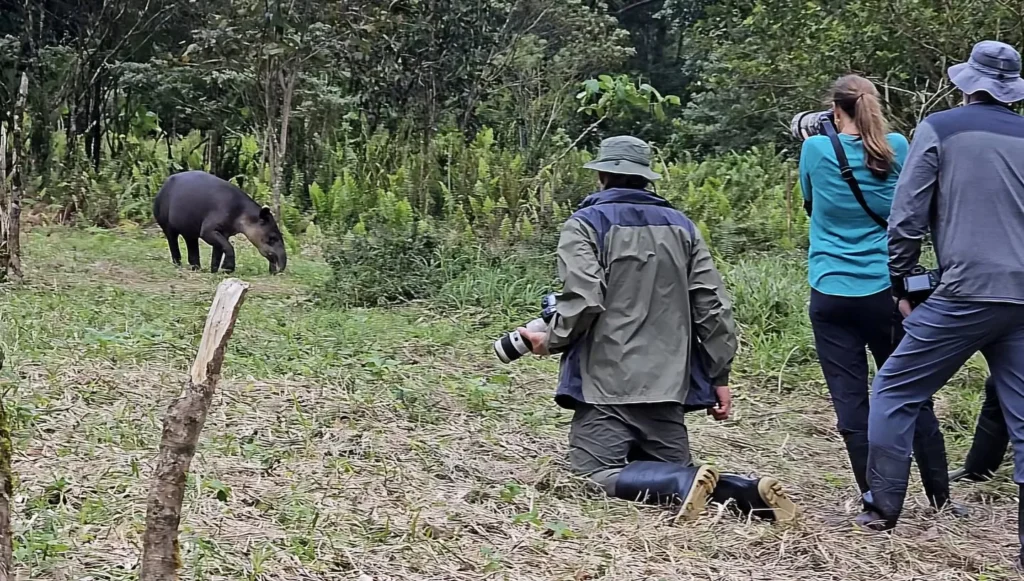
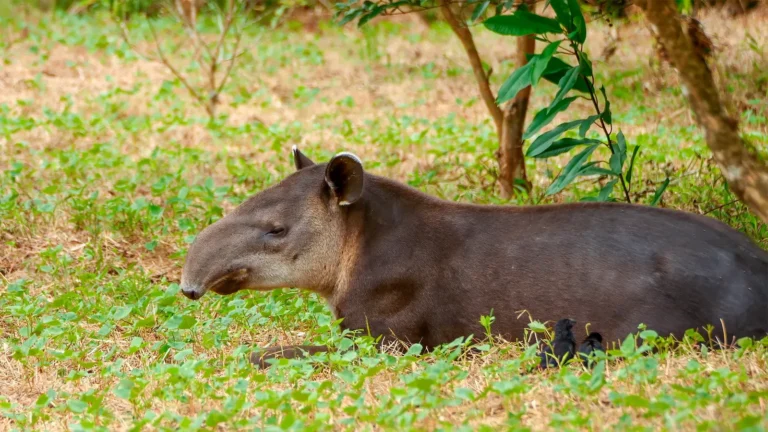
Often, but never guaranteed. Baird’s tapirs live in the reserve: about 11 move through Tapir Valley and some 50 through the Tenorio-Miravalles Biological Corridor around it. We saw and photographed one on each of our last two visits. The reserve sits in the Tenorio Rainforest, 1 h from Liberia and 2 h from Playas del Coco.
Can my non-photographer partner come?
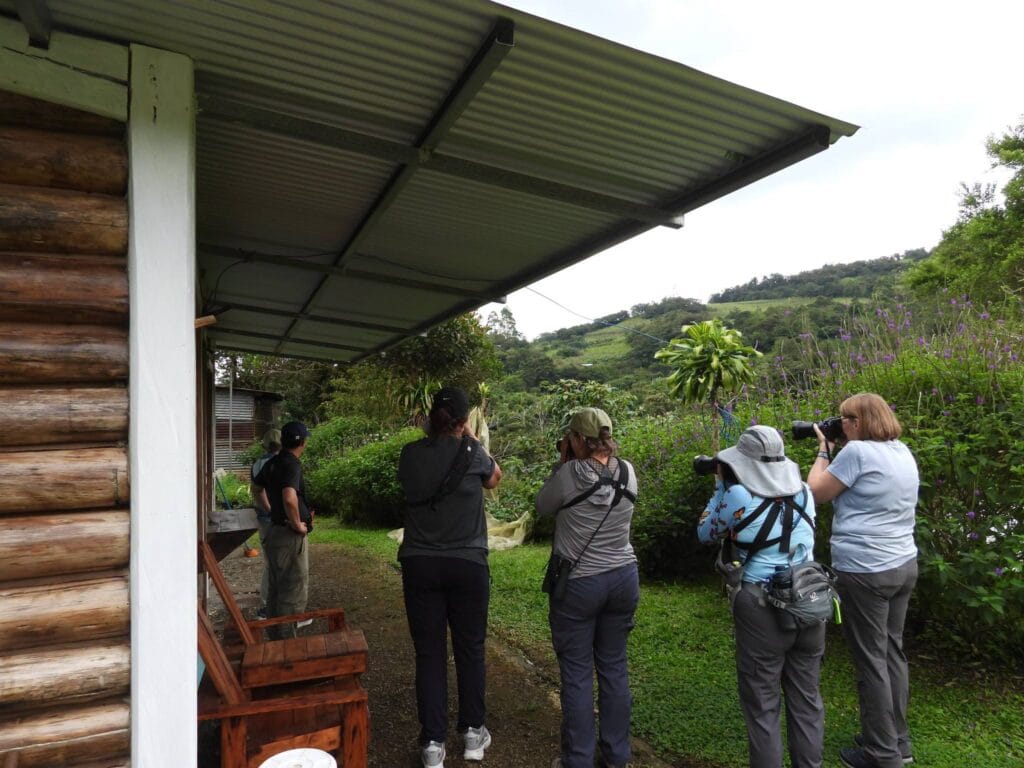
Yes. Every day is private, so we set the pace for both of you. The Palo Verde boat, the hanging bridges at Heliconias and the covered hummingbird decks at Valle de los Quetzales, San Ramón are enjoyable without a camera, and partners share the spotting scope and binoculars at every stop.
Do you use flash on birds?
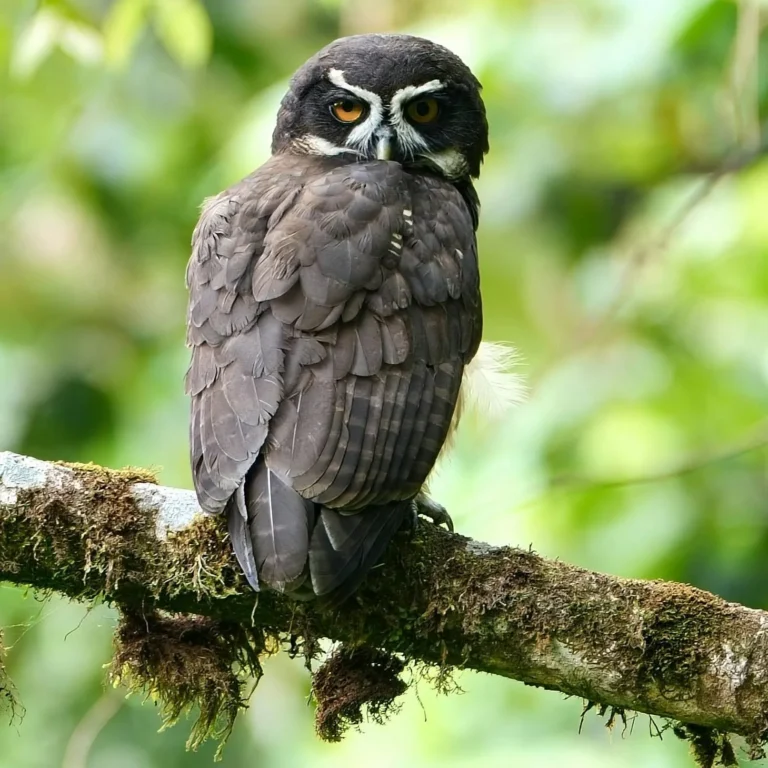
No. We photograph birds in natural light, which is why dawn starts and covered decks matter. A flashlight is used on the separate owl night tour at Valle de los Quetzales, San Ramón. Under rainforest canopy expect high ISO: a male Snowcap at Tapir Valley was shot at ISO 4000.
Do I need a domestic flight to reach these sites with my camera gear?
No. Every site on this page is reached by road from your hotel in Guanacaste, Costa Rica, or from Liberia airport (LIR), so long lenses stay with you. That matters: on Sansa domestic flights the free personal item is 4.5 kg, and anything over 6.8 kg must be checked.
Is Valle de los Quetzales the same as the Valley of the Quetzals in San Gerardo de Dota?
No. Valle de los Quetzales is in Bajo La Paz, north-west of San Ramón town, in Alajuela, at about 1,200 to 1,500 m. The English “Valley of the Quetzals” usually means San Gerardo de Dota, about three hours south of San José. From Guanacaste, Costa Rica, we go to San Ramón: 3 h 45 from Coco.
When do we have to cancel by?
Twenty-four hours before your tour begins, counted from the start time and not the day. Cancel before that and you get a full refund.
How much does a private bird photography day cost?
A private photo day to the sites near your hotel in Guanacaste, Costa Rica (Las Trancas, Palo Verde, Rincón de la Vieja and the Tenorio Rainforest) is US$350 per person. The Gulf of Nicoya salt ponds and Monteverde are quoted for your dates, and the private Valle de los Quetzales, San Ramón day trip is US$1,000 per group of 2. The two-hour wildlife photography session in the Tenorio rainforest is an add-on from US$70 per private group of 2.