





Snowcap, Ornate Hawk-Eagle and a Tapir at the Lagoon: One Morning at Tapir Valley, Tenorio Rainforest
One guided birding morning, two guides, three guests and one complete eBird checklist. Here is everything we saw, and how it happened.
In four and a half hours on 12 October 2026, our group logged 71 bird species at Tapir Valley, a private reserve in the Tenorio Rainforest, on the Caribbean slope of Volcán Tenorio. The highlights were a Snowcap, an adult Ornate Hawk-Eagle at the gate, ten northern migrants just arrived, and a Baird’s tapir that walked out of the lagoon and past the group.
What this report is, and what it is not
This is the second report in our series of field notes from the Tenorio Rainforest, Costa Rica. The first one, from July, was a guide’s notes from two afternoons squeezed between other tours. This one is different: a single guided birding morning, with two guides and three guests, and one complete eBird checklist filed at the reserve’s own hotspot.
That means every species below is tied to one place and one morning, and anyone can check it against the original list. The numbers are what we counted, not estimates. Where something is not in the checklist (the tapir, for example, because eBird is a bird database), we say so and show the photographs instead.
Tapir Valley Nature Reserve, Tenorio Rainforest
A private reserve on the Caribbean slope of Volcán Tenorio, in Alajuela province, in the forest corridor between Tenorio Volcano National Park and Miravalles. It has its own lagoon, which is where the tapir in this report came from. From the Guanacaste coast, the Tenorio Rainforest is about two hours by road from Playas del Coco, and about an hour and a half from Liberia.
We do not take every group to the same reserve. We rotate between several private reserves in the Tenorio Rainforest and choose one on the day, depending on the habitat conditions and what the guests most want to see. On 12 October, that choice was Tapir Valley.
The Ornate Hawk-Eagle came to us
At the entrance, by the gates, we heard an Ornate Hawk-Eagle calling from high on the slope. It called a couple more times while we scanned with binoculars, and then it flew towards us and perched on the far side of the road.
It was a full adult, and we watched it both in flight and perched. Nobody managed a photograph, so there is none here. We would rather tell you that than show you a picture from another day.
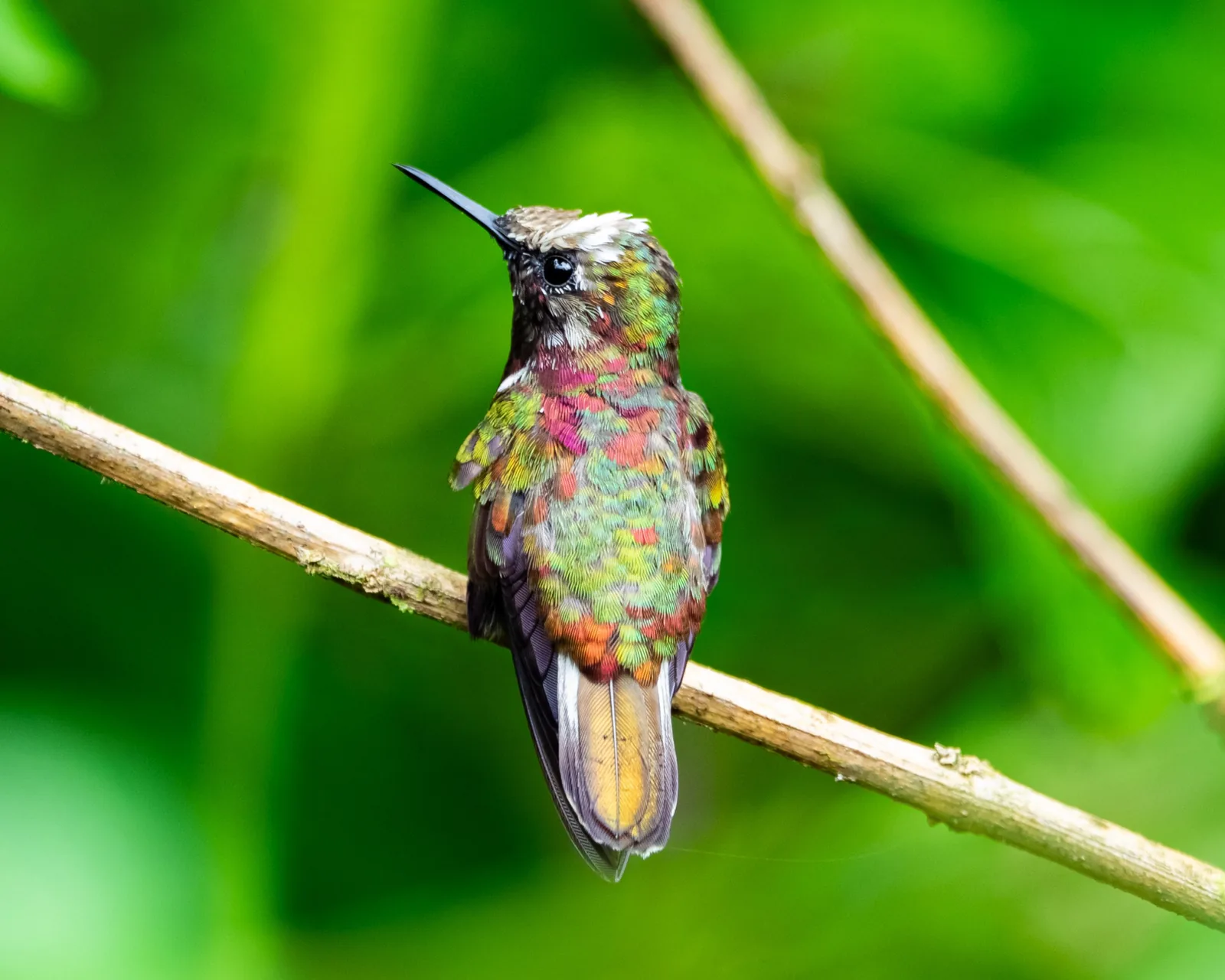
Snowcap, a young male in moult
The white cap was already complete, but the body was a patchwork of green, copper and the first wine-coloured feathers. The Snowcap is a Caribbean-slope foothill hummingbird found only from Honduras to western Panama, and it is one of the birds people come to the Tenorio Rainforest for. It shared the morning with five other hummingbirds, including three Blue-throated Goldentails.
A tapir walked out of the lagoon
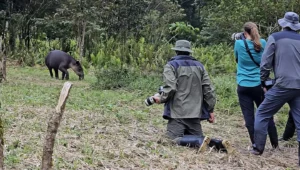
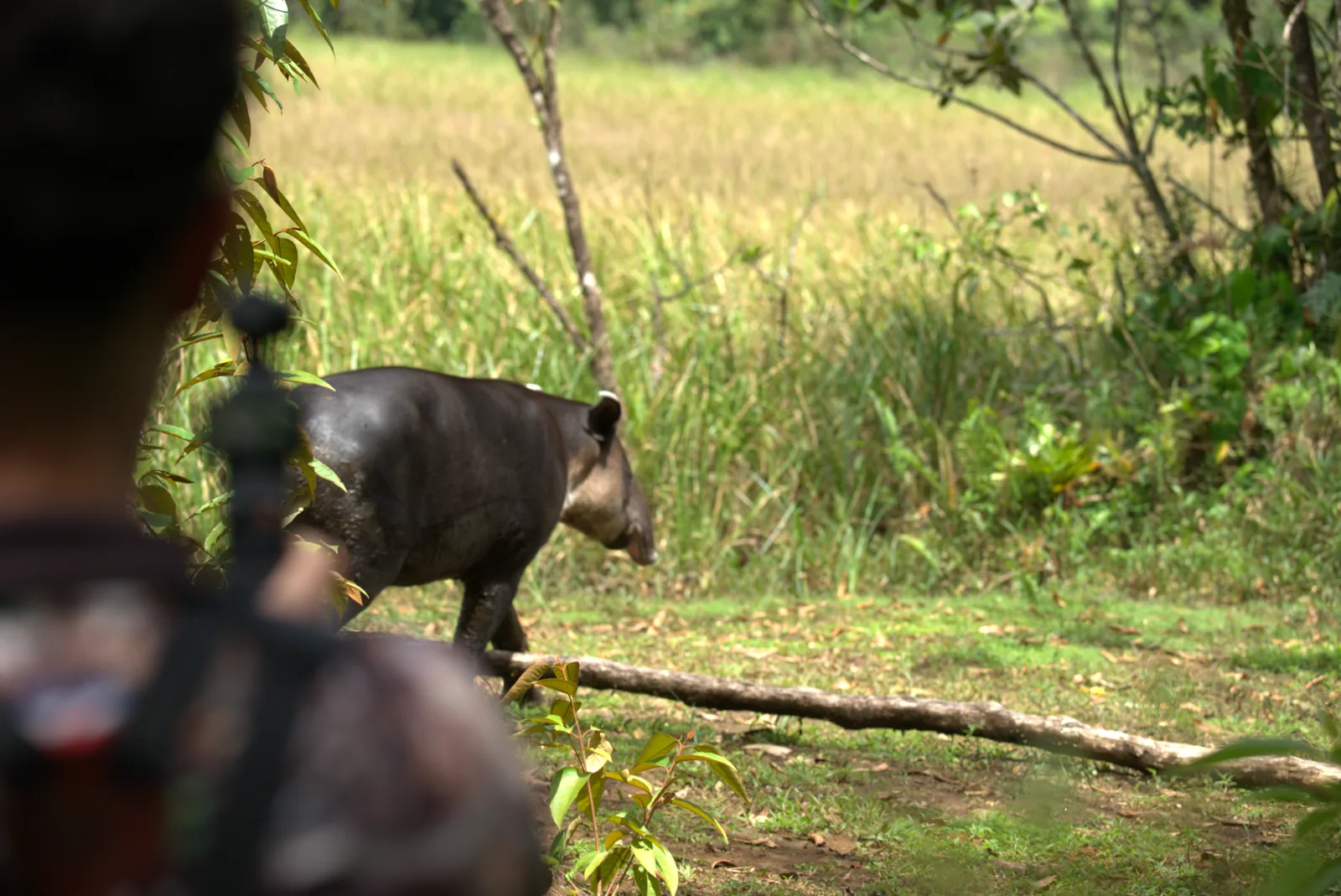
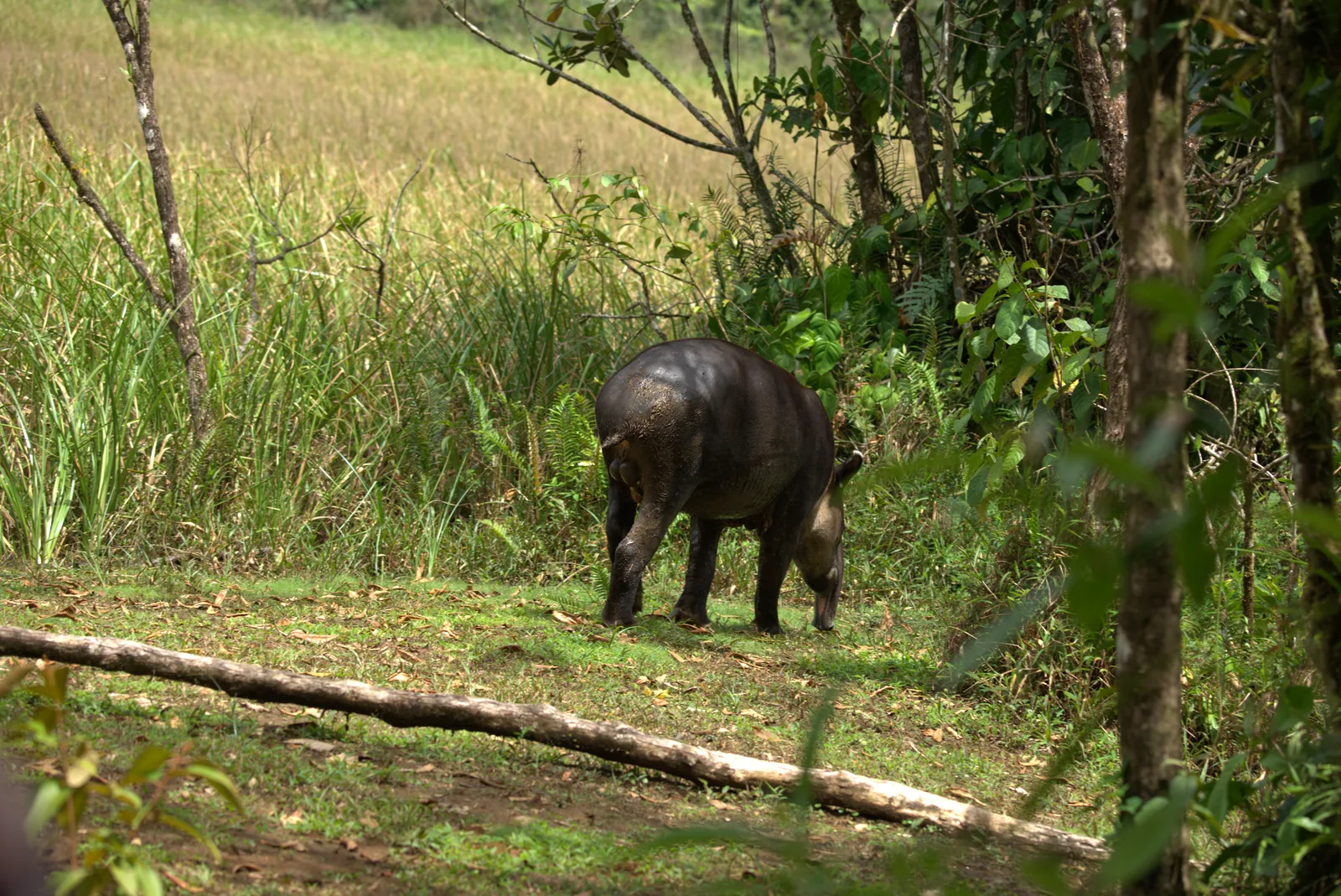
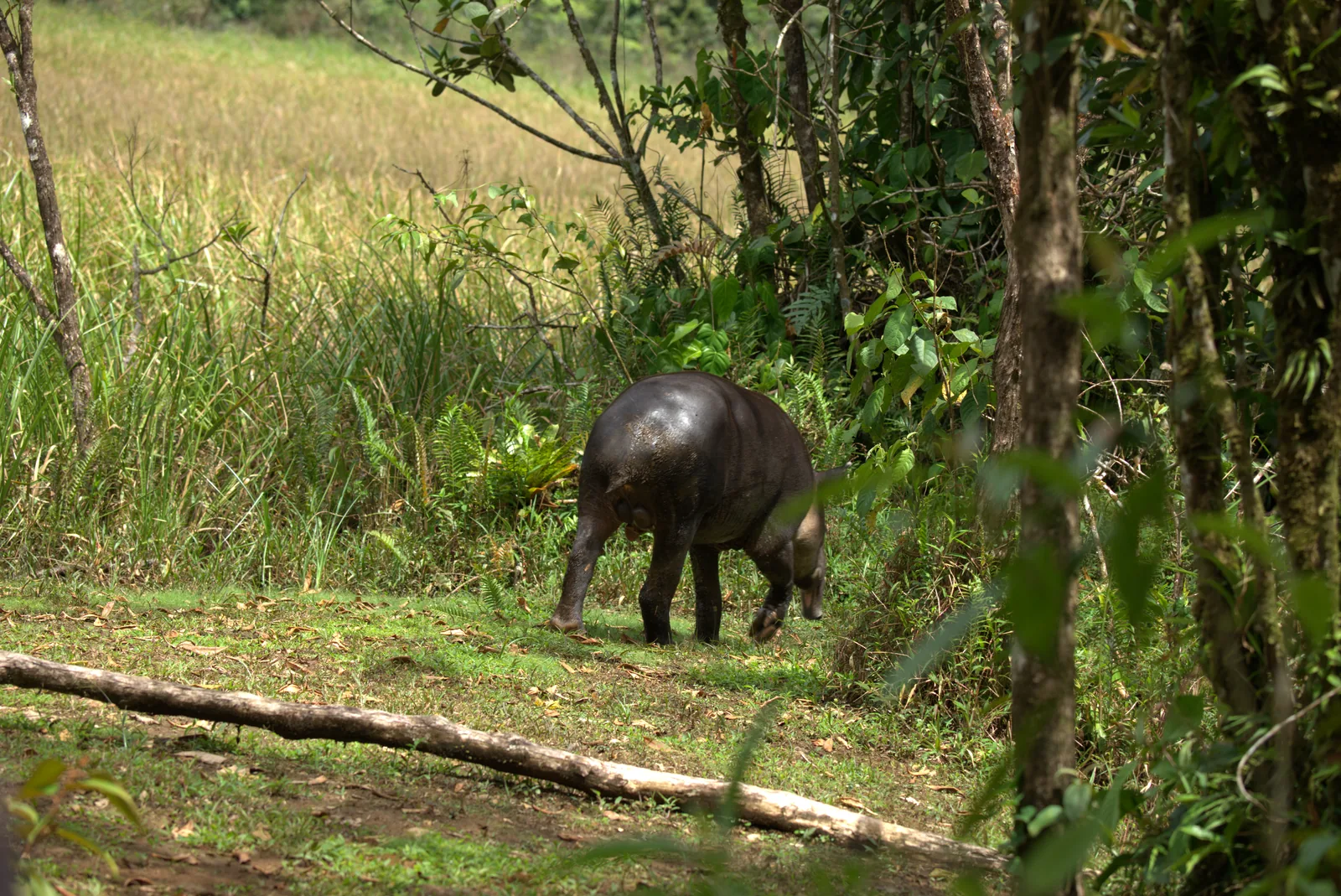
We were searching the lagoon edge for the Rufous-tailed Jacamar when a Baird’s tapir came up out of the water and walked along the edge of the trail, right past the group, while we stood still and watched. It was a male, still wet from the lagoon.
Baird’s tapir is an endangered species and the largest land mammal in Central America. As far as we know, ours was the only group to see it that day. We also filmed the encounter. And yes, we found the jacamar too, after the tapir had gone back into the forest.
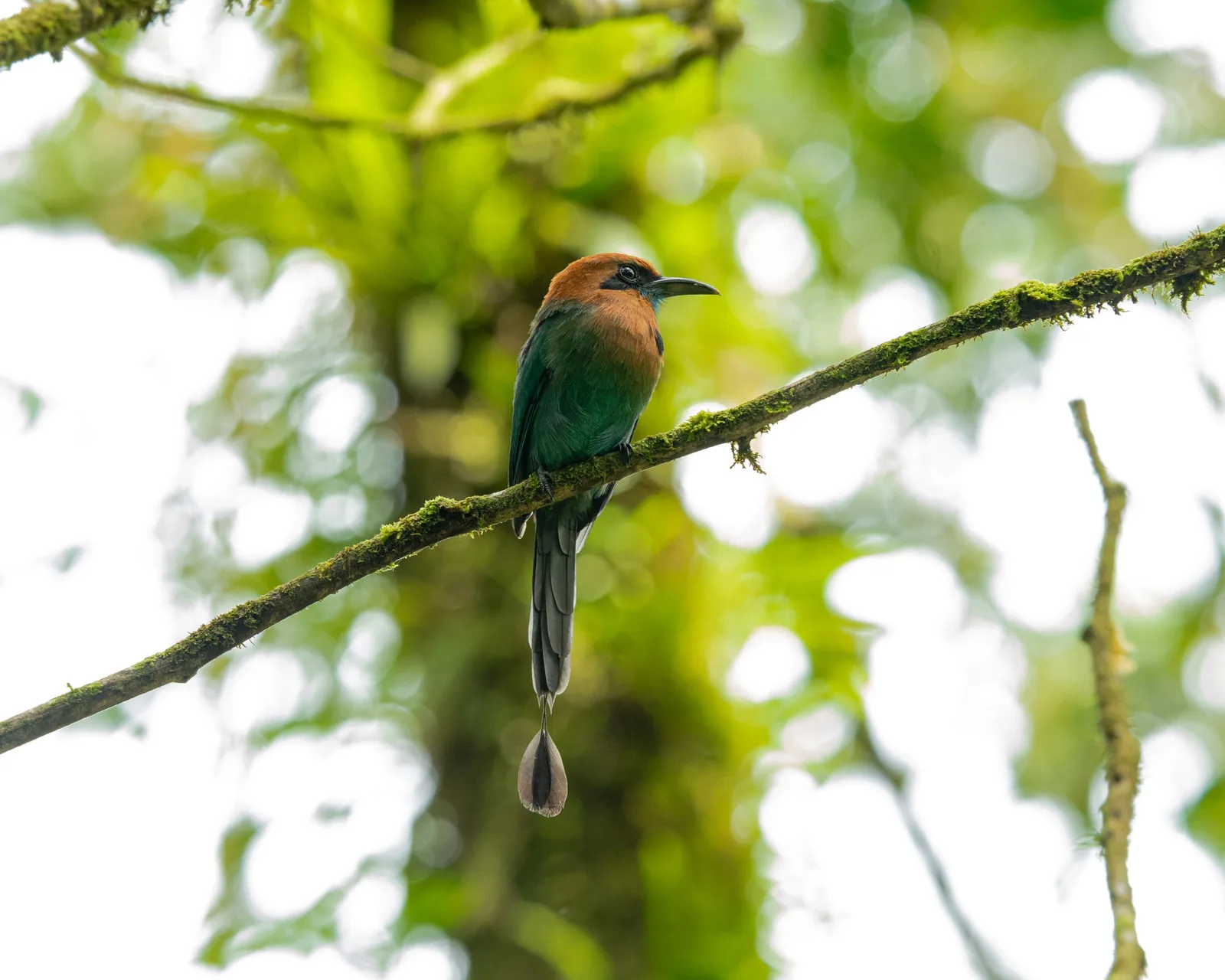
Motmot, trogons, a scarce tanager and two coasts in one walk
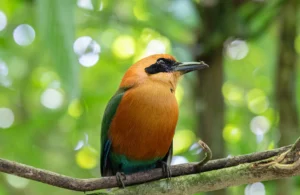
Broad-billed Motmot. One bird, seen well, including the bare-shafted racket tail. In July we had five motmot species on this corridor; this time the Broad-billed was the only one.
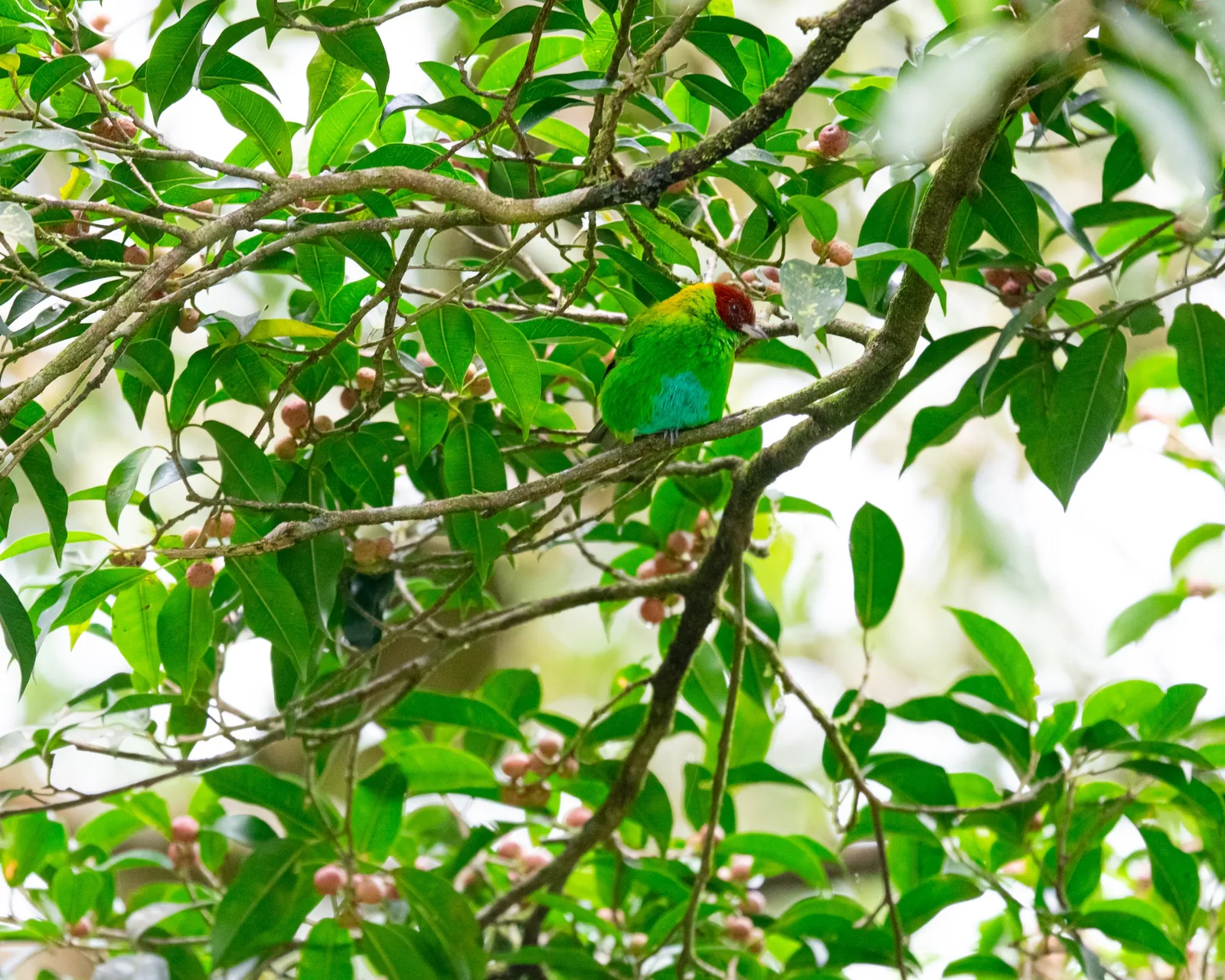
Rufous-winged Tanager. Two birds in a fruiting fig, with the golden nape band and turquoise belly patch showing well. It is a scarcer tanager of the Caribbean foothills and easy to overlook among the more common species.
Two woodpeckers from two different coasts. Hoffmann’s Woodpecker is a bird of the dry Pacific side; Black-cheeked Woodpecker belongs to the wet Caribbean side. Seeing both on the same short walk is a small, concrete example of what makes the Tenorio Rainforest interesting: it sits right where the two slopes meet.
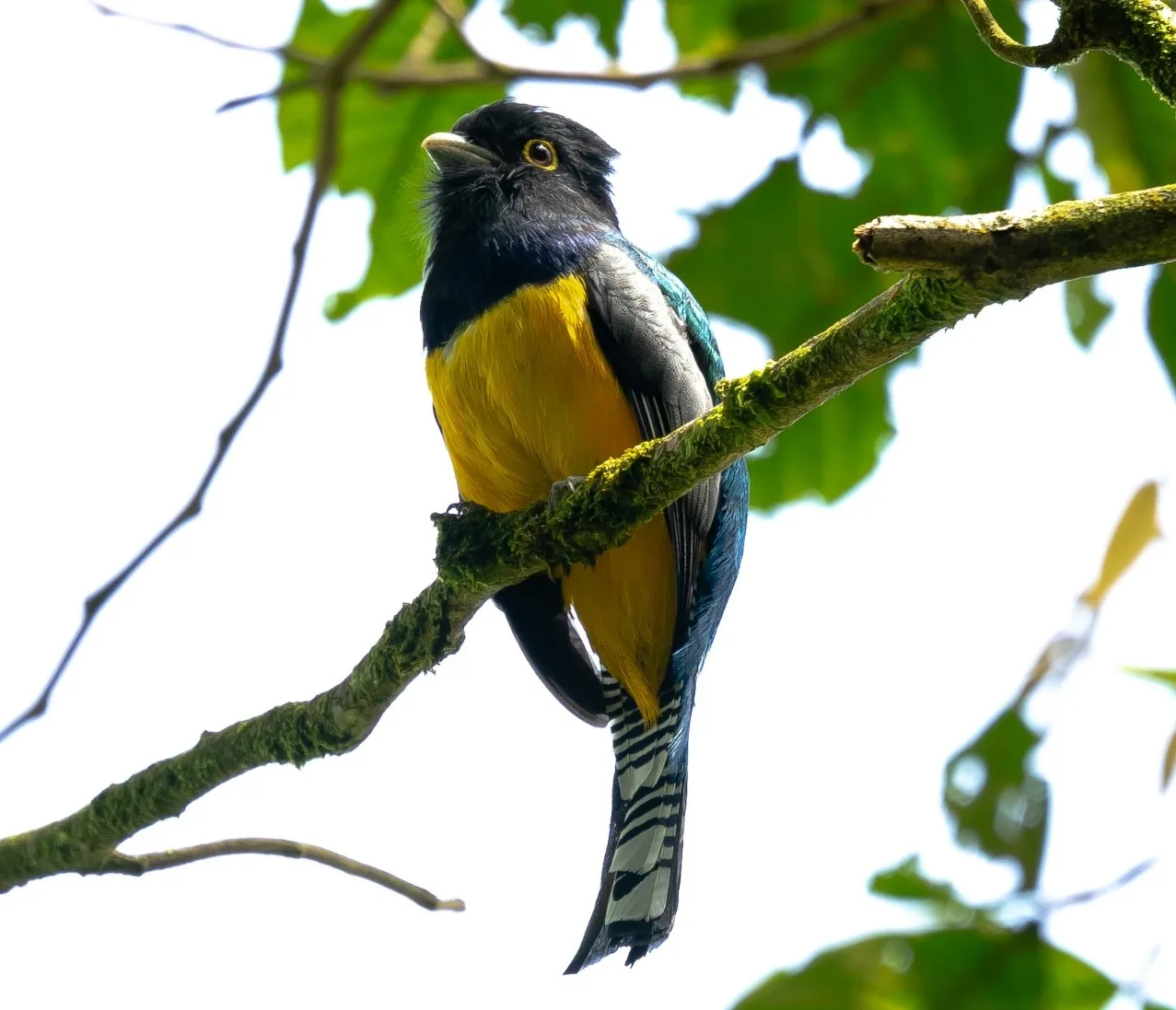
Two trogons, Gartered and Black-throated, and both large toucans, Yellow-throated and Keel-billed, three of each.
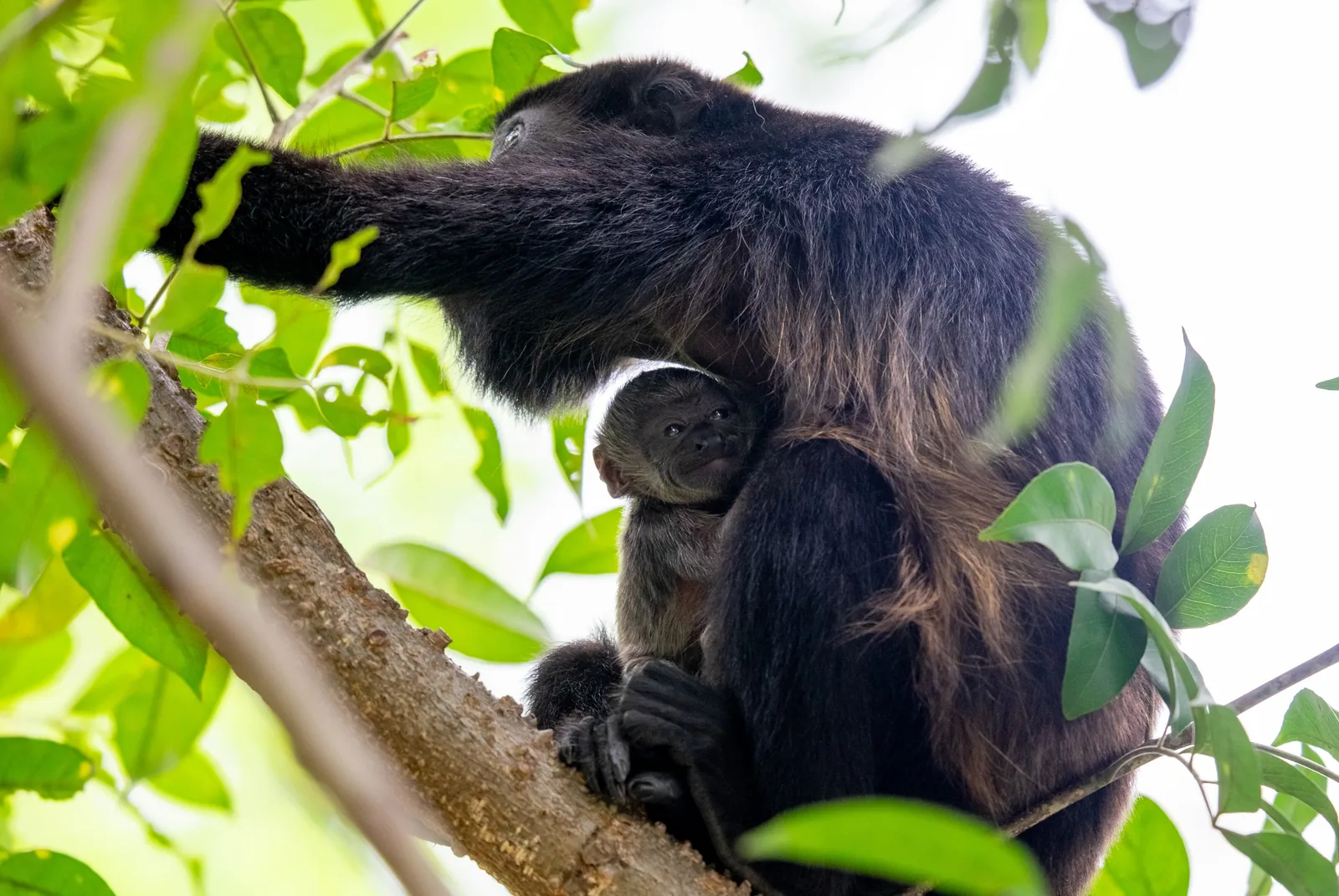
All 71 species, with counts
- Short-billed Pigeon1
- White-tipped Dove1
- Gray-chested Dove1
- Groove-billed Ani3
- Common Squirrel-Cuckoo1
- Violet-headed Hummingbird1
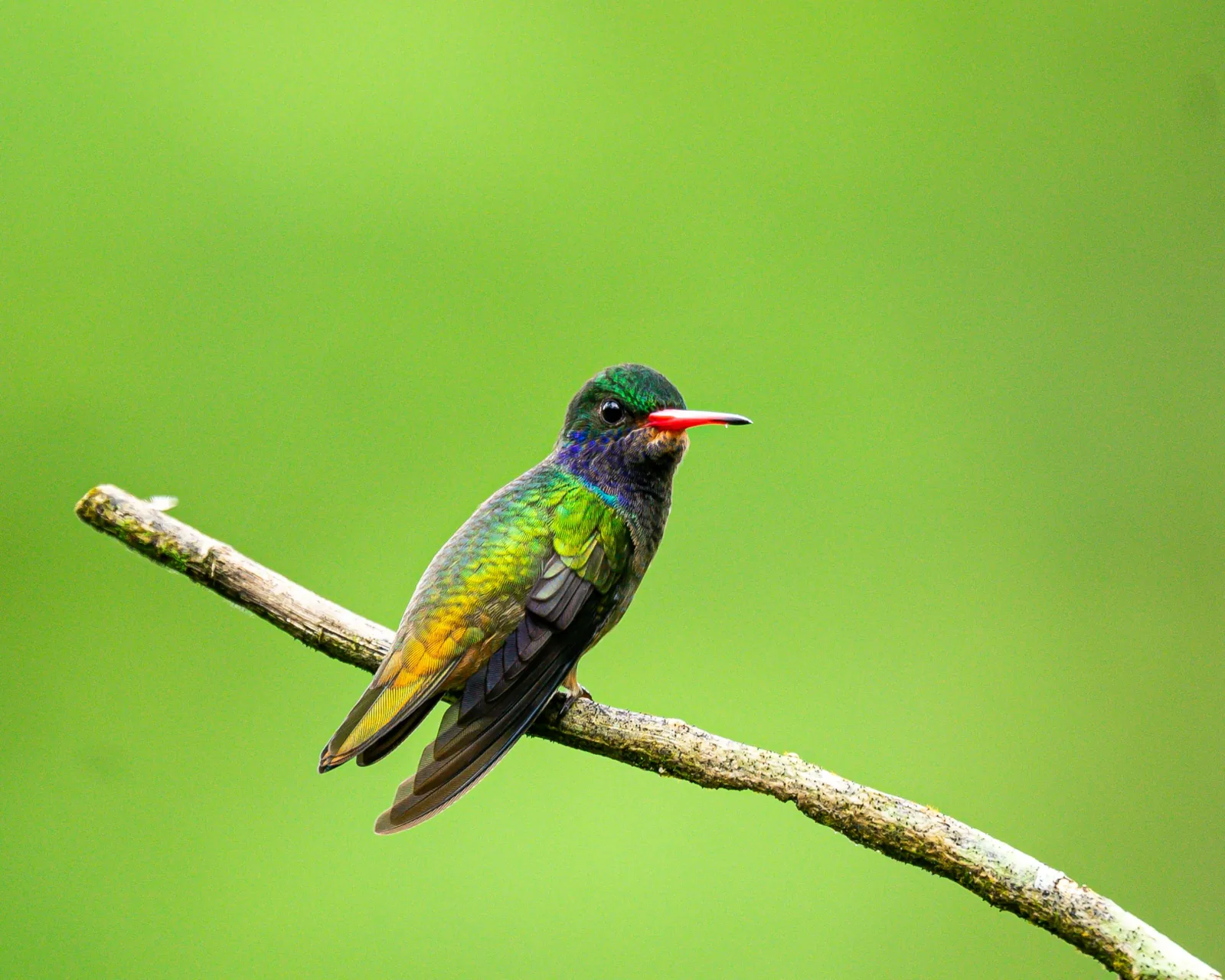
- Bronze-tailed Plumeleteer1
- Snowcap1
- Scaly-breasted Hummingbird2
- Rufous-tailed Hummingbird2
- Blue-throated Goldentail3
- Russet-naped Wood-Rail2
- Great Egret1
- Black Vulture4
- Turkey Vulture3
- Ornate Hawk-Eagle1
- White Hawk2
- Gartered Trogon1
- Black-throated Trogon1
- Broad-billed Motmot1
- Rufous-tailed Jacamar1
- Yellow-throated Toucan3
- Keel-billed Toucan3
- Black-cheeked Woodpecker1
- Hoffmann’s Woodpecker2
- Smoky-brown Woodpecker1
- Red-lored Amazon2
- Streak-headed Woodcreeper1
- Slaty Spinetail2
- Cinnamon Becard1
- Scale-crested Pygmy-Tyrant1
- Common Tody-Flycatcher3
- Black-headed Tody-Flycatcher2
- Yellow-bellied Elaenia1
- Eastern Wood-Pewee1
- Yellow-bellied Flycatcher1
- Dusky-capped Flycatcher1
- Great Kiskadee1
- Boat-billed Flycatcher2
- Gray-capped Flycatcher1
- Tropical Kingbird1
- Lesser Greenlet1
- Red-eyed Vireo2
- White-breasted Wood-Wren1
- Swainson’s Thrush1
- Clay-colored Thrush2
- Yellow-crowned Euphonia2
- Olive-backed Euphonia3
- Black-striped Sparrow1
- Orange-billed Sparrow1
- Baltimore Oriole1
- Great-tailed Grackle2
- Black-and-white Warbler2
- Tennessee Warbler1
- Olive-crowned Yellowthroat1
- Tropical Parula1
- Blackburnian Warbler1
- Yellow Warbler1
- Chestnut-sided Warbler1
- Buff-rumped Warbler1
- Carmiol’s Tanager2
- Blue-black Grosbeak1
- Crimson-collared Tanager1
- Scarlet-rumped Tanager3
- Blue-gray Tanager1
- Rufous-winged Tanager2
- Green Honeycreeper2
- Thick-billed Seed-Finch2
- Variable Seedeater4
- Bananaquit2
- Buff-throated Saltator5
The migrants have arrived
October is when North American migrants pour into Costa Rica, and this checklist shows it. Ten of the 71 species were northern migrants: Blackburnian, Chestnut-sided, Black-and-white, Tennessee and Yellow Warblers, Swainson’s Thrush, Baltimore Oriole, Eastern Wood-Pewee, Yellow-bellied Flycatcher and Red-eyed Vireo.
If you bird in the United States or Canada, many of these are birds from your own backyard and local woods. In October they are here, feeding in the same forest as the Snowcap.
What this morning adds to the July report
The July report covered two short afternoons at personal locations, with 52 species between them. This morning, in a single session filed at a hotspot, produced 71. The two reports are not a fair comparison (different months, different hours, different effort), but together they start to give a picture of the corridor across the year.
- Toucans, againBoth large toucans were present, three of each. Toucans are not birds of the Guanacaste coast; they are one of the clearest reasons to come up to the rainforest.
- Ten new arrivalsThe October list carries ten northern migrants that were absent in July.
- In both reportsCarmiol’s Tanager and White Hawk appeared on both outings.
One feeder, no borrowed photos
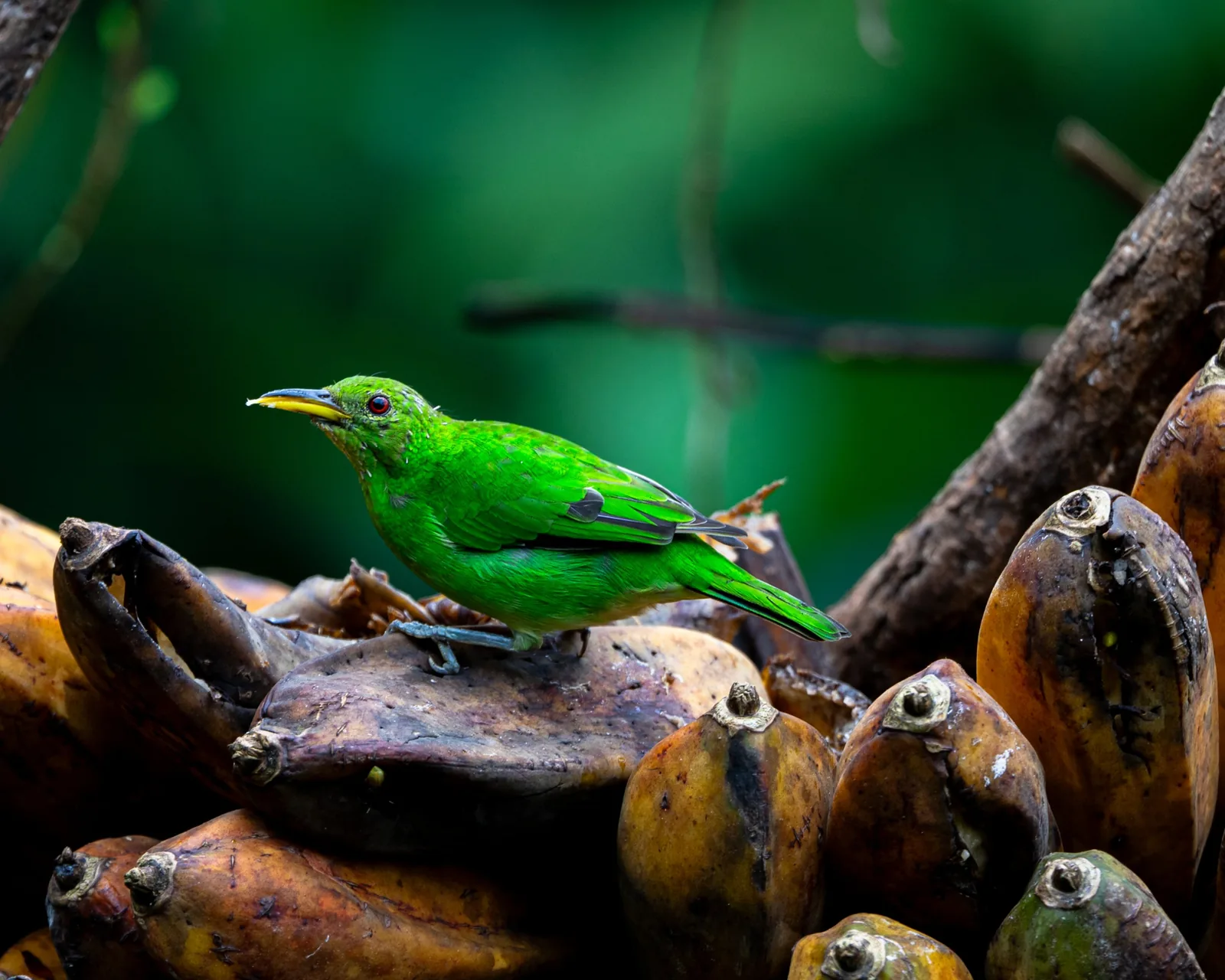
Everything on this list was seen or heard on the outing. One stop has a fruit feeder, where we photographed the Green Honeycreeper below, so you can weigh that record accordingly. Every photograph here was taken on this outing, and the eagle has none because nobody got one.
Practical notes for visiting birders
- Start earlyBy late morning the heat had cut activity noticeably.
- Go slowlyWe covered 1.27 km in four and a half hours, and that was the right pace.
- Listen at the gateThe Ornate Hawk-Eagle was found by its call before anyone saw it.
- Bring a guide who knows the lagoonThe tapir, the jacamar and the Snowcap all came from knowing where to stand and wait.
Who was looking
Miller Contreras Canales is a naturalist guide and wildlife photographer, and co-founder of Guanadreams CR. He has worked in tourism for over 30 years and has been guiding for more than 20. All the photographs in this report are his, taken on this outing. His eBird profile is public under the username Guanabird.
Bryan Montoya was born in Bijagua and has birded the Tenorio corridor all his life. He has recorded 599 species in eBird.
References
- eBird checklist S401805271, Bijagua–Tapir Valley hotspot, 12 October 2026.
- Garrigues, R. & Dean, R. The Birds of Costa Rica: A Field Guide.
- Merlin Bird ID (Cornell Lab of Ornithology), used in the field for confirmation only; all records represent our own identifications.
Before you plan a morning here
Sometimes. The reserve has a lagoon that Baird’s tapirs use, and on 12 October 2026 a male came out of the water and walked past our group. No honest guide can promise one, because tapirs are shy and move on their own schedule, but this is one of the best places near Guanacaste to try.
Yes. It has its own eBird hotspot, and in one slow morning we logged 71 species on a complete checklist, including Snowcap, Ornate Hawk-Eagle, Rufous-tailed Jacamar, both large toucans and ten North American migrants.
About two hours by road from Playas del Coco and about an hour and a half from Liberia, so it works as a full-day trip from the coast.
Early morning. Our checklist ran from 08:47 to 13:16, and bird activity dropped noticeably once the day turned hot late in the morning.
Make the next list yours
That was one morning, chosen for the day and walked slowly. Private birding days from anywhere on the Guanacaste coast: your group, your guide, your pace.