




The Blue Morpho Butterfly of Guanacaste, Costa Rica
A hand-sized flash of electric blue that seems to appear and vanish over a forest trail — Costa Rica’s national butterfly, and one of the most generous sights in the rainforest we reach.
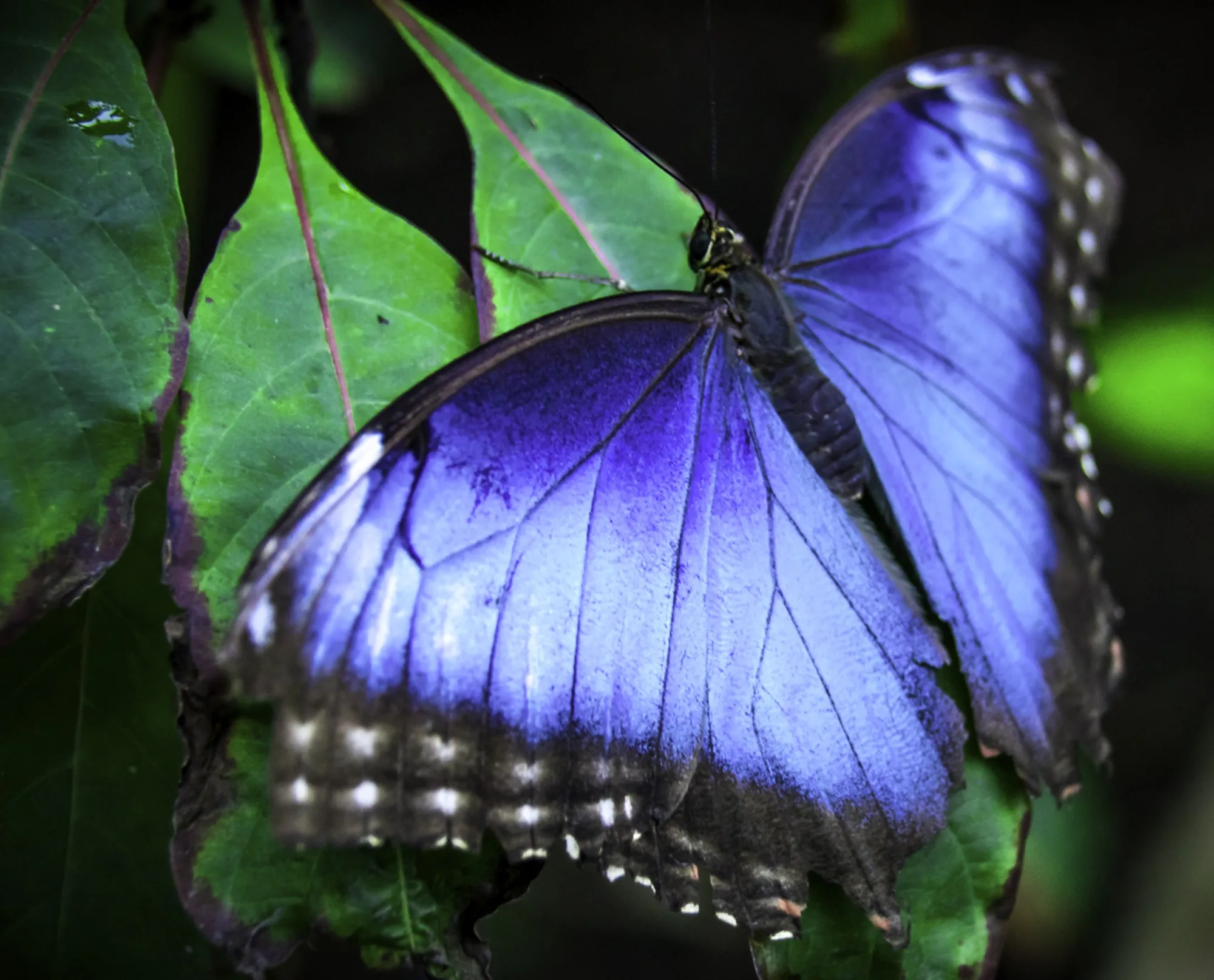
You’ll find the blue morpho along shaded forest edges, riverbanks and fruiting trees in the Tenorio rainforest — roughly an hour and forty-five minutes inland from the Guanacaste coast, not on the dry beaches themselves. It’s Costa Rica’s national butterfly, and one of the forest’s most generous sights: warm, bright mornings are best.
Most people don’t call it a morpho. They call it “the big blue butterfly” — the one that crosses a trail like a scrap of sky and is gone before anyone can point. On our days in the Tenorio rainforest, it’s the sight that makes a whole group stop walking at once.
Here’s the good news: this is one butterfly we don’t have to hedge about. The blue morpho genuinely lives in the humid forests our guests reach, and in the right place, on a warm morning, it’s less “if” than “watch the shade by the river.” What follows is where it lives, why its wings aren’t really blue, and how to see one without ever touching it.
The dry Guanacaste coast
The beaches and tropical dry forest around Playas del Coco are beautiful — but sunny and seasonal, not the shaded, humid world a morpho needs. You’ll meet plenty of butterflies here; the electric-blue giant isn’t a coast resident.
The Tenorio rainforest
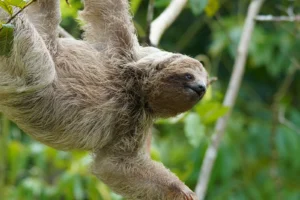
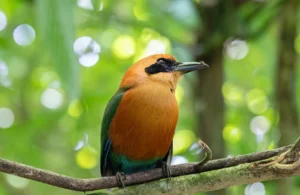
Cross inland and the forest changes: shaded river edges, fruiting trees, damp mornings. This is morpho country — the same rainforest day where our guests watch for sloths, toucans and frogs.
| The blue | Structural, not pigment — nanoscopic scales reflect only blue light. It never fades. |
|---|---|
| Diet | Fermenting fruit, mud, sap and minerals — not nectar. |
| National status | Costa Rica’s national butterfly (Morpho helenor narcissus), since 31 May 2022. |
| Where near you | Shaded rainforest edges, rivers and fruit trees in the Tenorio rainforest. |
Three things people get wrong
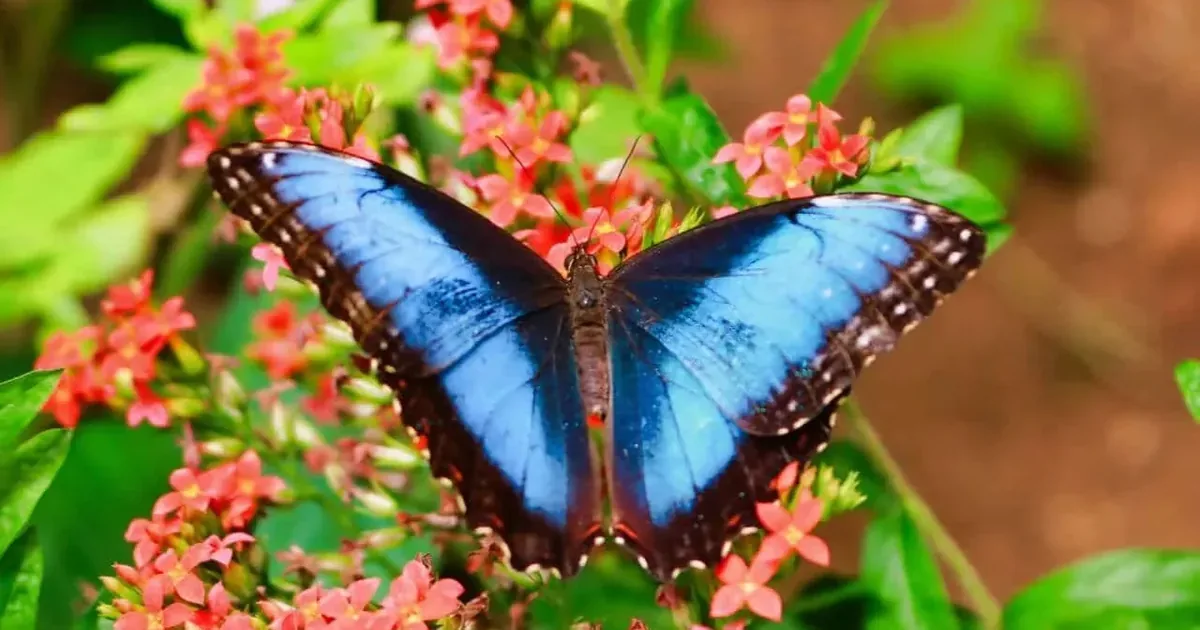
A national emblem, drifting through its own forest — Costa Rica’s blue morpho.
Two of Costa Rica’s living emblems share this same rainforest day — the sloth and the blue morpho are both national symbols. The Baird’s tapir, so often mistaken for one, actually belongs to Belize.
Why a morpho isn’t really blue
Crush a blue morpho’s wing and no blue comes off — there’s no blue pigment in it at all. The colour is structural: each scale is covered in ridges built at the scale of a wavelength of light, shaped so only blue bounces back to your eye — the same trick that colours a soap bubble. Because it’s built from shape, not dye, it never fades, which is why laboratories study the morpho for paints and screens that never bleach.
Wings open
The upper side flares that impossible blue as it flies.
Wings closed
The underside is brown with owl-like eyespots — near-perfect bark camouflage.
Flash & vanish
In flight it flickers blue-to-brown and seems to blink out, losing predators like the jacamar.
That flicker is also why it’s so hard to photograph: the moment it lands it folds its wings and hides the blue completely. With a wingspan up to about 20 centimetres, it’s one of the largest butterflies you’ll ever stand next to — and one of the quietest to disappear.
The butterfly I thought was drunk
As a kid, I was sure the blue morphos were drunk. They feed on fermenting fallen fruit, and they fly in this loping, zig-zag way — so of course, I figured, they’re tipsy. It took me years of watching them to learn the truth, and it’s better than the myth: that erratic flight is defense. A morpho’s main predators are birds, and every time it beats its wings the blue flashes on and the brown side vanishes — open, gone, open, gone — while it loops and bobs through the shade. The bird loses the line. Now you see me, now you don’t. The “drunk” butterfly turned out to be one of the forest’s sharpest escape artists.
The blue always looks like luck — even when the forest is generous.
Private tour from Guanacaste
Sloth & Waterfall Rainforest Combo
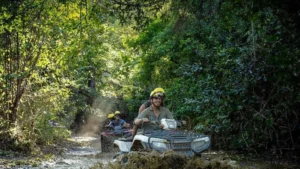
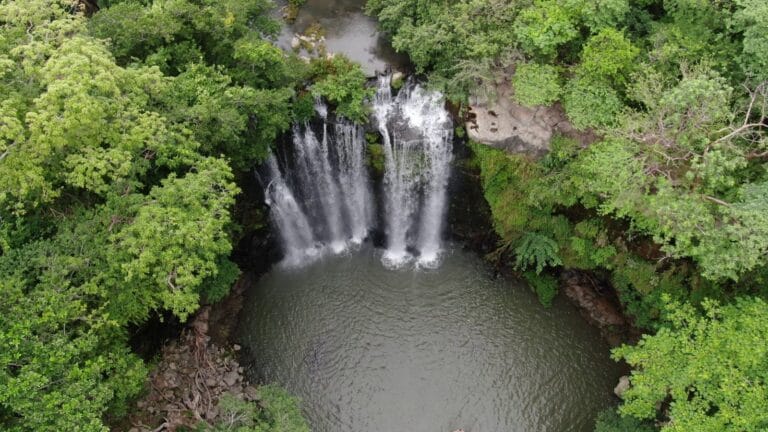
A private day in the Tenorio rainforest, about two hours from the coast: rainforest trails where blue morphos drift through the understory, the private reserves where we look for sloths, and the Llanos de Cortés waterfall. Your own naturalist guide and transport from your hotel.
Other wings in the same forest
Owl butterfly
Caligo — huge eyespots, flies at duskLongwings
Heliconius — slow, toxic, long-livedGlasswings
See-through wings, almost invisible“Eighty-eight”
Diaethria — an 88 printed underneath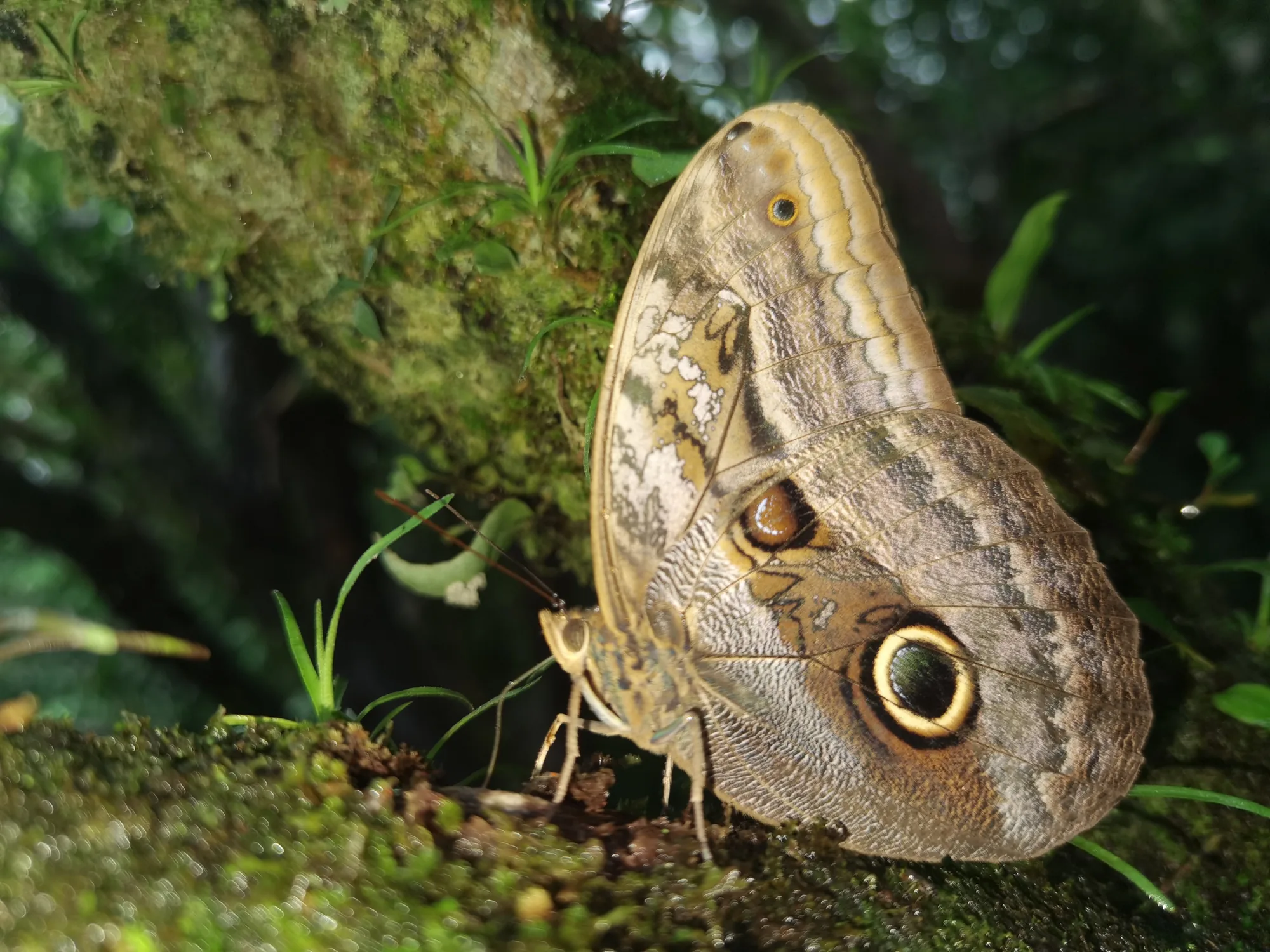
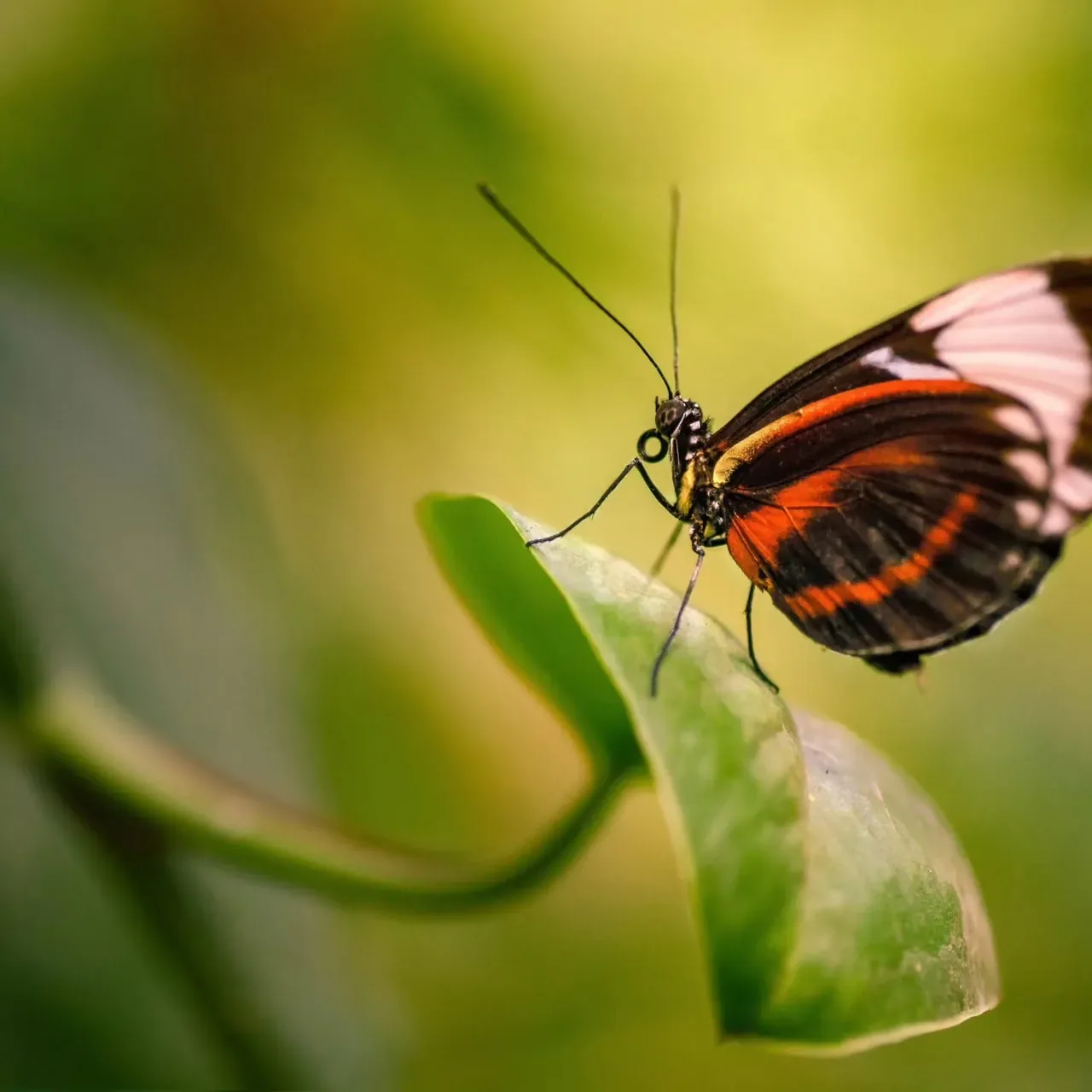
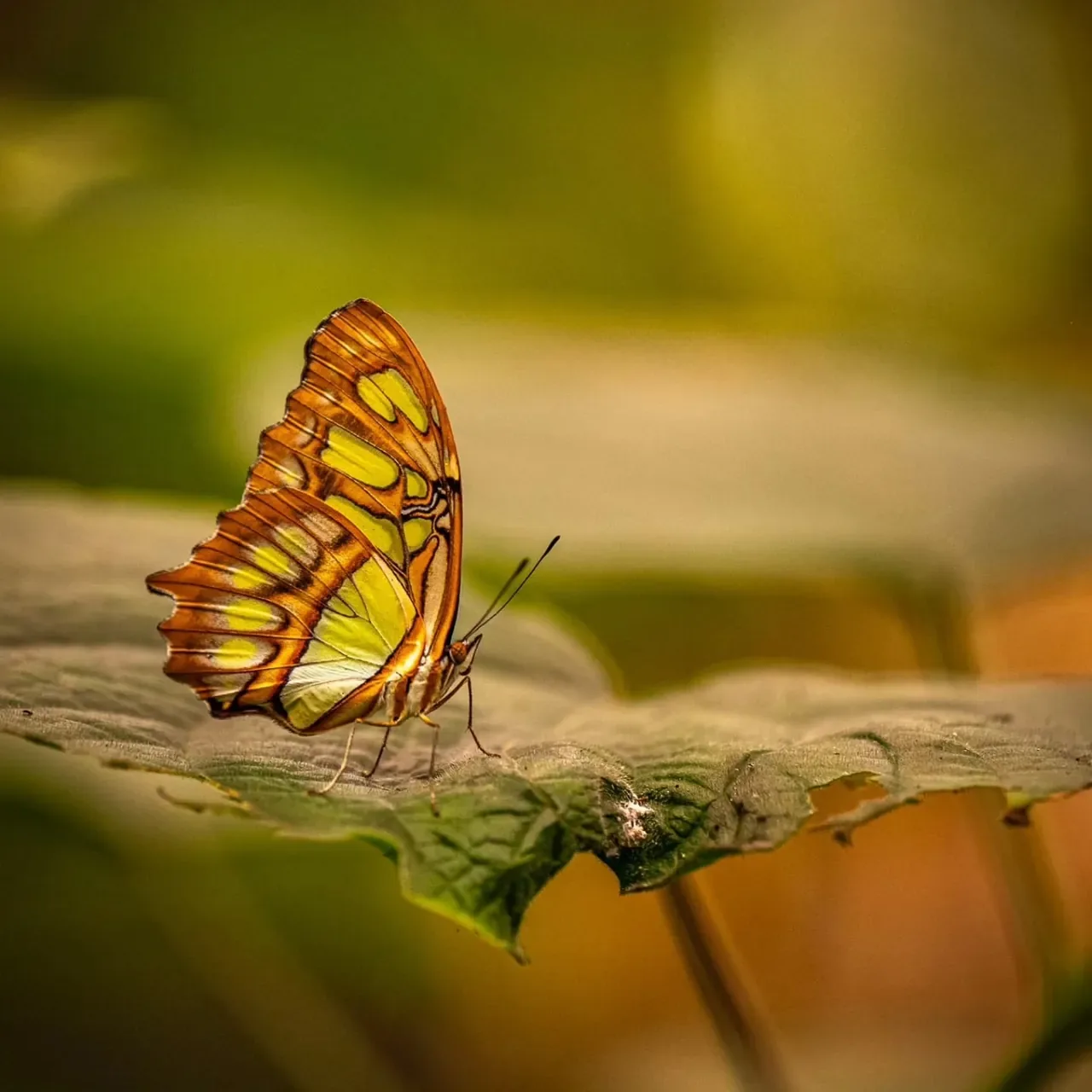
The morpho itself starts life as a red-and-yellow caterpillar in a communal silk web, then a chrysalis, before the adult ever takes to the air.
Look to the shade
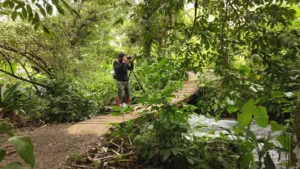
Search shaded edges, riverbanks and fruiting trees — not open sun. Warm mornings are best.
Watch it fly
At rest it hides the blue. The magic is in flight, so keep your eyes on the air, not the leaves.
Bring patience (and a scope)
Your guide will find one and steady it in the scope so everyone gets the view — and the photo.
We watch — we don’t handle
We never hold or pose wildlife, butterflies included. A morpho’s wings are fragile and its body absorbs whatever is on our skin — sunscreen, repellent, salt. So we watch from a respectful distance. Seeing it wild, on its own terms, is the whole point.
Blue morpho — quick questions
In the Tenorio rainforest near the town of Bijagua, about an hour and forty-five minutes inland from the coast — along shaded forest edges, riverbanks and fruiting trees. It isn’t a resident of the dry Guanacaste beaches themselves; you reach it on a rainforest day.
Its colour is structural, not chemical. Microscopic ridges on each wing scale reflect only blue light — the same effect as a soap bubble. Because it comes from shape rather than dye, the blue never fades.
Warm, bright mornings along shaded water are best. Morphos are most active when it’s warm, and they favour the cooler edges of the forest by rivers and fruiting trees.
Yes — Costa Rica named the blue morpho (Morpho helenor narcissus) its national butterfly on 31 May 2022, as its symbol of lepidopteran fauna.
Come find it in the rainforest
The blue morpho shares its forest with sloths, toucans and frogs — all on one day in the Tenorio rainforest. Tell us where you’re staying along the Guanacaste coast and we’ll build the day around you.