





What this report is, and what it is not
This is not an expedition report. These are a guide’s field notes from two working afternoons in the Tenorio rainforest, taken while leading general nature and wildlife tours rather than dedicated birding trips. On both days I was the only person in the group actively looking at birds, which is why both eBird checklists are submitted with a party size of one.
I think that makes the lists more useful to a visiting birder, not less. What follows is what a slow walk through this area gives you in three and a half hours in the middle of the day, in the middle of the wet season, without playback and without chasing anything. If that is the baseline, a dedicated morning here is a different conversation entirely.
Both checklists are public and linked below. Every species named in this report comes from one of them.
Location and access
Bijagua de Upala, Alajuela province, Costa Rica. Two walking routes from a shared start point on the Caribbean side of the Tenorio massif: 10.727, -85.065 and 10.726, -85.065.
This stretch of the Tenorio rainforest sits on the Caribbean slope of Volcán Tenorio, roughly between the dry Pacific lowlands of Guanacaste and the wet Caribbean foothills. That position is the whole story of the place: species from both slopes overlap here, and the birding changes character within a few kilometres of road.
Access is straightforward. The village is on Route 6 between Cañas and Upala. Coming from the Guanacaste coast it is roughly an hour and three quarters by road from Playas del Coco or Papagayo, and two and a half hours from Tamarindo. There is lodging in and around the village at several price points, and several private reserves and feeder gardens in the immediate area charge modest entry fees.
A note on the coordinates. Both checklists were submitted at personal locations rather than at named eBird hotspots, and both cover walking routes of 11–14 km. That means I can tell you what the area produced on each day, but I cannot honestly assign individual birds to individual reserves or trails from the checklist data alone. Where I remember where something was, I say so and label it as recollection. Future lists from this area will be split by site.
Visit 1 — 15 July 2026
11:23–15:06 · 14.0 km walked · 34 species
A slower, more open walk. Fruiting trees were productive and the toucan family was everywhere — all three species of the northern lowlands in a single afternoon, which is the combination most visitors come here hoping for.
Full list
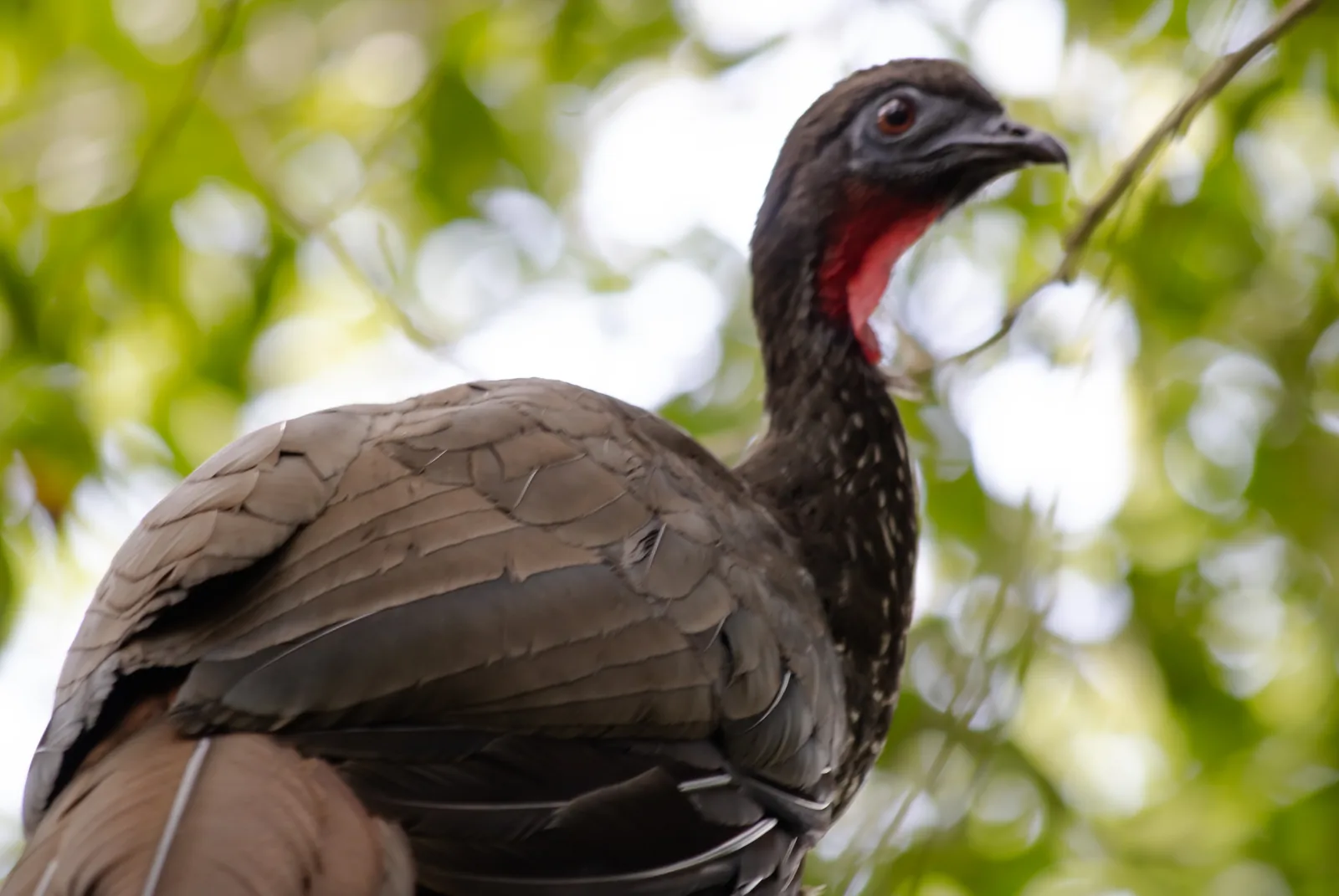
Crested Guan (3) · Common Squirrel-Cuckoo (1) · Rufous-tailed Hummingbird (1) · Black Vulture (10) · Turkey Vulture (7) · White Hawk (1) · Tody Motmot (1) · Lesson’s Motmot (2) · Rufous Motmot (2) · Ringed Kingfisher (1) · American Pygmy Kingfisher (1) · Collared Aracari (3) · Yellow-throated Toucan (3) · Keel-billed Toucan (2) · Black-cheeked Woodpecker (2) · Hoffmann’s Woodpecker (1) · Pale-billed Woodpecker (1) · Laughing Falcon (1) · Barred Antshrike (1) · Streak-headed Woodcreeper (3) · White-collared Manakin (2) · Masked Tityra (6) · Common Tody-Flycatcher (2) · Great Kiskadee (5) · Brown Jay (5) · Clay-colored Thrush (8) · Yellow-crowned Euphonia (2) · Yellow-throated Euphonia (4) · Montezuma Oropendola (6) · Scarlet-rumped Tanager (5) · Blue-gray Tanager (3) · Red-legged Honeycreeper (2) · Green Honeycreeper (4) · Bananaquit (3)
Notes
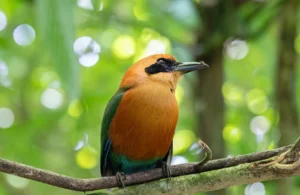
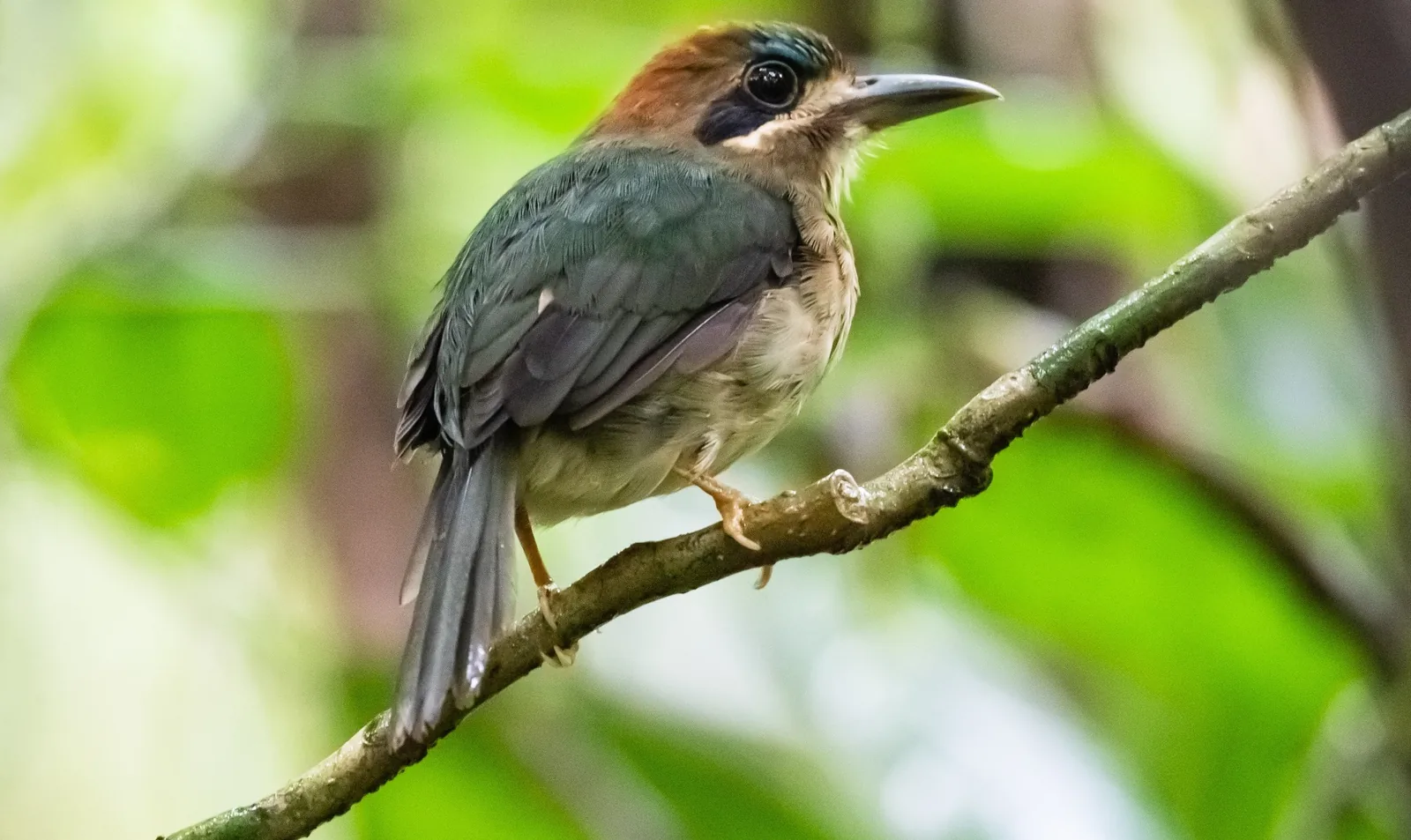
The Tody Motmot was the bird of the day — a small, quiet, easily overlooked motmot that most visitors miss entirely. It came in low and stayed long enough to be watched properly. Three motmot species on the walk: Tody, Lesson’s and Rufous.
Two kingfishers on the same route — Ringed and American Pygmy — is a nice indication of how much water this landscape holds. The Pygmy is the harder of the two and usually wants a shaded, slow-moving stream edge.
Hoffmann’s Woodpecker here is worth flagging for anyone keeping track of slope distributions: it is a Pacific-slope bird, and this side of Tenorio sits close enough to the divide that it turns up.
Visit 2 — 30 July 2026
11:10–14:38 · 11.7 km walked · 29 species
A completely different afternoon on essentially the same ground, two weeks later and starting within fifteen minutes of the same time.
Part of this walk was on the trails at Las Heliconias, on the Caribbean side of Tenorio. I remember that clearly, and I remember that the motmots and the antbirds came from that stretch — but the checklist was submitted as one continuous route and does not separate Las Heliconias from the rest of the ground covered, so treat the attribution as my recollection rather than as data.
Full list
Great Curassow (1) · Short-billed Pigeon (1) · Rufous-tailed Hummingbird (2) · King Vulture (1) · White Hawk (1) · Slaty-tailed Trogon (2) · Gartered Trogon (1) · Rufous Motmot (2) · Keel-billed Motmot (2) · Broad-billed Motmot (1) · Black-cheeked Woodpecker (2) · Spotted Antbird (1) · Ocellated Antbird (1) · Common Tody-Flycatcher (1) · Yellow-olive Flatbill (2) · Mistletoe Tyrannulet (1) · Dusky-capped Flycatcher (3) · Lesser Greenlet (1) · Cabanis’s Wren (2) · Black-headed Nightingale-Thrush (1) · Yellow-crowned Euphonia (2) · Yellow-throated Euphonia (1) · Montezuma Oropendola (6) · Tropical Parula (1) · Chestnut-capped Warbler (1) · Carmiol’s Tanager (1) · Scarlet-rumped Tanager (5) · Blue-gray Tanager (2) · Green Honeycreeper (5)
Notes
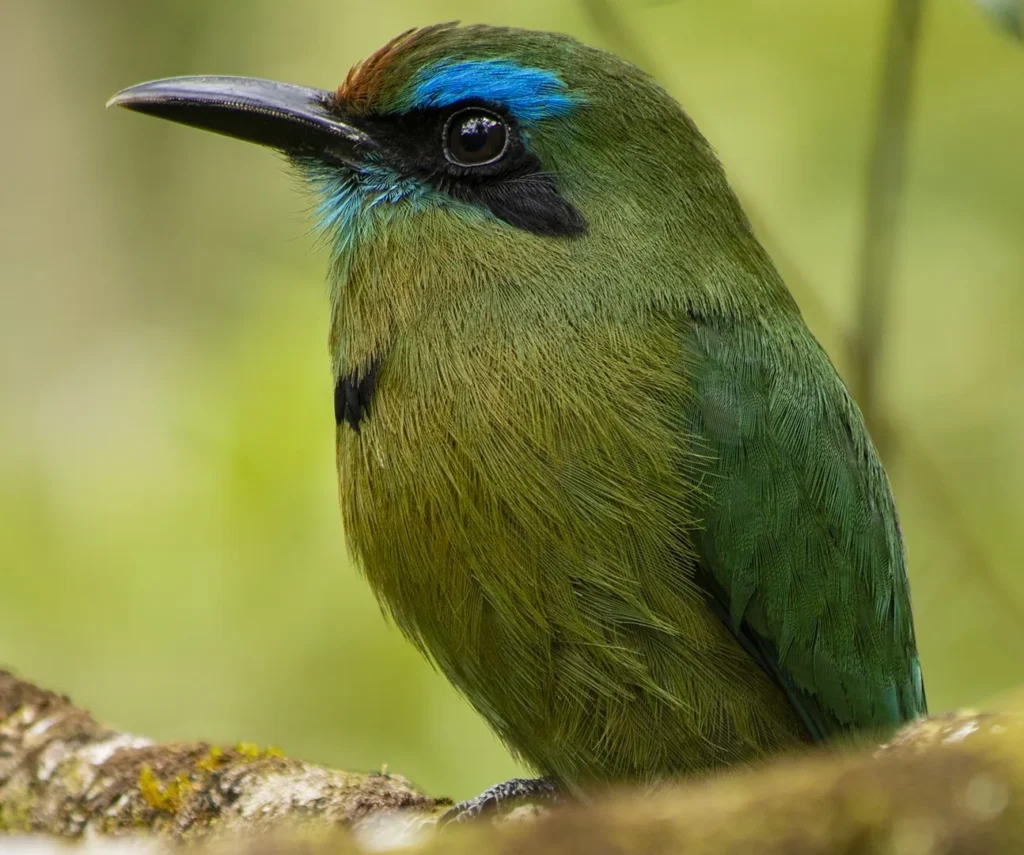
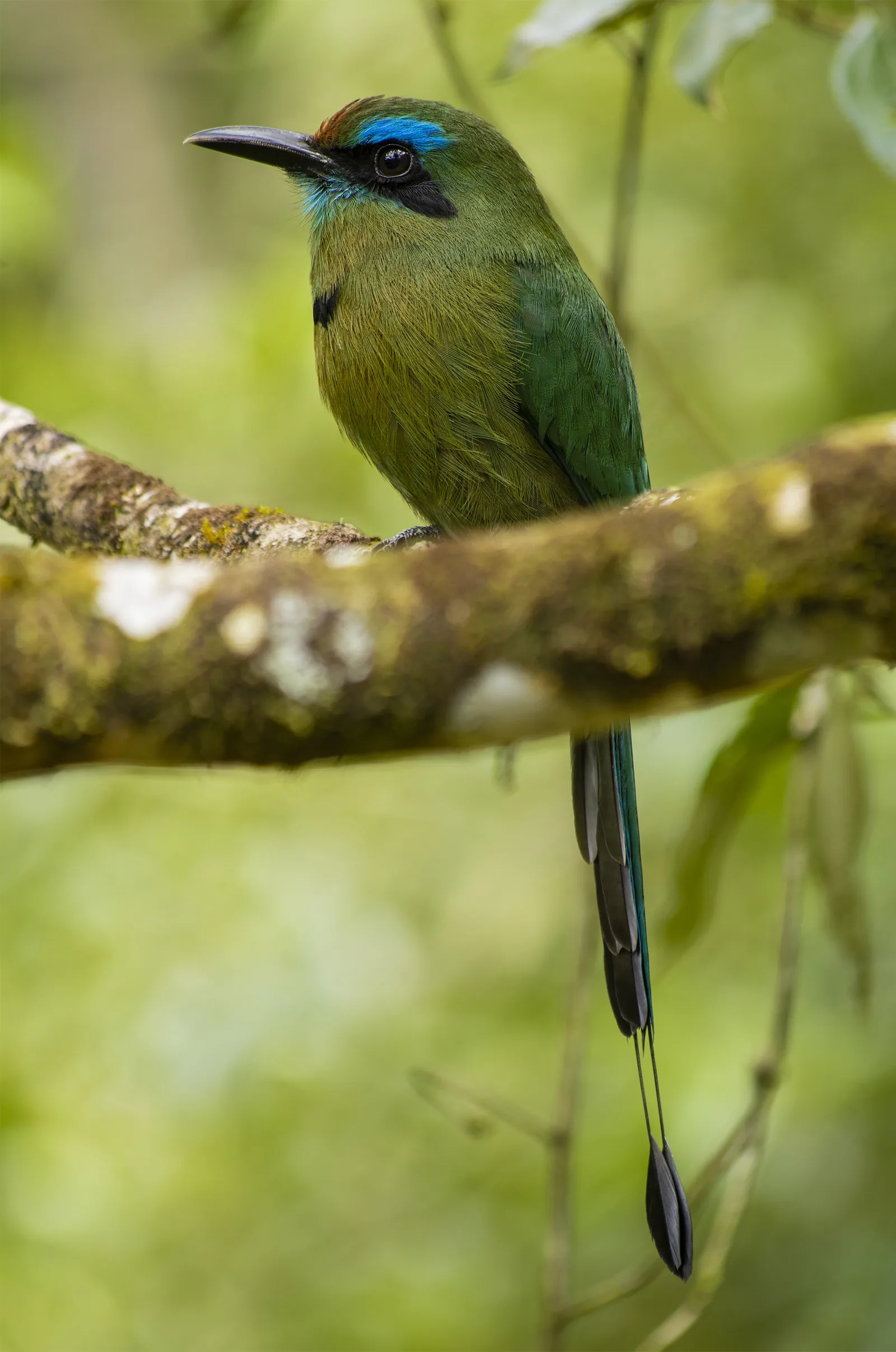
Keel-billed Motmot (2). The headline bird of both visits. This is a restricted-range species, uncommon and local through its whole distribution, and it appears in roughly one in ten checklists at the well-watched sites in this corridor. Two birds together, seen well. Anyone working through the Costa Rican motmots should understand that the Tenorio rainforest is one of the places where this is a realistic target rather than a lottery ticket — but it is still a bird that rewards patience and a guide who knows the specific stretches of forest it uses.
Three motmot species again: Keel-billed, Rufous and Broad-billed. Across both visits that makes five motmot species in the same small area within a fortnight — Tody, Lesson’s, Rufous, Broad-billed and Keel-billed.
Spotted Antbird and Ocellated Antbird together. Both were feeding actively. The behaviour was consistent with birds attending an army ant swarm, but the swarm itself was off the trail and I could not get to it to confirm, so I am reporting what I saw and not what I inferred. Ocellated Antbird in particular is an obligate ant-follower, and finding it at all usually means the ants are close.
King Vulture. One bird, overhead. Never a given anywhere. Great Curassow (1), Slaty-tailed Trogon (2) and Carmiol’s Tanager round out an afternoon that leaned heavily toward interior forest species.
What two visits fifteen days apart actually showed
This is the part I would want to read if I were planning a trip here.
Same area. Same start time, within fifteen minutes. Almost the same duration. Two weeks apart.
On 15 July I recorded all three toucans and no antbirds. On 30 July I recorded two antbirds and no toucans.
Only eleven species appeared on both lists. Across the two afternoons the combined total was 52 species, of which 41 were seen on one visit only.
I am not going to dress that up as anything mystical. Fruiting trees move, ant swarms move, and a walk that drifts a hundred metres toward closed forest instead of open edge produces a different bird list. But it is the honest answer to the question visitors ask most often, which is some version of how many days do I need here. One afternoon in the Tenorio rainforest will give you good birds. It will not give you this area’s list.
Practical notes for visiting birders
- Timing. Both of these walks were middle-of-the-day, in the wet season, which is close to the worst case for activity. Early morning here is substantially better. The wet season is also when this slope is greenest and least crowded.
- Effort. Both routes were long walks — 11.7 and 14.0 km — at a slow pace with frequent stops. This is not a roadside-birding destination; the good birds are in the forest and along the quieter edges.
- Playback. None used on either visit.
- Detection. These lists record birds I saw. Several vocal species — toucans among them — were heard on both days without being logged, because I was working rather than compiling. Treat the totals as a floor, not a ceiling.
- Getting the specialties. Keel-billed Motmot, Tody Motmot and the antbirds are not birds you stumble into reliably on your own in a few hours. They are why local knowledge matters here.
References
- Garrigues, R. & Dean, R. The Birds of Costa Rica: A Field Guide.
- Merlin Bird ID (Cornell Lab of Ornithology) — used in the field for confirmation only; all records represent my own identifications.
- eBird — checklists S372583267 and S378202125, and the public bar chart data for the Tenorio-area hotspots.
About the observer
Miller Contreras Canales is co-founder, lead naturalist guide and wildlife photographer of Guanadreams CR, a private nature tour operator based in Guanacaste, Costa Rica. He has worked in the Costa Rican tourism industry for more than thirty years and has been a naturalist guide for over twenty. His eBird profile is public under the username Guanabird.
Guanadreams runs birding and wildlife photography days in the Tenorio rainforest corridor and across northwest Costa Rica. See our birding and photography experiences.
Comments, corrections and questions about any record in this report are welcome.
Those were two working afternoons on the trails we use for our birding days. If you want the list to be yours instead of ours — Rainforest Birding in the Tenorio corridor →