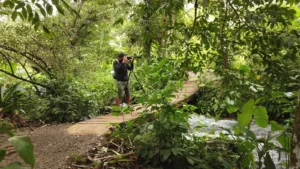
Most days start around 5:00 a.m., reach the site between 6:00 and 7:00, and include a morning walk, lunch and an afternoon walk when the light allows. Drive times are from the previous night's lodge.
Private pickup at Liberia airport. With an early flight, a first dry-forest walk at golden hour near your lodge.
Birding starts at first light on private land along the park road; we enter the Las Pailas sector when it opens at 8:00. If we find an army-ant swarm, we wait beside it: it is the best chance of seeing the Rufous-vented Ground-Cuckoo, the forest's phantom. Afternoon at the lodge or the hot springs. Las Pailas is closed on Mondays, so this day never falls on one.
Look for: White-throated Magpie-Jay · Long-tailed Manakin · Lesser Ground-Cuckoo · Turquoise-browed Motmot · Rufous-vented Ground-Cuckoo (rare; it follows army-ant swarms — listen for its bill-clacking)
eBird list: Rincón de la Vieja, Las Pailas sector
A riverboat on the Tempisque River and the wetland beside it. The boat is shared with other visitors, and your guide stays with your group the whole time. March is the best month: the marsh shrinks and waterbirds gather. More on our wetland and dry forest birding day.
Look for: Roseate Spoonbill · Wood Stork · Jabiru (possible) · Bare-throated Tiger-Heron · American Crocodile
eBird list: Palo Verde National Park
Santa Rosa National Park for the Elegant Trogon (best in May), the Santa María sector of Rincón de la Vieja, or a wildlife photography session — or a make-up day if rain or the volcano closed a park.
eBird lists: Santa Rosa National Park · Rincón de la Vieja, Santa María sector
Day 5 · Tenorio Rainforest
Sleep: Bijagua · ~1 h 45
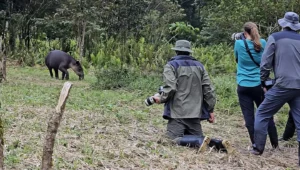
Dawn in a private reserve on the continental divide, where Pacific and Caribbean forests meet: three toucan species in one garden, hummingbirds and wild sloths. Optional night walk for frogs and tapir tracks. See our rainforest birding day.
Look for: Snowcap · Tody Motmot · Yellow-throated Toucan · Black-crested Coquette (Feb–Apr)
eBird list for the area: Tapir Valley, Bijagua
A second rainforest dawn on the lagoon or the wetland platform, then on to La Fortuna. Afternoon on a flat forest trail known for crakes and sloths.
Look for: Uniform Crake · White-throated Crake · Rufous-tailed Jacamar
Sunrise from a lodge deck and tower in the Arenal area, with the volcano behind the birds. Afternoon river float or rest.
Look for: Great Curassow · Crested Guan · Black-crested Coquette · Yellow-eared Toucanet (possible)
Leave at 4:30 to reach the cloud forest by 6:30. The quetzal feeds on aguacatillo, a wild avocado, and the reserve's guides know which trees are fruiting each week. In Bajo La Paz, the village below the valley, the Arias brothers and a local association put up artificial nest boxes and guard active nests from predators so more chicks fledge; nesting runs from about February to June, the months when quetzals are easiest to see. In the afternoon, a walk to the La Danta waterfall. Read more about the Resplendent Quetzal.
Look for: Resplendent Quetzal · Coppery-headed Emerald (endemic) · Purple-throated Mountain-gem · Violet Sabrewing
eBird list: Valle de los Quetzales
The best photo light of the trip in the valley, and the raptor nest from a respectful distance when it is active. Midday drive to Vara Blanca and an afternoon in a hummingbird garden.
Look for: Ornate Hawk-Eagle (seasonal) · Collared Trogon · Black-faced Solitaire
Day 10 · Cinchona and fly home
To SJO airport · ~1 h
Early coffee at the Cinchona viewpoint with barbets at eye level, then to San José airport. Book flights after noon.
Look for: Red-headed Barbet · Prong-billed Barbet · Northern Emerald-Toucanet




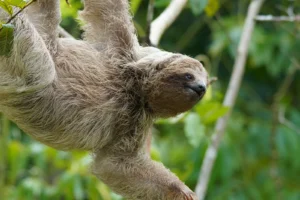 01 · NatureNature ExperiencesSloths, waterfalls and Río Celeste, with a local naturalist.Explore
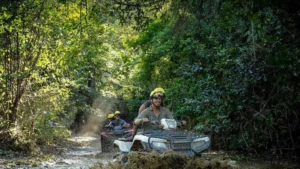 02 · AdventureAdventure ExperiencesATV trails, Tenorio rafting and canyon waterfalls.Explore
 03 · OceanOcean ExperiencesPrivate catamaran, sunset sailing and sport fishing in Papagayo.Explore
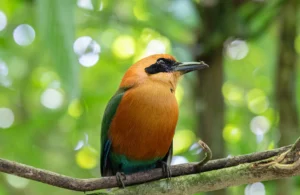 04 · BirdingBird WatchingPrivate birding days, sites and itineraries.Explore
 05 · PhotographyBird & Wildlife PhotographyPrivate photo days planned around the light.Explore