



The Baird’s Tapir (Danta): Costa Rica’s Gentle Giant — and Where to Find It Near Guanacaste
The danta is the largest land mammal in Central America — and the Tenorio rainforest, at the inland edge of Guanacaste, is one of Costa Rica’s best places to find one in the wild.
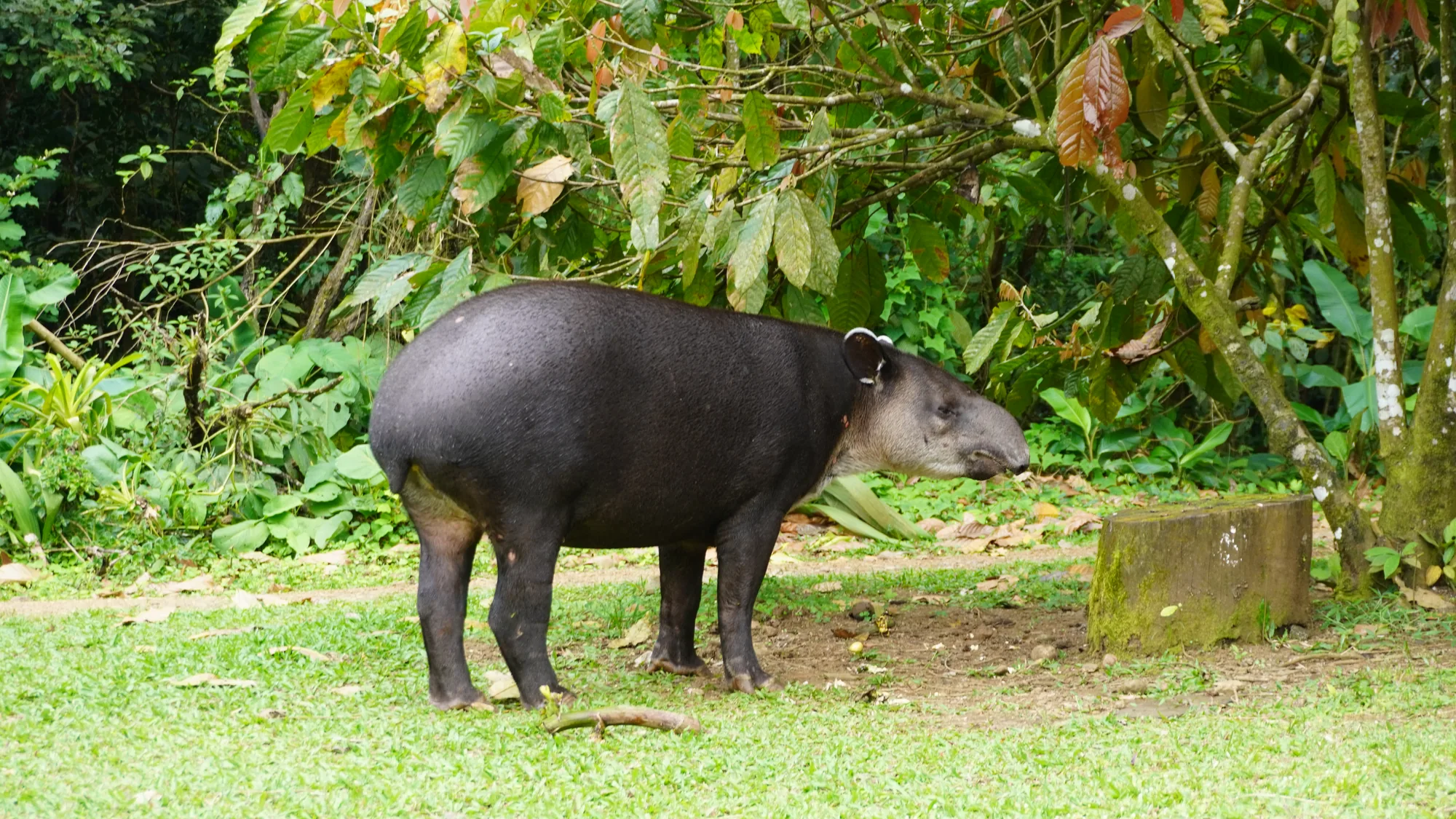
The Baird’s tapir — the danta — is the largest land mammal in Central America, and the Tenorio rainforest, at the inland edge of Guanacaste, Costa Rica, is one of the very best places in the country to find one in the wild. Shy and mostly nocturnal, the tapir shows itself on its own terms — and this is genuinely tapir country. They aren’t in the dry coastal Guanacaste of the beaches, but a couple of hours inland, in the rainforest, the danta is at home.
The dry coast has no tapirs — but the rainforest does
The dry forests and beaches of coastal Guanacaste aren’t tapir habitat — the danta needs deep, wet, undisturbed forest with permanent water. But that forest starts closer than most visitors realize. Climb inland toward the Tenorio–Miravalles corridor around Bijagua and you cross into a completely different Costa Rica: humid rainforest, blue rivers, and one of the last strongholds of the danta outside the Osa Peninsula.
The territory speaks for itself. Tenorio Volcano has a crater lake named Laguna Danta — Tapir Lagoon — and just below the park sits the Tapir Valley Nature Reserve, 220 hectares of primary forest bought and protected by locals specifically for this animal. When a place names its lake and its reserve after an animal, you know it belongs there.
What the danta actually is
After a thirteen-month gestation, a single calf is born covered in white stripes and spots — camouflage for the dappled forest floor. We call them sandías: little watermelons. Calves stay with their mothers up to two years, and tapirs can live around 30 years.
Private tour from Guanacaste
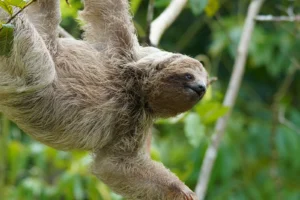
Sloth & Waterfall Rainforest Combo
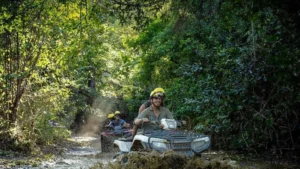
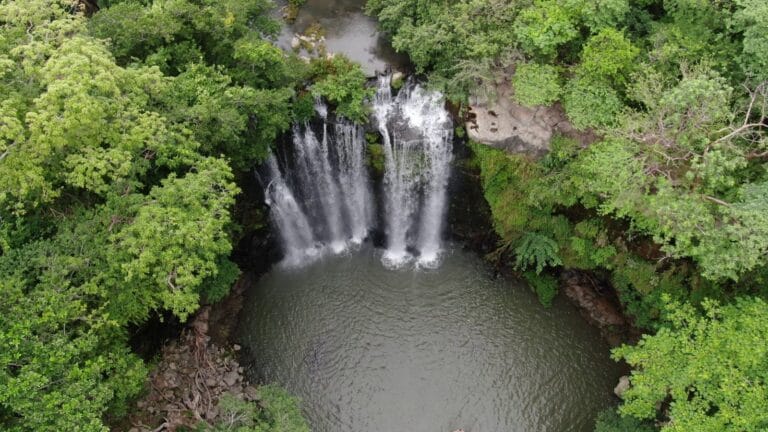
A private day in the Tenorio rainforest, danta country, about two hours from the coast: rainforest trails and the private reserves where we go looking for wildlife, plus the Llanos de Cortés waterfall. Your own naturalist guide and transport from your hotel.
The Baird’s tapir is Belize’s national animal — not Costa Rica’s
Here’s a detail even many Costa Ricans get wrong: the Baird’s tapir is the national animal of Belize, not of Costa Rica, where it’s affectionately called the “mountain cow.” Costa Rica doesn’t claim it as a national symbol — but it protects it fiercely, and the Tenorio rainforest is proof of that quiet commitment.
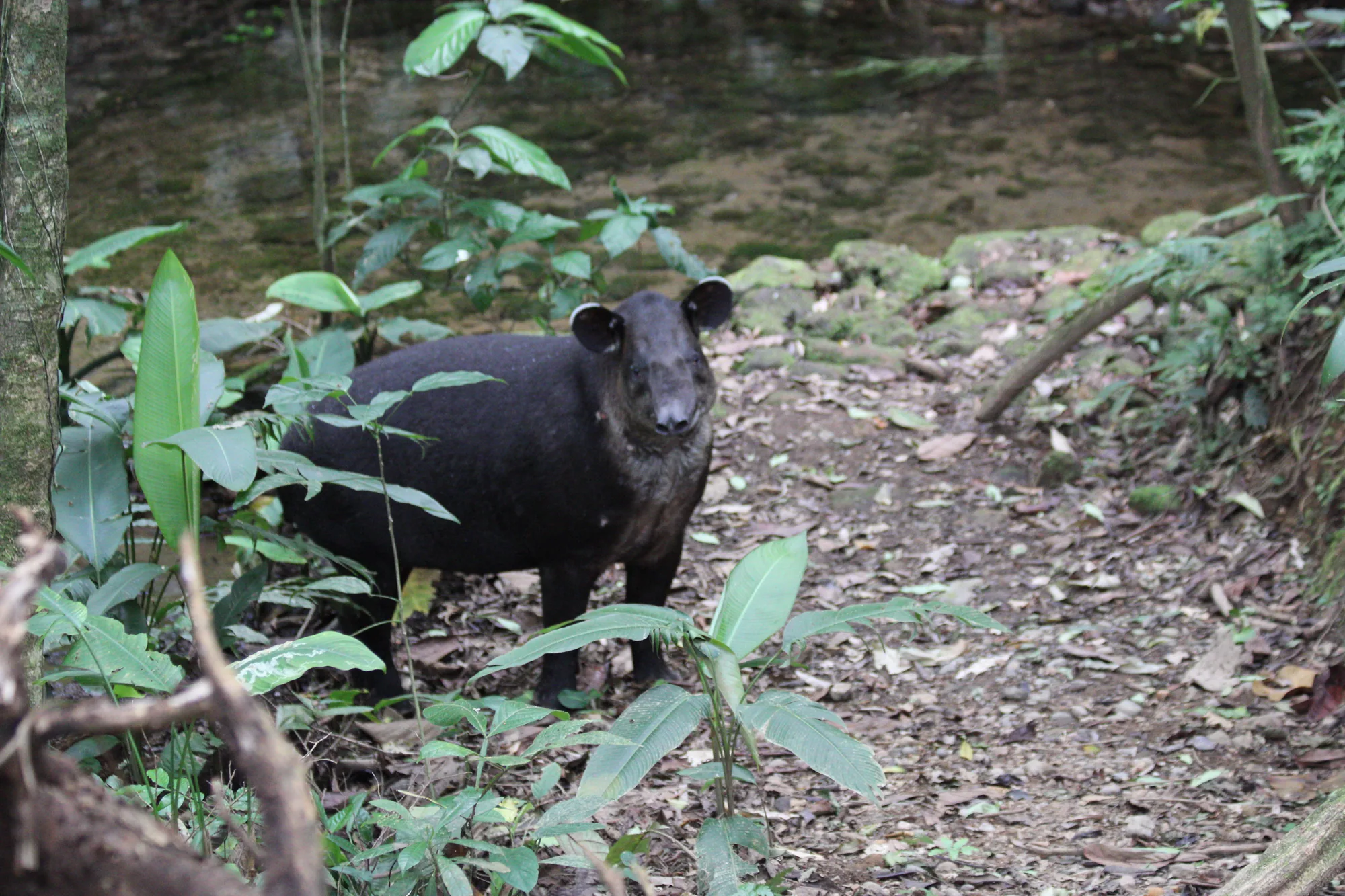
The danta is mostly nocturnal, but every so often one moves in daylight. We’ll be walking the trails, not looking for anything in particular, and suddenly the ground is moving — something big, coming fast — and it’s her. One of them. A tapir.
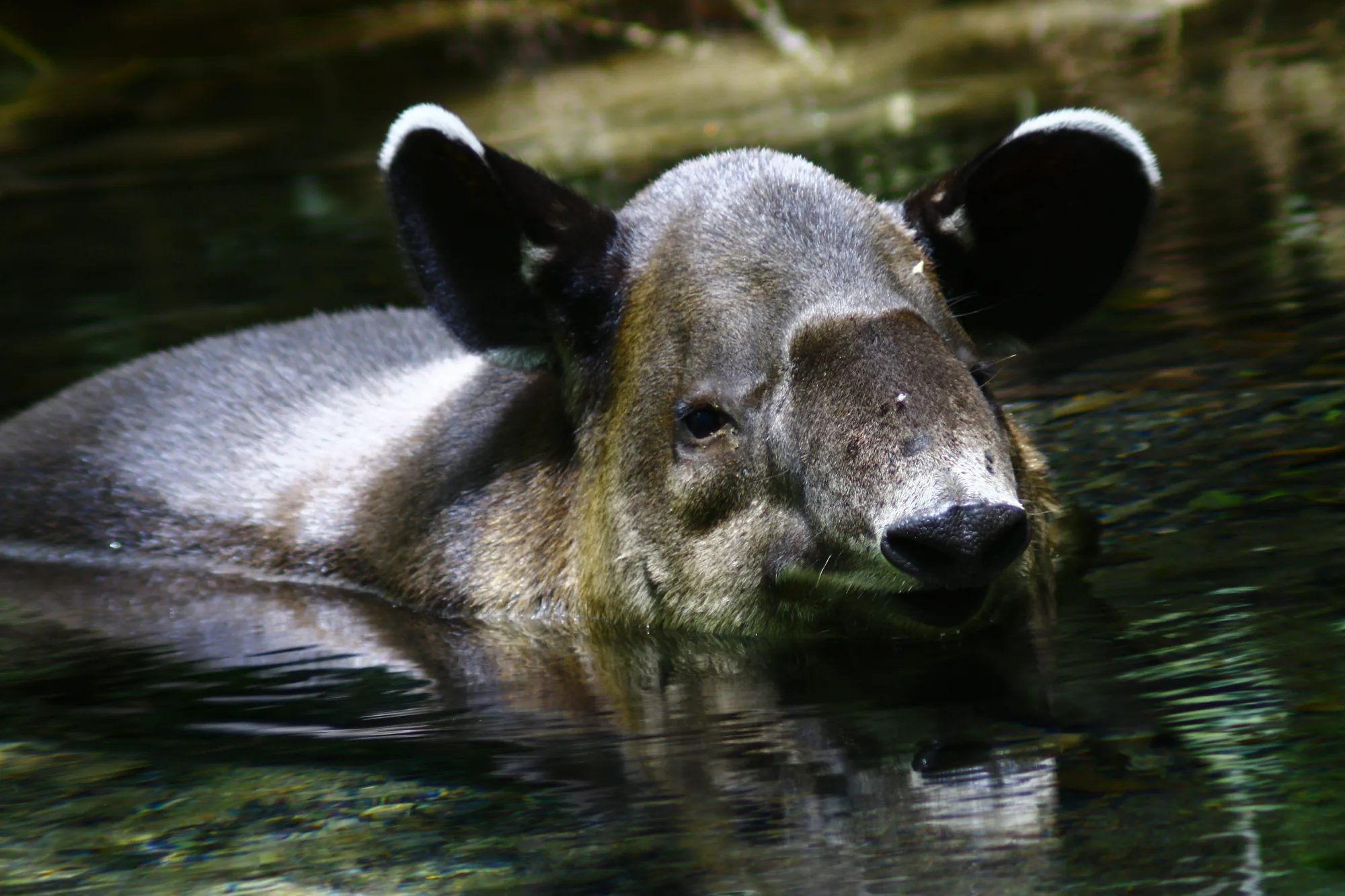
More often, when you’re not looking for her, you find her half-submerged in a river or a pool. She can look imposing up close, and it’s natural to feel a flash of fear when one comes near — but we always step back and give her room. Not out of fear: out of respect, for her and for the forest.
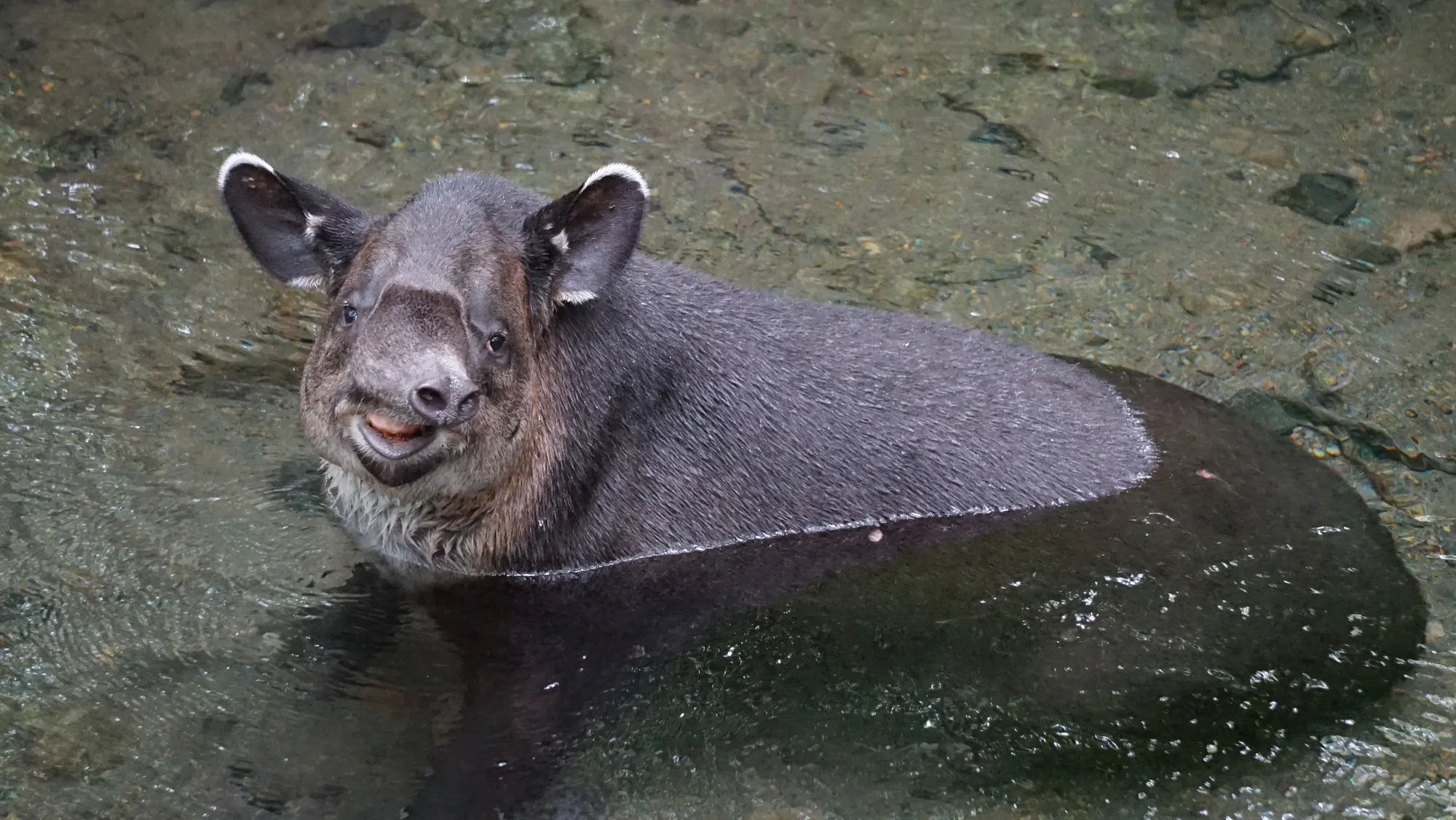
Of all the rainforest animals, the danta may be the most elusive.
Nocturnal, solitary, shy. On a day hike you’re far more likely to read the forest than to meet the tapir face to face: a deep three-toed track pressed into river mud, a fresh trail through the undergrowth.
What we promise is to take you into real danta country with someone who can read the signs. This is where they live — and when the bosque decides to show you one, you’ll understand why locals named a whole valley after it.
Before you go looking
Not in the dry coastal beach areas — but yes, in the rainforest at the inland edge of the province. The Tenorio rainforest, a couple of hours inland, is one of Costa Rica’s best regions for wild Baird’s tapir (the danta).
No — the Baird’s tapir is the national animal of Belize, where it’s known as the “mountain cow.” Costa Rica protects the species but hasn’t adopted it as a national symbol.
They’re peaceful, plant-eating animals that avoid people. Like any large wild mammal, a tapir can defend itself if it feels cornered — which is why we observe from a respectful distance, never approaching or feeding.
Go with a naturalist guide into the right forest and read the signs. Guides who know the tracks, water sources and trails give you a real chance — and even the tracks and stories are part of the experience.
Ready to look for the danta?
We run private day trips from anywhere on the coast — your group, your guide, your pace.