In 2018, a naturalist guide from Bijagua was walking through a wetland he had known for eighteen years when he heard a call he didn’t recognize.
He wasn’t a university biologist. He was a guide — someone who had spent two decades learning the sounds of one particular forest. But that’s exactly why he noticed.
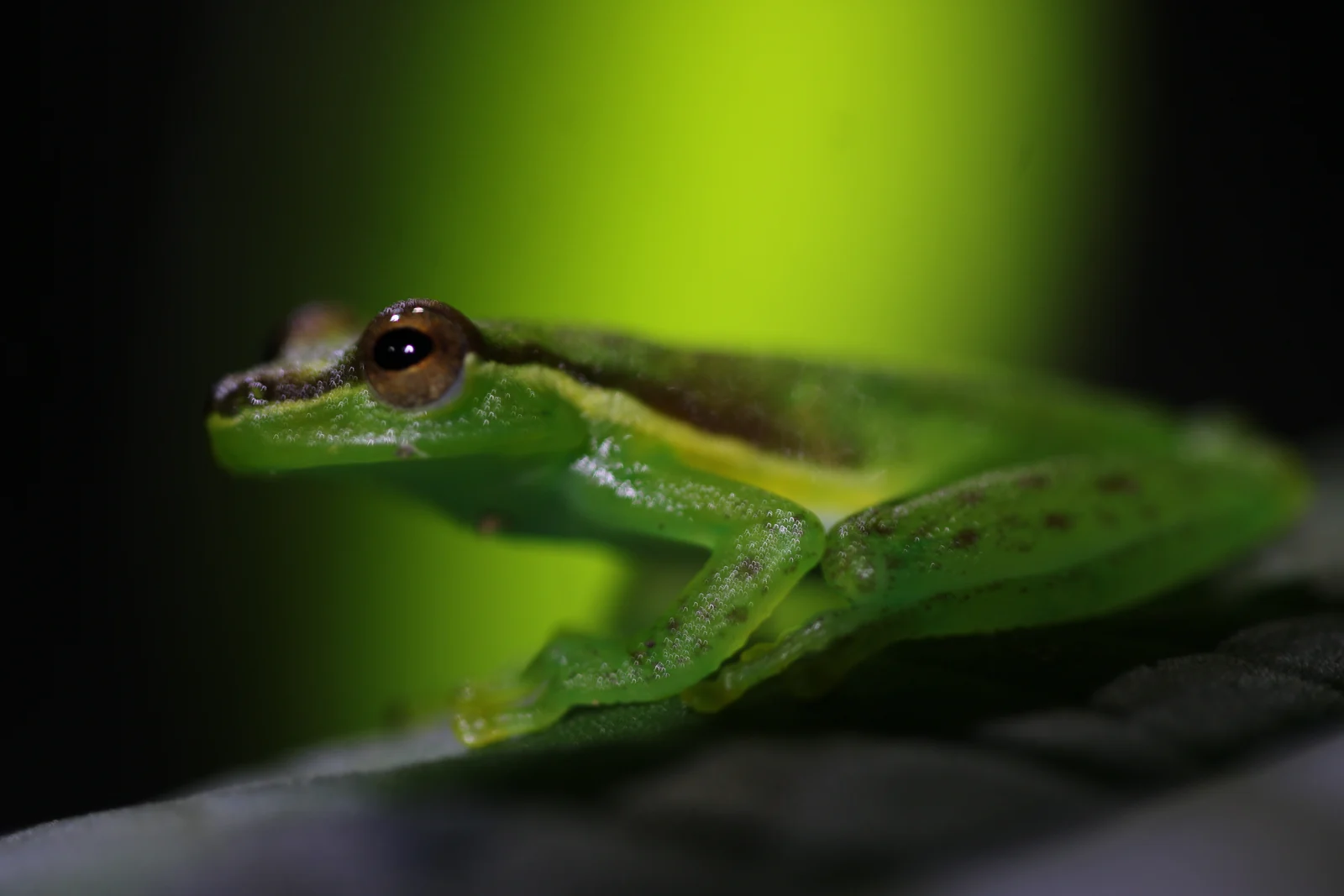
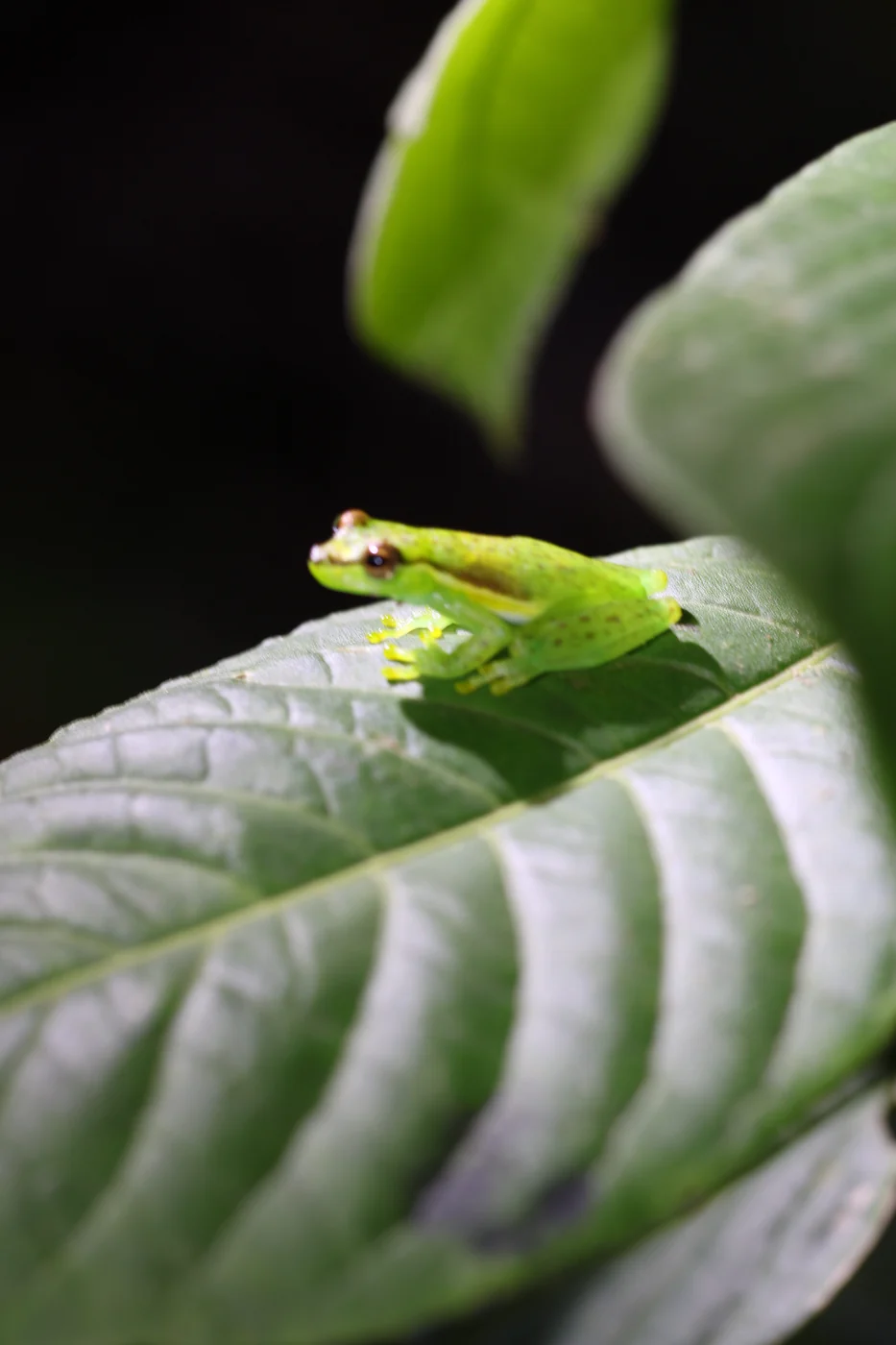
What he found was a bright green frog barely 2.2 centimetres long, marked with a reddish-brown stripe, with skin on its belly so clear you could see straight through it.
Nobody believed him. It took four years.
On 30 August 2022, the scientific journal Zootaxa published the formal description of a species new to the planet: Tlalocohyla celeste, the Tapir Valley tree frog — with the guide, Donald Varela Soto, listed as first author.
It lives in an eight-hectare wetland. It is one of thirty-seven amphibian species recorded on that reserve. And here is the part that still gives us chills: that land used to be cattle pasture. Deforested, grazed, written off. Someone let it grow back — and a species no one on Earth had ever described turned up in it.
That’s the forest we take people into. It is not a museum. It is still being discovered.
Why This Particular Forest Is So Alive
Tenorio Volcano National Park sits in a strange and lucky place: it catches weather from both the Caribbean and the Pacific slopes at once. Rain arrives from two directions, roughly 3,500 millimetres of it a year, and the temperature holds between 15 and 24 °C.
That collision of climates packs an unusual number of life zones into a small space — lowland rainforest, premontane wet forest, cloud forest — and the biology follows. According to Costa Rica’s national park service, this is the most biodiverse protected area in the entire Arenal-Tempisque Conservation Area, and it forms part of the UNESCO-designated Water and Peace Biosphere Reserve.
The official counts for its 18,402 protected hectares:
- 131 species of mammals
- 135 reptiles and 78 amphibians
- 35 species of fish
- At least half of every bird species in Costa Rica
To put that last number in perspective: one park, in one corner of one province, holds half the birds of a country famous worldwide for its birds.
The Corridor Nobody Talks About
Here’s something most visitors never learn, and it’s the reason this forest still works.
A national park on its own is an island. Large animals — tapirs, jaguars, pumas — need to move across far more ground than any single park provides. Trap them inside a boundary and the population slowly fails.
So in 2001, Costa Rica established the Tenorio-Miravalles Biological Corridor, connecting the two volcano parks. And the crucial detail is this: most of that corridor runs across private farmland, not state land.
Which means it only exists because the families who own those farms agreed to it. They built wildlife crossings. They stopped hunters. They changed how they farm. Costa Rica’s park service has formally recognized the corridor as a national example — and nationally, biological corridors are now the country’s second most important conservation strategy by area, covering nearly 16,000 square kilometres.
There’s one more thing that forest does, and it’s the one locals mention first: its springs supply drinking water to more than twenty communities. Up here, the forest isn’t scenery. It’s infrastructure.
The Gardeners of the Forest
The animal that holds all of this together is the one most visitors have never heard of: the Baird’s tapir, known here as the danta.
It’s the largest land mammal in the Neotropics — around 300 kilos of it — and it has been walking these mountains for millions of years. It’s also endangered.
They’re called the gardeners of the forest, and the name is literal. A single tapir eats up to thirty kilos of leaves, fruit and seed every day and walks tens of kilometres doing it. Everything it eats, it plants somewhere else. Remove tapirs and the big trees lose their main dispersal system — the forest keeps standing, but it stops renewing itself.
In the Tenorio-Miravalles corridor, researchers count around thirty-five tapirs. Six of them now wear GPS collars, part of a monitoring programme run with the national park service that tracks where they go and — just as importantly — which stretches of land need replanting so they can keep going there.
They face real threats: road strikes, diseases passed from cattle, and conflict when they wander into crops. The solution that’s working is refreshingly simple — camera traps to understand their routes, and low-impact electric fencing that turns them away from farmland without hurting them.
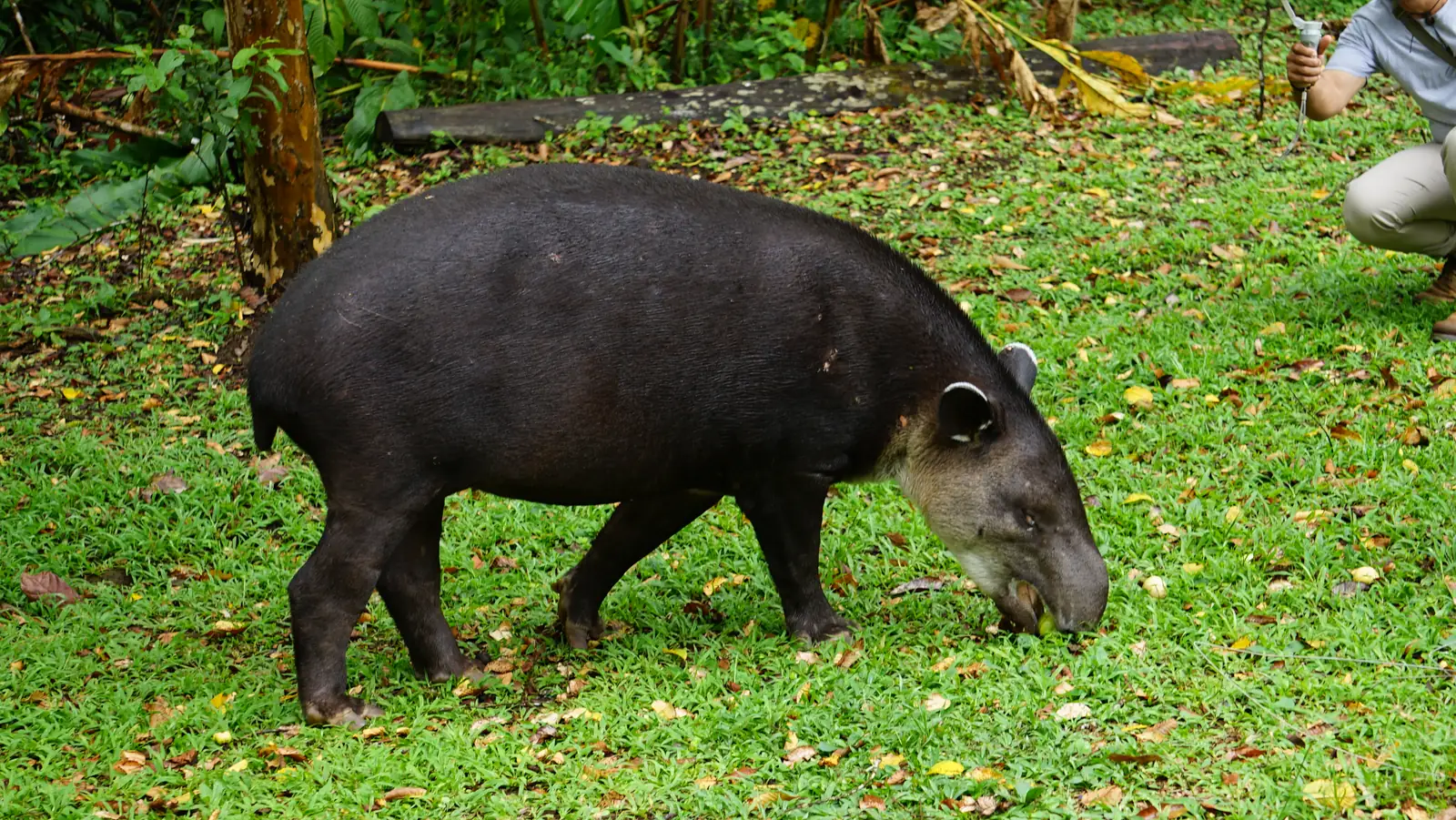
The recovery of tapirs in this corridor is now cited internationally as something rare: a species coming back because a community decided it should.
We see them often. Not every trip — nobody can promise a tapir — but often enough that we’ve stopped being surprised, and never often enough to stop being moved.
What It Actually Feels Like to Walk In
Everything above is the science. This part is harder to write.
Walking into that rainforest is a magical, almost spiritual connection — and we say that carefully, because we’re not given to that kind of language. There isn’t really a name for it.
The closest thing we’ve found is a scene from a film. In Avatar, the forest people connect to the living world through a tree — one physical link, and suddenly they’re part of everything around them. That’s the nearest anyone has come to putting it on a screen.
Because that’s what happens. You forget the world you came from. You’re transported to another universe.
Some of it is physical: the air is warm and wet and full of smell — soil, leaf, water, something green you can’t name. The light doesn’t come down in beams, it filters, so everything is lit from everywhere at once. And the sound never stops. Insects, frogs, birds, water, the creak of branches. It isn’t quiet in there. It’s the opposite of quiet.
And then something in you settles. People go silent about ten minutes in. We’ve watched it happen hundreds of times.
What You’ll See in a Morning
Sloths are the most reliable sighting of all — the three-fingered ones move by day, and the forest around Bijagua holds them in real numbers. Howler monkeys, whose call carries further than any land animal’s on Earth and startles everyone the first time. White-faced capuchins. Coatis crossing the trail with their tails straight up.
Birds constantly, because half the country’s species live here — toucans, motmots, trogons, tanagers, and if the season is kind, the bare-necked umbrellabird or the three-wattled bellbird.
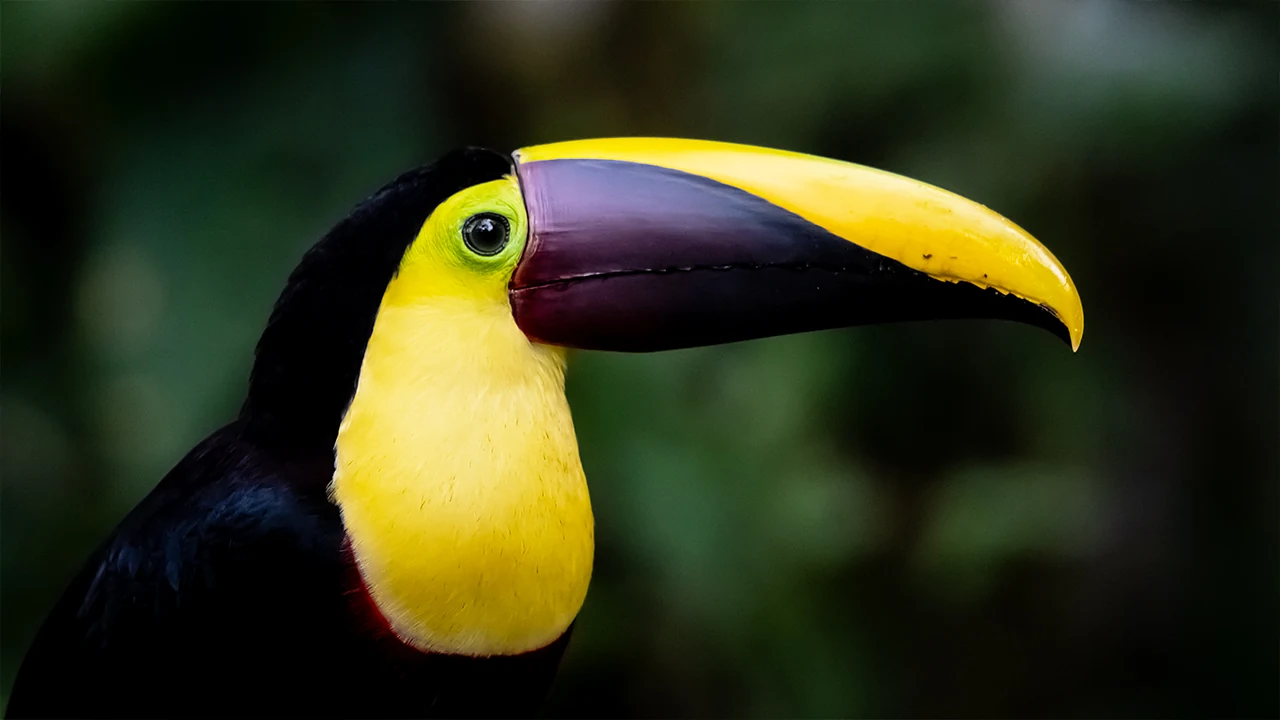
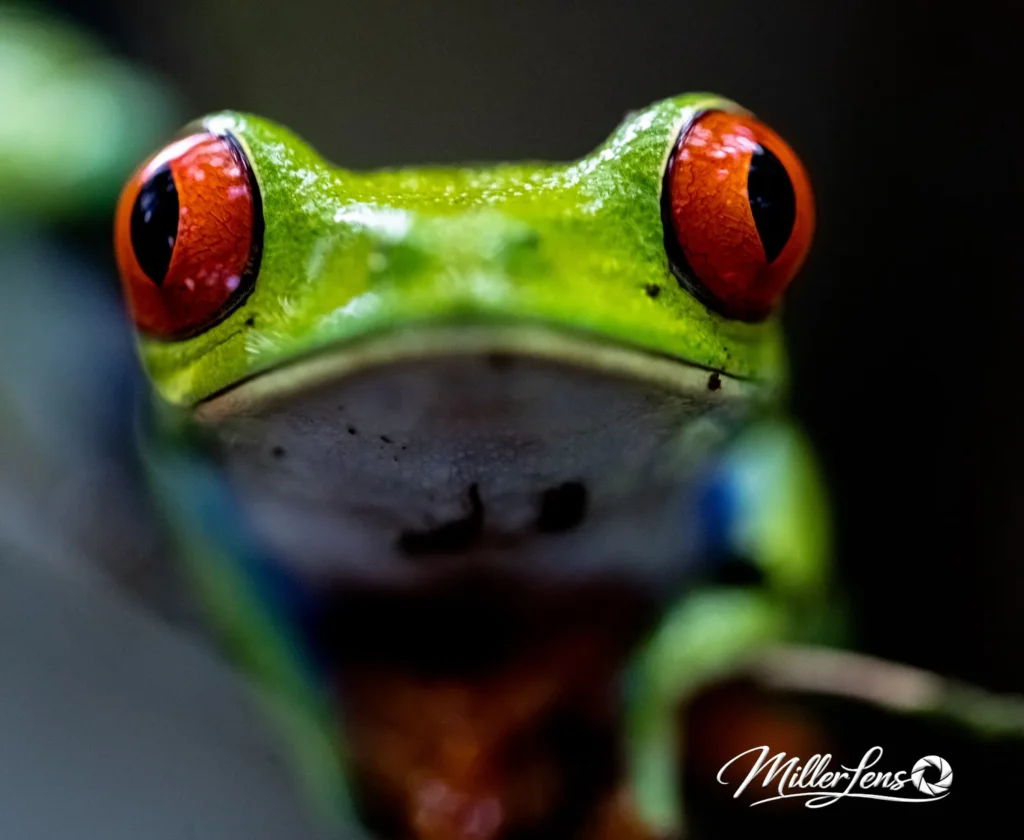
Frogs, once you know where to look — including the red-eyed tree frog everyone comes hoping for, and thirty-six other species besides.
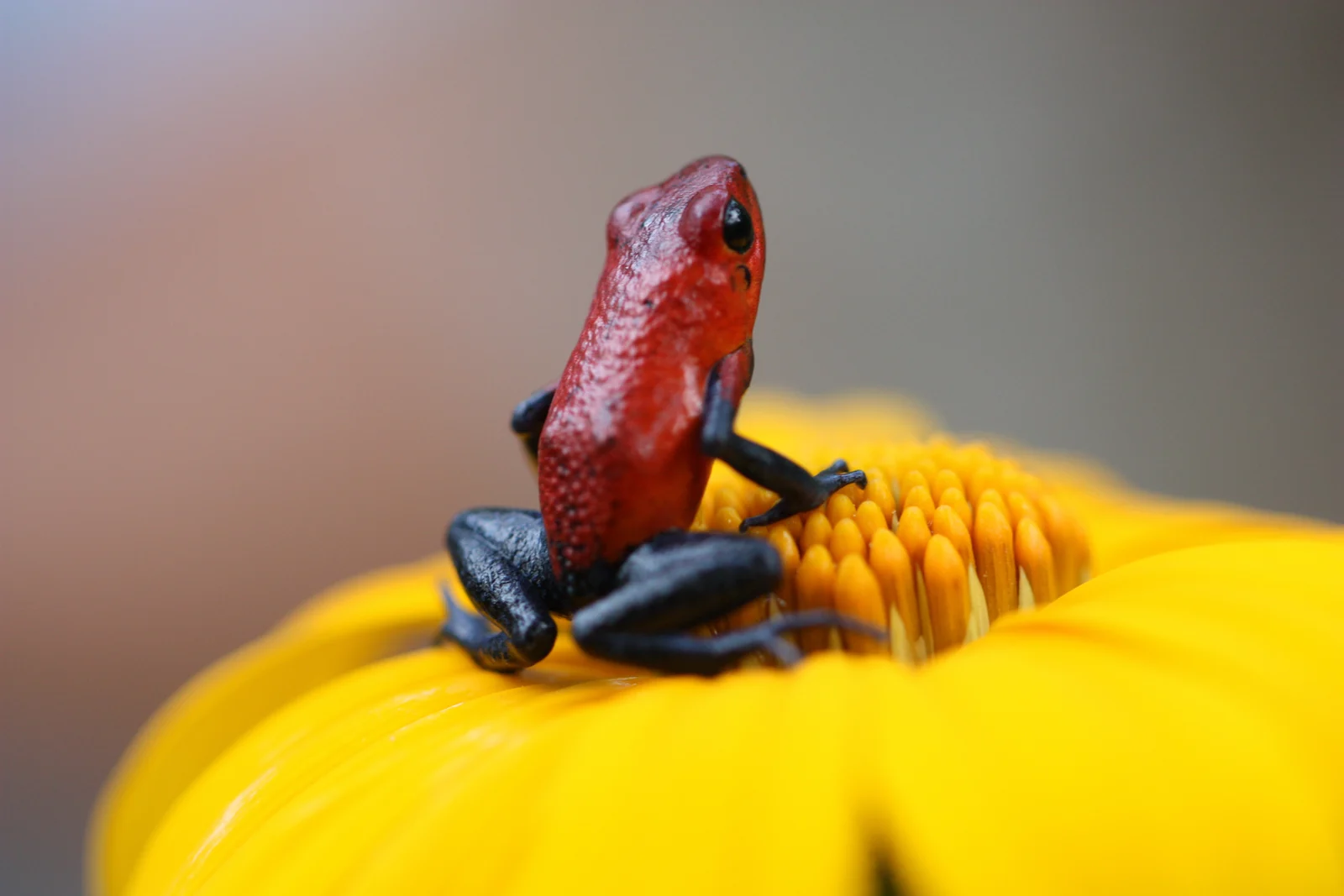
And the small things that end up being what people remember: leafcutter ants running their highway across the trail, a snake coiled in a bromeliad, an orchid the size of a fingernail growing on a branch forty feet up.
There’s even a tree here that grows nowhere else on Earth — the jícaro danto, endemic to this mountain range, and one of the tapir’s favourite foods.
Getting There from the Coast
Bijagua sits between the Tenorio and Miravalles volcanoes, and from the Guanacaste beaches it’s closer than most people expect:
- Liberia — about 1 hour
- Playas del Coco, Hermosa, Panamá, Ocotal — about 1.5 hours
- Papagayo Peninsula — about 1.5 hours
- Flamingo, Conchal, Brasilito — about 2 hours 20
- Tamarindo — about 2.5 hours
That’s less than half the drive to La Fortuna, and the forest is quieter.
Go early. The animals are active in the first hours and the light through the canopy is at its best. And don’t rush the trail — the whole point is that you slow down enough to notice things.
Come and See It
We run this as a private day from anywhere on the Guanacaste coast: your group, your guide, your pace, and a naturalist who has spent a lifetime learning what that forest sounds like.
Because that’s the thing about a forest that still holds secrets. You need someone who can hear them.
See the Tenorio rainforest experience → · Where to see sloths from Guanacaste → · Message us on WhatsApp